

Uromastyx Lizard Care: The Fascinating Spiny‑Tailed Agamids – Part 2
Please see Part I of this article for information on the natural history of the Spiny-Tailed Agamids (also know as Dabb Lizards or Mastigures).
Tempting, but….
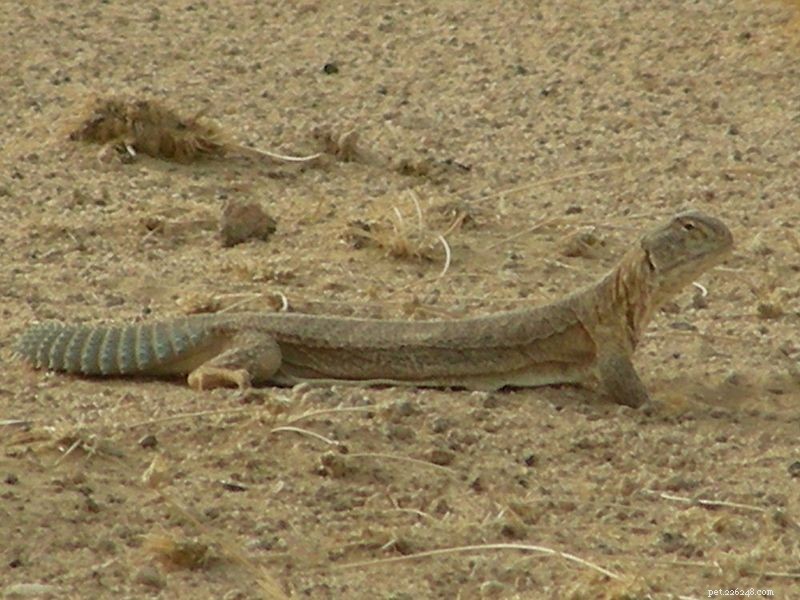 Unfortunately, Dabb Lizards are difficult to resist, and hobbyists sometimes jump at the chance to own them without realizing what is involved in their care. They require large enclosures, and many individuals become stressed if unable to construct the long burrows that are their natural retreats.
Most species are quite quarrelsome, and difficult to house in groups – an exhibit of 13 Mali or Sudan Dabb Lizards (U. dispar) that I set up at the Staten Island Zoo, while very interesting and quite popular with zoo visitors, was sometimes maddening to manage!
Specific Requirements
Dabb Lizards have evolved to consume the high fiber, low-nutrient diet typical of desert-dwelling reptiles, and fail to thrive if their unique dietary needs are not met. A diet that is too rich (i.e. high in fruit or insects) may kill them as quickly as will one lacking essential nutrients. Many species relish such seemingly unappetizing foods as dry split peas, millet, canary seed and other grains.
Hailing from desert fringes and dry savannahs, Dabb Lizards require ambient temperatures of 86-95F, and basking sites of 100-120F; a sharp dip in temperature at night is beneficial, and a “winter” is necessary to induce breeding behavior in many species. As would be expected, they fare poorly if not provided with high levels of both UVA and UVB radiation
- How to Safely Re‑Capture a Pet Lizard at Home
- Spiny-Tailed Agamids: The Ultimate Guide to Uromastyx Lizards – Part 1
- Snake Lizards: Remarkable Legless Predators in the Wild and Captivity
- The Ultimate Guide to Uromastyx Lizard Diets: Expert Tips from a Herpetologist
- Discover the 10 Most Stunning Uromastyx Species, Morphs, and Color Variations
- Bearded Dragons vs. Flat-Headed Agama Lizards: Key Differences for Pet Owners
- Optimal Feeding Guide for Pet Lizards: Balanced Nutrition & Feeding Schedules