

Dual‑Purpose Turtle Platform: Basking Spot & Frog‑Feeder
 I apologize for the awkward title, but try as I might this was the best I could do! Today I’d like to propose a new use for the Penn Plax Turtle Pier, a wonderful product that was originally designed as a resting/basking area for turtles, newts and frogs.
Problematical Habitats and Habits
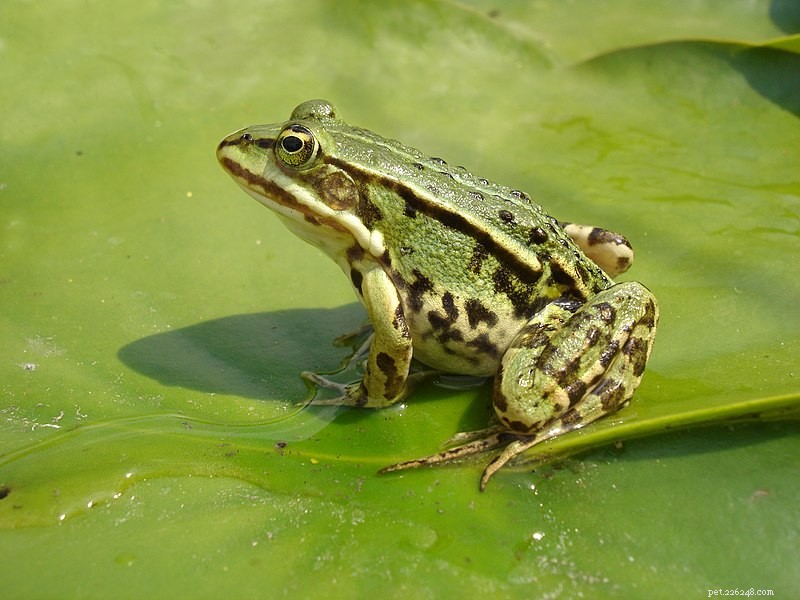
Many semi-aquatic frogs, often thought of as “typical pond frogs” by people living within their ranges, make interesting and attractive pets. However, due to the habitats they prefer and, in some cases, their relatively shy natures, it is often difficult to provide captives with the varied diets they require.
I’m thinking here of American Bullfrogs, Green Frogs, Fire-Bellied Toads, European Marsh Frogs, Edible Frogs, Leopard Frogs, Pickerel Frogs, Pig Frogs and similar species. These are best housed in aquariums with relatively large, deep areas of water and resting sites in the form of platforms and floating plants.
The Problem
Frogs that feed from tongs are easily supplied with dietary variety. But not all will (American Bullfrogs, for example, are often very shy) and in large collections hand-feeding is not always an option. Crickets survive well in largely aquatic situations, clinging to plants and cork bark until they are captured. Crickets alone, however, even when supplemented with vitamin powders, are not a healthful diet for frogs long-term.
In typical frog set-ups, many of the most valuable food animals invariably fall from land areas into the water within minutes of being placed in the aquarium. Unlike African Clawed Frogs and other completely aquatic species, those mentioned above cannot catch food underwater unless the water is only 1-2 inches in depth (most need much deeper pools in order to feel secure).
Earthworms, minnows and other fishes (which are vital calcium sources for Bullfrogs and several others), caterpillars, sowbugs, beetles, moths and other important foods are, therefore, often nearly impossible to use in typical semi-aquatic aquariums.
Devising Feeding Areas
My solution had been to construct land areas from plastic storage boxes – cutting away most of one side of the box but leaving a lip of plastic to help retain earthworms, fishes and other food animals. In essence, the boxes were used as “holding areas” for active food items that might otherwise wind up underwater before being captured by the frogs. However, these were not very attractive (and could not be used in zoo exhibits) and did not always work out, size-wise.
 Enter the Penn Plax Turtle Pier. Its large, flat surface provides an excellent “table”, and the slight lip around the rim helps retain foods such as dry-docked fishes. For frogs that will not feed on cue, I believe it represents a very important means of providing a healthful, varied diet with a minimum of effort.
A Useful Tadpole Ramp
The Turtle Pier’s sloping ramp also provides a simple means by which transforming tadpoles can exit the water. It adjusts to the water level in your tank, and so can be used for tadpoles that can exit relatively deep pools (i.e. American Bullfrogs, Green Frogs) or those that require shallow water (i.e. Poison Frogs, American Toads, Painted Frogs).
- Pantry Foods Safe for Aquatic Turtles: A Complete Guide
- 8 Human Foods Safe for Turtles: A Guide to Healthy, Delicious Choices
- 12 Small Pet Turtle Species That Won't Outgrow You
- How to Encourage Your Red‑Eared Slider to Bask – A Complete Care Guide
- Top 10 Turtle Species That Make Excellent Pets
- Penn Plax Turtle Pier: The Ultimate Basking Solution for Turtles & Amphibians
- Designing Effective Sub‑Surface Basking Sites for Semi‑Aquatic Turtles, Newts & Frogs