

Rare Cloning Birth: Female Boa Constrictor Gives Live Offspring Without Mating
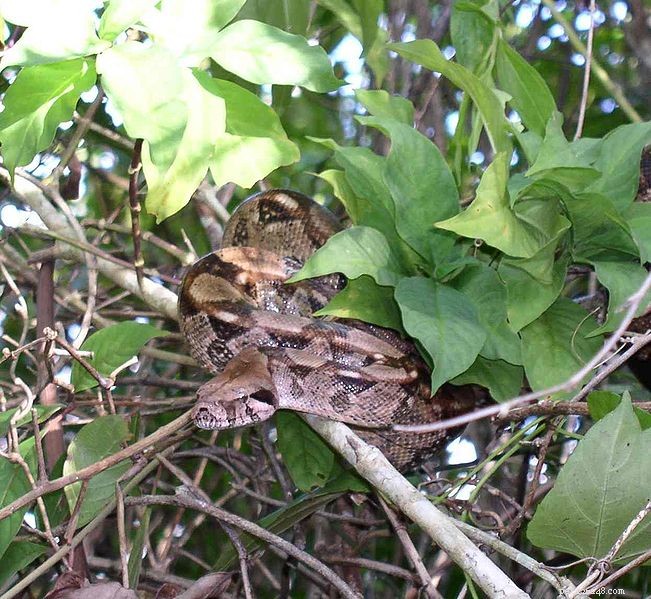 A female Boa (Boa constrictor) shocked herpetologists by giving birth to live young that she produced by cloning rather than mating. What’s more, the process used to create the young is new to the animal world – it has not been seen in any other vertebrate.
Asexual Births in other Species
Asexual reproduction or parthenogenesis – producing young without mating – is well known among insects and certain fishes (including Hammerhead Sharks), some of which can even switch sexes several times. It has also been recorded in a small number of reptiles, such as the Brahminy Blind Snake, American Whiptail Lizards and the Komodo Dragon.
Among certain Whiptail Lizards, the entire species seems to consist of females only, while in Komodo Dragons (and now Boas), females usually mate but have the “option” not to. Biologists debate the reasons for such an unusual strategy, but in the case of the Blind Snake, it has paid off – single females transported worldwide in soil (their alternate name is Flowerpot Snake) have established many populations far outside of their natural range, including several in Florida. Had they relied upon sexual reproduction, a pair or a fertilized female would be needed to start a new population – an unlikely event where stowaways are concerned.
A Completely New Type of Parthenogenesis
The discovery of a parthenogenic Boa was published this week (November, 2010) in the journal Royal Society Biology Letters. Researchers note that the female snake in question had previously mated and produced young, but then went on to produce 2 litters via cloning. They suspected something was amiss because all 22 youngsters were female, and caramel-colored, a recessive trait not carried by any of the potential fathers.
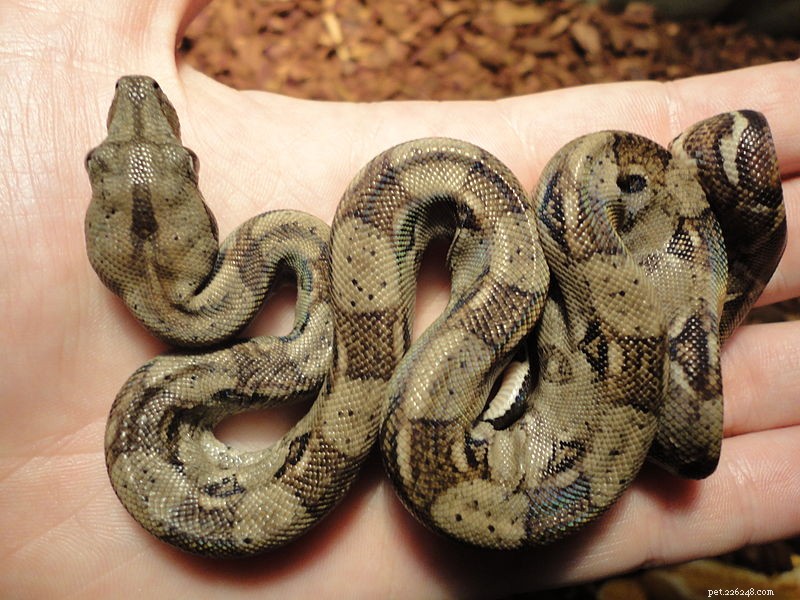 The researchers were shocked to find that the young snakes had been produced by a cloning process known only from lab experiments, but never before seen in nature. The youngsters were “half-clones” of their mother, having inherited 2 copies of ½ her genes (please see article below for a detailed explanation).
Observe and Share
The Boa Constrictor is one of the most thoroughly-studied snakes in the world, and millions have been bred in captivity. Yet we have only just now learned that it can reproduce by a means previously unknown to biologists.
- How to Tell if Your Young Red‑Eared Slider Is Male or Female
- Boa Constrictors vs. Pythons: Key Differences Explained
- Daisy Gives Birth to Four Kittens Amid Stormy Conditions – A Kitten Watch Update
- Texas Dog Sets State Record with 17-Puppy Litter
- Boa Constrictor Species Profile: Care, Behavior, and Health
- Optimal Temperature & Lighting for Live-Bearer Development Inside Female and Fry
- Essential Guide to Caring for Your Boa Constrictor