

Softshell Turtles: Comprehensive Natural History & Proven Care Tips – Part 1
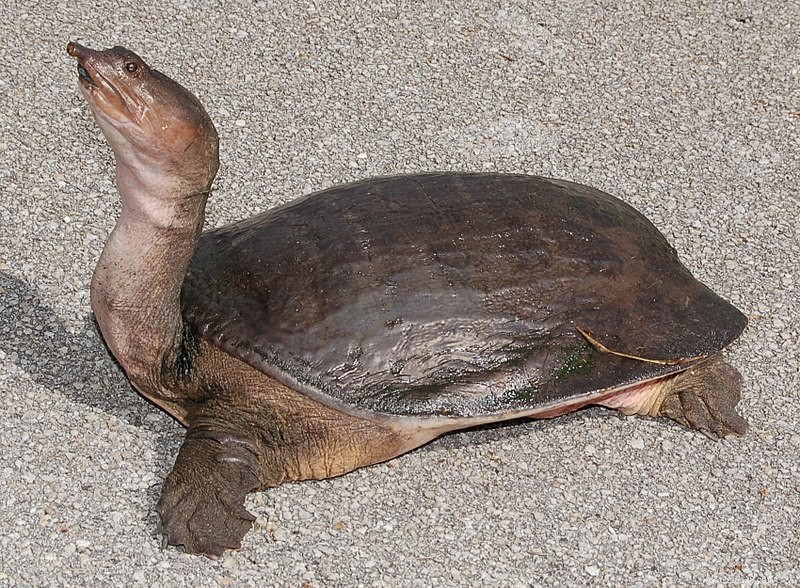 Softshell Turtles caught my attention early and remain great favorites of mine all these years (decades!) later. I’ve had a long history with the group – I raised Smooth Softshell hatchlings as a child, dove with huge Florida Softshells in southern canals and was eventually lucky enough to work with the immense Narrow-Headed and Bibron’s Giant Softshells. Today I’d like to introduce this most unique turtle family.
Natural History
Twenty four species of Softshell Turtles, all classified within the family Trionychidae, are found in Africa, North America (where 3 species occur) and Asia (they range to New Guinea, but have not reached Australia).
All are highly aquatic, and their flattened, leathery shells and paddle-like feet render them amazingly fast swimmers. Most spend a good deal of time partially buried in sand or mud, and they can disappear into such substrates as quickly as they move through water.
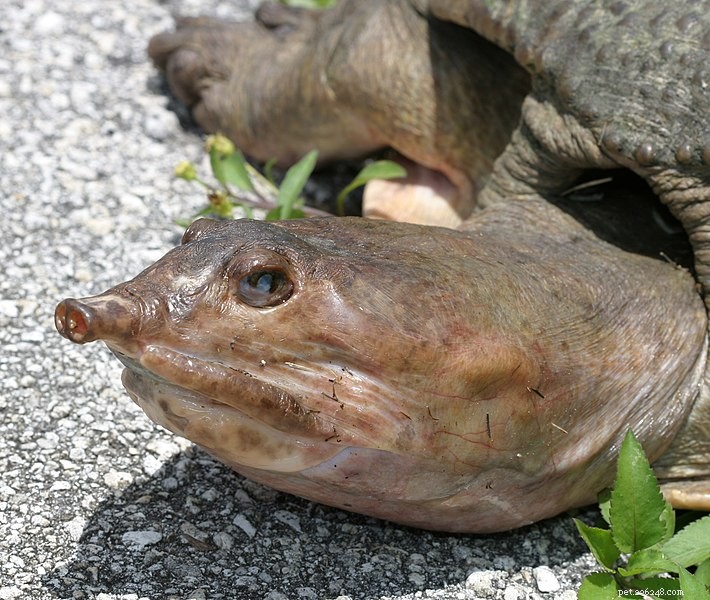
Long snouts help Softshells to breath without leaving the sand into which they have burrowed…by extending their necks to the surface, they can take in air while remaining hidden.
Diet
The largely carnivorous Softshell Turtles take nearly any creature they can overpower, and their strike rivals that of any snake in speed; fishes, insects, snails, crayfishes, frogs, tadpoles, salamanders and carrion are all on the menu. The flattened mouth ridges seen in some species may be an adaptation to crushing mussels and other mollusks.
While field research is lacking, my observations lead me to believe that muskrats, ducks and larger game are taken on occasion.
Keeping Softshells
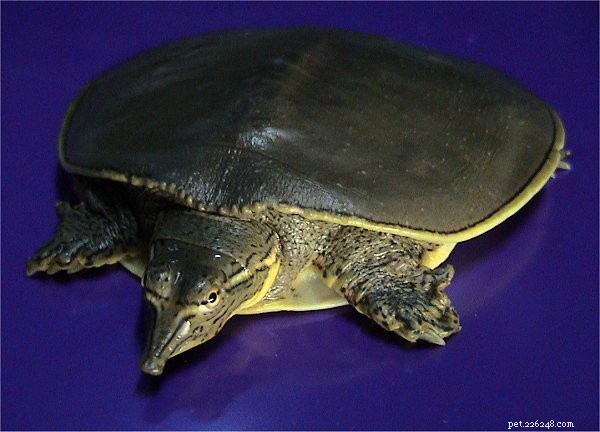 Softshell Turtles make interesting captives, but females of most species grow far too large for the average aquarium. Water quality is of paramount importance, far more so than for most turtles. Softshells kept in sub-optimal conditions invariably develop serious fungal infections that are difficult to treat. Strong filtration and frequent water changes are essential – I advise keepers to treat Softshells as they would aquatic amphibians or fishes.
Males are by far the better choice as pets, as they are much the smaller sex. While female Florida Softshells (Apalone ferox) have topped 70 pounds in weight, males may mature at a mere 6 inches long. Male Smooth (Apalone mutica) and Spiny Softshells (A. spinifera) are, at 4-6 inches, so much smaller than females as to appear to be of another species.
Be Careful…some sad stories
Softshell Turtles are very prone to shell injuries when kept on rough substrates…in my experience these become infected with extraordinary speed, and often prove fatal even with treatment. Sand or smooth pea gravel is best.
I still recall with great sadness 2 Narrow-Headed Softshells (Chitra indica) that expired during my years as a zookeeper due to injuries caused by an inappropriately-designed exhibit. Several huge Spiny Softshells that lived for decades in the Brooklyn Botanical Gardens koi pond (much to the chagrin of the koi!) apparently met the same fate when moved during a renovation.
I’ve read reports of a 96 pound Florida Softshell that was captured in Florida and died from plastron injuries when it was stored improperly (I tried to see that animal but unfortunately was too late).
Softshells generate more stories than most turtles – from boat-attacking behemoths to temple guardians, they figure prominently in the lores of many countries. The habits of many are also a mystery…I’ll touch on these topics in Part II.
- Mastering Newt Care: Natural History & Captive Management – Part 1
- Smokey Jungle Frog (Leptodactylus pentadactylus): Natural History & Expert Captive Care – Part 2
- Mudpuppy: Natural History & Care Guide – Part 1
- Expert Guide to Mudpuppy (Waterdog) Care – Part 2: Habitat and Light Management
- Softshell Turtles: Expert Care & Natural History Guide – Part 2
- Mertens’ Water Monitor: Natural History & Expert Captive Care Guide – Part 1
- Trans-Pecos Ratsnake Care Guide: Natural History & Housing Tips – Part 2