

Conserving Stag Beetles: A Practical Guide to Keeping and Protecting Large Beetles
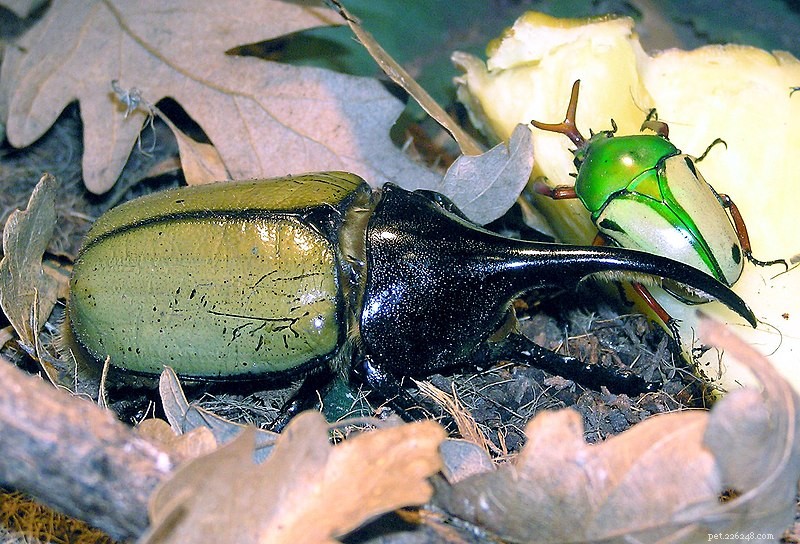 Beetle-keeping is a small but expanding hobby here in the USA, but is amazingly popular in Japan, where beetle larvae are even sold in vending machines (I experienced this first-hand, and can say they survive the ordeal quite well!). Beetles are classified in the order Coleoptera, which exceeds all other animal orders in species diversity, and they play a vital role most ecosystems. Beetle conservation, however, is in its infancy, so I was very pleased to learn of new efforts on behalf of the UK’s largest species, the European Stag Beetle, Lucanus servus.
Elusive Quarry
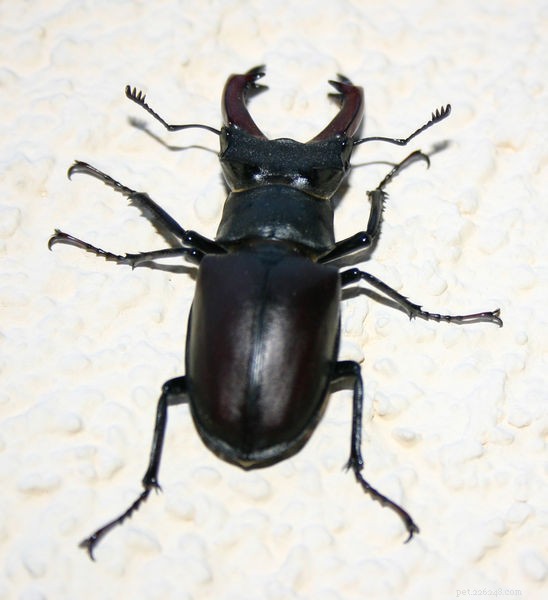
The European Stag Beetle (please see photo) is likely in sharp decline, but no one knows why. They are very hard to study…adults do not feed and so cannot be lured to traps, and digging for buried larvae often kills them and destroys their habitat.
However, researchers at the Universities of London and York discovered that adult Stag Beetles are attracted to ginger, which releases a chemical (Alpha Copaene) known to attract wood-boring insects. Ginger-baited traps proved very effective.
Simultaneously, tiny microphones were used to detect the noises made beetle larvae as they moved about below ground or in dead wood (many invertebrates stridulate, or vibrate various body parts, in order to communicate). Instruments used to monitor pollution also proved useful in detecting the presence of Longifolene, a chemical released by beetle grubs.
Insect Conservation
Insect conservation is always overshadowed by efforts geared towards “cute and fuzzy” creatures (the “charismatic mega-vertebrates, as biologist call them)…in the UK, for example, Stag Beetle field studies rely almost entirely upon the efforts of dedicated volunteers. So I’m encouraged by these advances…with such technologies in place, it will be easier to study tiny, secretive creatures.
Giant Beetles in the Terrarium
I’ve always kept Caterpillar Hunters and other native beetles (please see article below), but it wasn’t until I began working at the Bronx Zoo that I met some of the most spectacular foreign species face-to-face. Charged with setting up an invertebrate display in the early 1980’s, I was astonished by the amazing range of beetles that was available. Helped along by a more experienced colleague, I was eventually able to rear and even breed some of the world’s largest and most impressive insects.
 Some of these are occasionally available to private collectors in the USA, but imports are restricted. My favorites include the massive Goliath Beetle, Goliathus regius, the Hercules Beetle, Dynastes Hercules, and the Atlas Beetle, Chalcosoma atlas – all are well-named!
Today you can see quite a few beetles at the insect displays that are becoming ever more popular in US zoos. By all means make an effort to visit one – photos do not do these insect giants justice. The Cincinnati Zoo’s Insectarium tops my list, but even it pales in comparison to those I saw in Japan, where insect keeping has a long history…more on that in a future article.
- 26 Largest Dog Breeds – Photos & Key Details
- Rabies Prevention: Why Timely Vaccinations Protect Your Pets and Family
- How to Keep Your Large Dog Healthy: Expert Tips & Care Guide
- The Real Challenges of Owning a Pet Monkey
- Urgent Turtle Conservation Update: Protecting USA’s Native Species Amid the Asian Turtle Crisis
- American Wood Turtle Care Guide: Essentials & Natural History
- Top 20 Large Dog Breeds – Comprehensive Guide with Photos