

Historic First: North American Captive Breeding of the Giant Horned Lizard
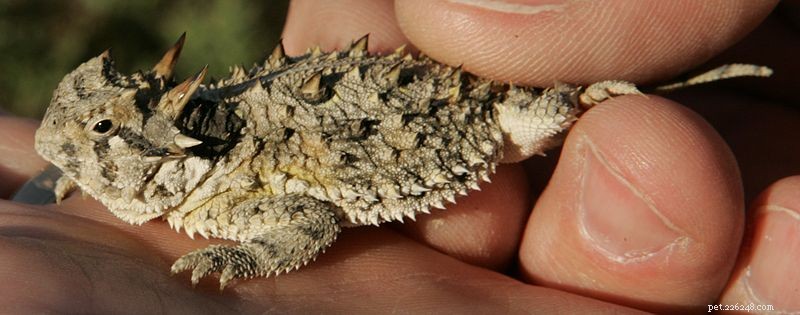 Horned Lizards of various species, usually sold as “Horned Toads”, were US pet trade staples in the 1950’s and 60’s. Looking much like minute dinosaurs, they needed more heat and UVB than most could provide, along with an ant-dominated diet, and fared poorly. As a boy, I was able to keep them going in the summer, thanks to natural sunlight and plentiful ants, but they declined in winter (I discovered they did not like the “house ants” I collected in local stores!). As I moved into zoo work, the key to keeping most species remained elusive. So I was very happy to hear that the Los Angeles Zoo had recently (January, 2011) succeeded in breeding the largest species, the Giant Horned Lizard, Phrynosoma asio.
Natural History
The 6 ¼-inch-long Giant Horned Lizard inhabits tropical scrub, rocky hillsides and forest edges along the Pacific Coast of southern Mexico. Unlike the more familiar desert-adapted species, it experiences prolonged rainy and dry seasons, and seems less dependent upon an ant-based diet.
The Giant Horned Lizard is one of the eight species in the genus Phrynosoma known to squirt blood from its eyes when disturbed (please see photo).
Captive Breeding
Partly because they accept food other than ants, Giant Horned Lizards have done rather well, and have even bred, in European collections. The 9 eggs that hatched at the LA Zoo represent the first North American success. The parents are part of a group imported from Mexico and shared with the San Diego Zoo.
European reports indicate that Giant Horned Lizards mate in April-June, with gravid females laying 10-30 eggs after a gestation period of 60-70 days. The eggs hatch in 10-12 weeks when incubated at 85 F.
Horned Lizard Care
Horned Lizards are hard to resist, but it is a mistake to attempt keeping them unless you are well-experienced and able to provide for their very specific needs.
Those that accept a variety of insects, such as the Short-Horned Lizard, Phrynosoma douglassii, are better choices than the ant specialists. The Short-Horned Lizard, I learned to my surprise and delight many years ago, also gives birth to live young.
Please write in for details on proper care before acquiring a Horned Lizard.
Lizard Oddities
As if their appearance, diet, and blood-squirting abilities were not enough to distinguish Horned Lizards, several species are now known to guard their nests, attacking snakes and other predators…others inflate themselves with air and flip over as if dead when attacked (please see video below).
And there’s more – both the Giant Horned Lizard and the Coast Horned Lizard, Phrynosoma coronatum, have been observed mating in a most un-reptilian manner…belly-to-belly!
- Breeding the Rosy Boa: A Comprehensive Guide for Successful Reproduction
- 29-Foot Giant Crocodile: How Deinosuchus Roamed the American Southeast 79 Million Years Ago
- Keeled Box Turtle (Pyxidea mouhotii): A Resilient Species in Urgent Need of Captive Breeding
- Keeled Box Turtle: Conservation & Captive Breeding Strategies – Part 2
- Master Lizard Breeding with Live-Bearing Swifts (Spiny Lizards) – Part 2
- Breeding the Malayan Leaf Frog: Tips for Successful Captive Propagation
- Caring for Latin American Tiger Ratsnakes in Captivity: Expert Tips & Guidelines