

Turtles Move Toward Heat Inside Eggs: Uncovering Temperature's Role in Sex Determination
 Turtles and other reptiles are full of surprises when it comes to reproduction. In the past few decades we’ve learned that incubation temperature, not genetics, determines the sex of many species, that some have dispensed entirely with males (i.e. the Brahminy Blind Snake) and that the massive Komodo Dragon is capable of reproducing without fertilization. Recently (May, 2011), biologists have determined that turtle embryos move within the egg and actively seek heat. This finding may cause us to re-examine conservation techniques, and raises an array of important questions – i.e., can turtle embryos actually determine what sex they will be?
Active in the Egg
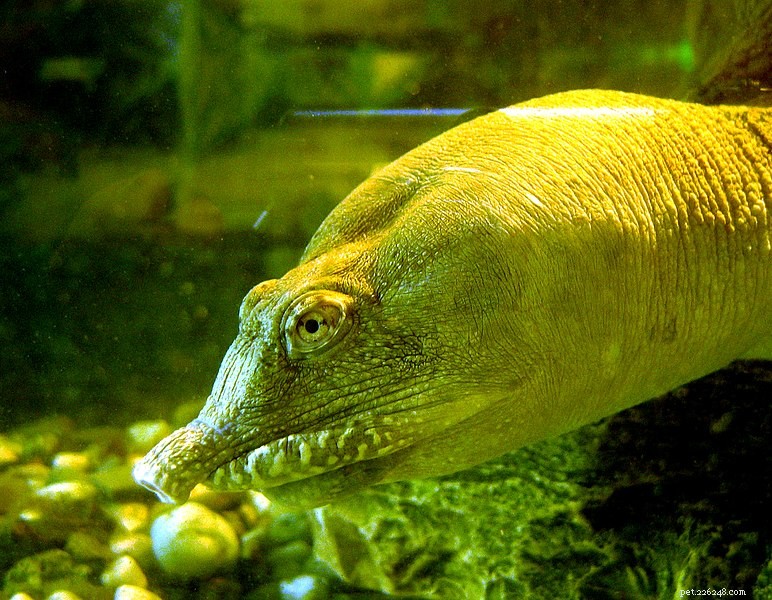
Researchers from the Chinese Academy of Sciences found that basking behavior may be as important to turtle embryos as it is to fully-formed animals. In laboratory experiments, embryos of the Chinese Soft-shelled Turtle, Pelodiscus sinensis, were able to sense slight temperature differences (1.8 Degrees F) and could move towards a heat source located outside of the egg.
The researchers repeated their findings in semi-natural conditions. They oriented 540 eggs so that they could later trace the embryos’ movements by shining a strong light at the shell (a process known as “candling”). Some of the eggs were buried in “nests” located on sloping ground, where sun exposure would vary, while others were located on flat ground, where the sun would strike the eggs evenly. All of the embryos in the sloped nests migrated towards that portion of the egg that received the most sun; the embryos in the other nests did not move.
Conservation Implications
Being able to predict the sex of turtle hatchlings has important implications for captive breeding and “head-starting” programs. In most turtles that have been studied, warmer incubation temperatures produce male hatchlings. In Chinese Softshells, warmer temperatures also speed up hatching by approximately 4.5 days for each rise of 1.8 F.
I’ve assisted in field research which revealed that certain female Green and Leatherback Turtles usually choose to nest in sunny locations, while others often nest beneath beach vegetation (cooler sites, in theory). An egg’s location within the nest – top or bottom – will also affect its incubation temperature. Perhaps these are ways of assuring a beneficial sex ratio. But if the embryos themselves are actually regulating their own temperatures, we have yet another variable to consider.
We do not yet know how this new information will affect our understanding of turtle biology and conservation…until the Chinese Academy of Sciences study, we were not aware that turtle embryos could sense heat and move within the egg. Just goes to show the importance of paying attention to details, no matter how common the species…even very basic information is still coming to light.
Chinese Softshells in the Food Trade
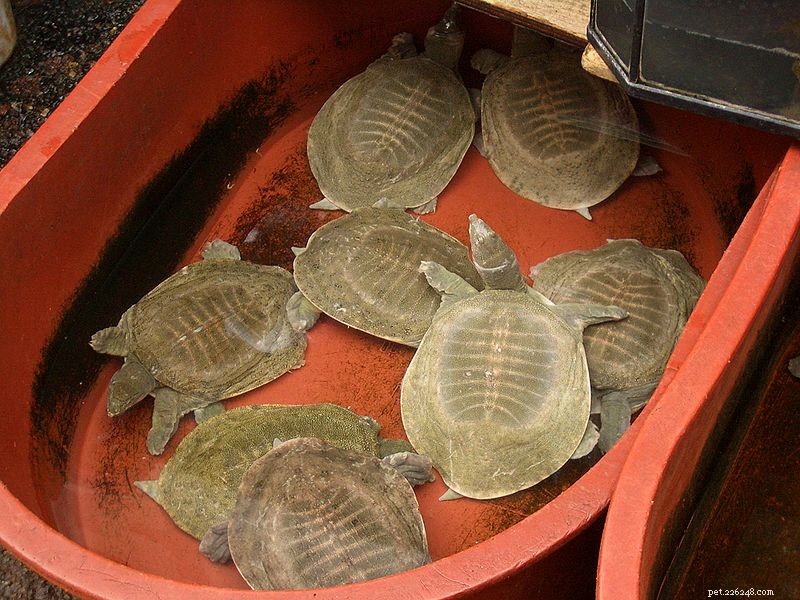 The Chinese Softshell is bred commercially, as a food item, in several countries. While farming does take pressure off wild populations, the turtles are, unfortunately, subjected to horrendous treatment in many food markets.
Years ago I tried, unsuccessfully, to induce the FDA to regulate the handling of Chinese and Florida Softshells in NYC. Sadly, I still see them in food markets here, and they continue to be held under terrible conditions. Recent efforts to stem the sale of live turtles and frogs by Wal-Mart (in China) have fallen upon deaf ears (please see this article for details).
- Why Does My Turtle Dig in Tank Rocks? Causes, Prevention, and Care Tips
- Determine the Gender of Baby Turtles: A Simple Guide
- Keeping Your Heat-Sensitive Pets Safe: Expert Tips for Summer Care
- The Rockster: From Struggle to Success—A Rags‑to‑Riches Tale of Compassionate Dog Care
- Where Do Turtles Go in Winter? Understanding Their Brumation Habits
- Top 8 Cat Breeds Known for Their Friendly Nature
- Inside the World of Toucans: Colorful Birds of the Tropical Canopy