

12 Million U.S. Freshwater Turtles Exported in Five Years – How You Can Help
 The plight of the USA’s freshwater turtles has taken a back stage to what has been labeled the Asian Turtle Crisis (a tragic situation, please see below). However, a full-blown crisis is in progress here as well. In the past 5 years, over 12 million wild caught freshwater turtles were sent from the USA to food and pet markets abroad, while untold numbers were sold in-country. Fortunately, you can make a real difference in their future by taking one simple step. Please read on to learn how to take action to support CITES (Committee on International Trade in Endangered Species) protection for the USA’s freshwater turtles.
US Turtle Diversity and Conservation
It comes as a surprise to many people that the USA is home to more species of freshwater turtles than any other country. Unfortunately, several of the states that support the greatest diversity and largest turtle populations offer little or no protection, despite strong evidence that many species are in sharp decline. Food markets in China and Southeast Asia are the main importers of US turtles, but rarer varieties wind up in the pet trade the world over.
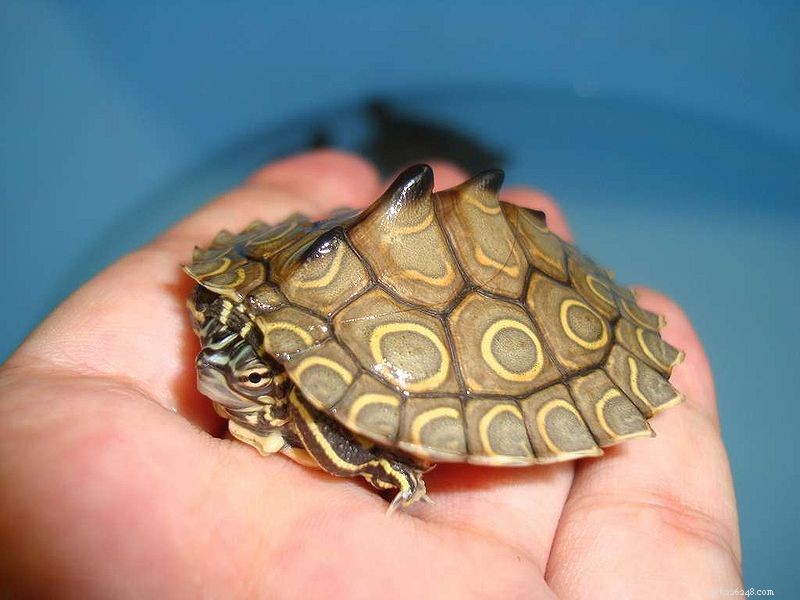
And, despite decades of pressure from conservation groups, the process of adding a turtle to the Endangered Species List remains a conservation travesty. The Cagle’s Map Turtle, for example, was listed as a candidate for protection in 1977, yet no action has been taken in the 34 years since! In common with many turtles in the genus Graptemys, Cagle’s Map Turtle is restricted to a single river system (the Guadalupe, in Texas). Recent genetic studies have uncovered a new species, the Pearl Map Turtle (please see below), and strengthen the belief that many populations have evolved in isolation and now survive only in tiny habitat fragments…yet map turtles remain largely unprotected.
Please Register Your Opinion Now
The Center for Biological Diversity recently formed a consortium of 20 conservation groups and has petitioned for turtle protection in every state where turtle harvests are unregulated or in need of tighter control. The Center has also provided a simple means for concerned people to act on behalf of the USA’s turtles:
Until August 16, 2011, the US Fish and Wildlife Service is soliciting input as to which species should be proposed for CITES protection. Please click here to participate.
The short form you’ll find takes but a few seconds to complete, and could very well help prevent one or more extinctions. If you are reading this after August 16, please check the links below to stay informed on future efforts.
Turtle Conservation Helps People
Some years ago I spearheaded a project that documented high levels of mercury in Florida Soft-shelled Turtles and other species sold in NYC food markets. Researchers have also found PCBs and other dangerous chemicals, but decisive action on a state or federal level has yet to be taken.
Some Good News
 The Center for Biological Diversity recently logged a historic victory when the US F&WS agreed to make decisions on the conservation needs of 757 animal and plant species; included among these are a great many long-ignored reptiles and amphibians. Please see this article for more info and a complete species list.
- Step-by-Step Guide: Caring for a Turtle with a Bleeding Shell
- How to Distinguish Male from Female Turtles: A Practical Guide
- The Surprising Ways Turtles Manage Breathing Underwater
- How Fast Do Turtles Move? Speed of Land, Freshwater, and Sea Turtles Explained
- Determining the Age of Turtles: Reliable Methods & Limitations
- Finding Turtles: Expert Tips to Locate Wild, Lost, and Rescue Pets
- How Long Do Turtles Live? Discover Their Lifespan and Care Tips