

Essential Gear for Caring for Pet Tarantulas – Expert Guide from a Zoo Keeper
Among the world’s 900+ tarantula species (Family Theraphosidae) we find spiders of every conceivable size, description and lifestyle, some of which make interesting, long-lived pets. I had the chance to work with many during my zoo career, and most of the supplies that I relied upon are now readily available to hobbyists. Whether you are just starting out or looking to add additional species to your collection, the following information will assist in your decision. Please be sure to post any questions or observations about pet tarantulas below.
Housing
Setting up the Terrarium
Tarantulas are best kept in screen-covered aquariums, reptile cages or plastic terrariums. “Extra high” styles are best for Pink-Toed Tarantulas and other arboreal species. Be sure to use cage clips on the cover, as tarantulas can climb glass and are incredibly strong. A 10-15 gallon aquarium is adequate for all but the largest individuals.
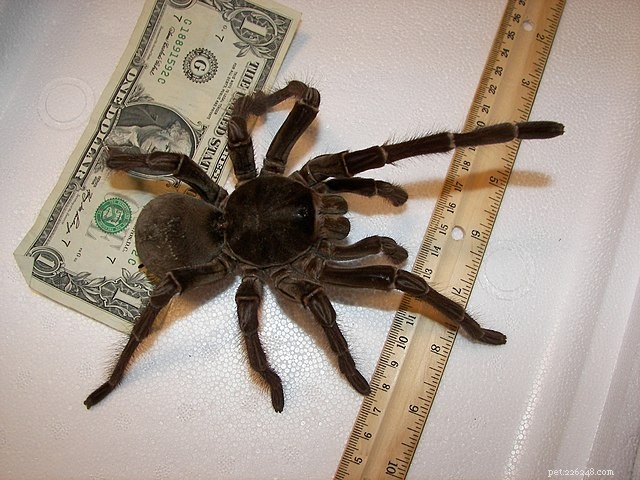
Uploaded to Wikipedia Commons by Snakecollector
All tarantulas require a dark hiding spot. Burrowing species such as the Goliath Bird-Eating Spider will dig their own caves if provided deep substrate. Sri Lankan Ornamental Tarantulas and other arboreal species will utilize the underside of an upright piece of cork bark. Most also accept inverted flower pots and plastic reptile caves.
Many tarantulas, especially arboreal species such as the Pink-Toed Tarantula, show themselves to their best advantage in complex, planted terrariums. A wide variety of live plants is suitable for use with tarantulas; please post below for further information.
Substrate
A mix of coconut husk, top soil and peat moss works well for Cameroon Red Tarantulas other rainforest natives. For burrowers such as the Thailand Black Tarantula, add just enough water so that the substrate sticks together when squeezed…keeping it so will help to prevent the burrow’s walls from caving-in.
Tarantulas that are native to arid habitats, such as Mexican Red-Knees, can be kept on a sand-gravel substrate.
Heat
Most tarantulas will thrive at temperatures of 77-86 F (please post below for specific information, as needs vary among the different species).
Red/black reptile night bulbs or ceramic reptile heaters can be used to warm the terrarium. These bulbs will not disturb your spiders and so will allow you to watch their nocturnal activities.
All heat sources will dry out the terrarium, so it is important to monitor humidity (see below)
Humidity
Proper humidity levels are critical to good health, normal activity and successful shedding. Please do not overlook this important facet of tarantula care. A humidity gauge is an essential piece of equipment for the serious tarantula keeper.
Uploaded to Wikipedia Commons by Glen Egebrecht
Tropical forest species such as the Sun Tiger require humidity levels in the range of 75-85%, while Chilean Rose-Haired Tarantulas and others from arid habitats do best at 40-50% humidity. Desert-dwelling tarantulas spend most of their time in burrows, where the humidity is high, and should be provided a cave stocked with damp sphagnum moss.
Humidity can be increased by misting, adding water to the substrate, maintaining a sponge in a bowl of water, utilizing a small reptile humidifier and/or partially covering the terrarium’s lid with plastic (be sure to maintain air flow as well if you use plastic covers; please post below for details).
Tarantulas become lethargic a day or so before shedding their exoskeleton; the terrarium’s humidity should be increased at this time. Most produce a silken mat on which to molt, and complete the process at night, while lying on their sides or backs. Do not attempt to right a tarantula that you find in this position, and do not disturb or feed your pet for several days after it has molted.
Food and Water
Most tarantulas will thrive on a diet comprised of crickets, mealworms and earthworms. I’ve always offered wild-caught insects, roaches, waxworms, and other invertebrates as well, and believe this is key to the long term health and breeding success of some if not all species. Canned grasshoppers and other invertebrates moved about with a long-handled forceps (remember, tarantulas have poor vision and may strike well above the food item – do not risk a bite!) are an excellent source of dietary variety.

Uploaded to Wikipedia Commons by Biomechanoid56
Although wild tarantulas of some species frequently capture frogs, lizards and the occasional small rodent, vertebrate prey is not required for captives. An occasional pre-killed pink mouse may benefit Goliath Bird-Eating Tarantulas, however, especially if breeding is contemplated. These voracious predators will readily accept dead prey moved about with a forceps; live mice should not be offered.
Tarantulas obtain water from their prey, but should also be provided with a shallow water bowl. The enclosure should be misted daily.
- Optimal Humidity Levels for Tarantula Care
- Top Tarantula Choices for New Hobbyists: A Guide to the Best Beginner-Friendly Species
- Affordable Pet Tarantulas: Find Low‑Cost Species and Setup Essentials
- The Essential Role of Toys in Pet Bird Health and Well‑Being
- How to Care for a Pet Tarantula: Housing, Diet, and Safety Tips
- Expert Guide: 4 Essential Tips for Successful Pet Adoption
- Comprehensive Rabbit Vaccination Guide: Protecting Your Pet’s Health