

Giant Centipedes: A Professional's Guide to Care, Bites, and Behavior
Hello, Frank Indiviglio here. Whether you are considering the massive Amazonian Giant Centipede (Scolopendra gigantea) or the tiniest native species, the keeping of these fascinating but potentially dangerous creatures should not be undertaken lightly. During the course of my career in zoo-keeping and field research, I’ve encountered many species, and have learned something of the difficulties and dangerous their care poses. An escaped Giant Centipede once gave me much cause for concern (please see article linked below), and several colleagues have been bitten, sometimes with dire results. Yet many of us are drawn to them, and with so much still to learn, and so many species yet to be discovered, their study offers an exciting challenge.
Escapes
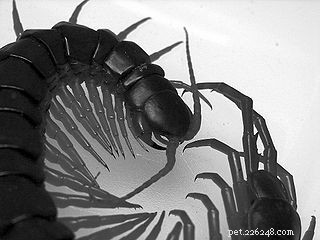
Uploaded to Wikipedia Commons by Matt Reinbold
Centipedes are very fast, can scale glass, and are able to squeeze through unbelievably small openings…escapes are not uncommon, even in zoos. And once out, they are almost impossible to find – or forget! I should know – I’ve helped recapture animals ranging from Snow Leopards to Kodiak Bears, but concerns caused by an escaped Giant Centipede lingered longest of all; please see the article below for details.
Venom
Bites from Giant Centipedes and related/unrelated species (identification is difficult, even for experts) have caused fevers, dizziness, cardiac problems, breathing difficulties, and fatalities. A co-worker of mine was bitten by what appeared to be a Giant Centipede while working in Brazil. He was hospitalized for nearly a week, and was in very bad condition for much of that time. Individual sensitivities and allergies can complicate medical treatment, although I do not know if that was the case for my friend. Other colleagues report similar reactions to the bites of smaller species in several far-flung countries.
As we know little about centipede venom, they should be kept only by responsible, well-experienced adults. Before keeping Centipedes, discuss the matter with your physician and make certain that treatment will be available if needed. Be sure to explain that species identification may be impossible; for example, 6 species have been sold under a single trade name, and individuals of the same species may exhibit an array of different colors.
Classification
Taxonomists place Centipedes and Millipedes in the same subphylum, Myriapoda, but any similarities end there. Chilopoda, the class to which Centipedes are assigned, contains over 3,000 species (10,000+ millipedes have been described), and many times that number no doubt await discovery.
Range and Habitat
Centipedes are found on all continents except Antarctica, and have adapted to life in deserts, grasslands, caves, rainforests, sea shores, cities and many other environments. The habitats of some are quite surprising…several range into the Arctic Circle, and in 2002 a new species was discovered in NYC’s Central Park.
Uploaded to Wikipedia Commons by NNeilAlieNN
Diet
Centipedes are formidable predators that consume a wide variety of insects and other invertebrates. The Amazonian Giant Centipede, the world’s largest (females may exceed 12 inches in length), and similarly-sized species also take bats, tarantulas, rodents, frogs, lizards, and small birds. Extinct forms topped 3 feet in length…imagine their hunting abilities – or having one at large in your home!
Defense
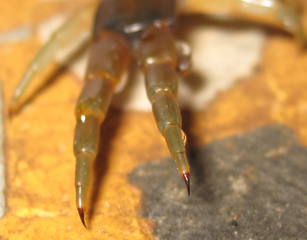
When attacked, Centipedes release chemical irritants and bite with venom-injecting fangs. The fangs, which are actually modified appendages, are also known as maxillipeds or forcipuls. Sharply-pointed rear legs (please see photo), which can inflict wounds of their own, serve to distract enemies from the head.
Please check out my posts on Twitter and Facebook. Each day, I highlight breaking research, conservation news and interesting stories concerning just about every type of animal imaginable. I look forward to hearing about your interests and experiences as well, and will use them in articles when possible.
Please also post your questions and comments below…I’ll be sure to respond quickly.
Thanks, until next time,
Frank Indiviglio
- Managing Dominant and Aggressive Cat Behaviors: Tips for a Harmonious Home
- Are Giant Centipedes and Millipedes Suitable Exotic Pets?
- Giant Centipedes: Bat Hunters, Survivors, and Safety Tips – Part 1
- Giant Centipedes: Bat Hunters, Escape Tales & Safety Tips – Part 2
- Giant Turtles: Insights from Working with the World’s Largest Freshwater Species
- Master Consistent Dog Tricks Anywhere with Sojos
- Effective Dog Training: Treats, Praise, and Proven Techniques