

School vs. Shoal: The Science Behind Fish Grouping
When you spot a cluster of fish in the water, you might think they’re simply swimming together. In reality, the way they move and interact tells a story about their species, purpose, and survival strategies. The two main types of fish gatherings—schools and shoals—are often confused, but they differ in coordination, composition, and behavior.
What Is a School of Fish?
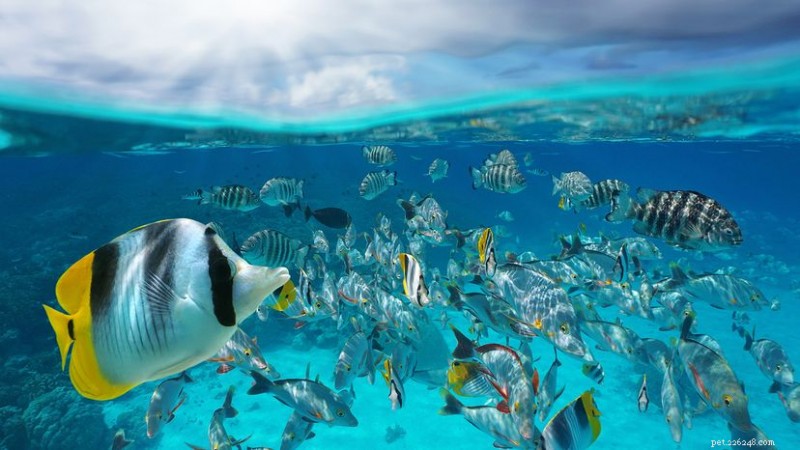
A school is a highly synchronized, tight‑packed group of fish that swim at the same speed and in the same direction. Typically, all members belong to the same species and are of similar size. This precise coordination is not accidental; it’s a deliberate strategy to protect against predators. The collective motion can create optical and acoustic confusion for predators like sharks or swordfish. In extreme situations, schools can form a spinning bait ball—an almost solid sphere of fish—maximizing safety for all members.
What Is a Shoal of Fish?
A shoal is a more relaxed gathering. While it may still offer protection and resource‑finding benefits, the fish in a shoal are not required to move in perfect unison. Shoals can include multiple species and a wide range of sizes. The group may drift together simply because it’s socially rewarding or because the fish are feeding, nesting, or exploring new territory. Shoals can grow or shrink quickly and often transition into a school if a predator appears.
How Fish Coordinate in Schools
Fish rely on an internal sensory system called the lateral line to detect pressure changes and vibrations in the water. This allows each fish to react almost instantaneously to the movements of its neighbors, maintaining the tight formation. The benefits are tangible: by drafting behind one another, fish reduce drag and expend less energy—much like cyclists riding in a peloton. Social learning also plays a role; experienced fish can lead the group, and younger fish quickly copy the established patterns.
Can Different Species Form a School?
While most schools are single‑species affairs, mixed‑species schools can appear temporarily, especially during feeding events or when predators loom. These mixed groups are usually short‑lived and tend to form near coral reefs or abundant food sources. In contrast, shoals are inherently more open to species diversity.
Why Do Fish Group Together?
- Predator avoidance: A coordinated mass creates visual and acoustic chaos that makes it hard for a predator to single out a target.
- Enhanced foraging: Schools and shoals can locate and exploit food sources faster than solitary fish.
- Social communication: Subtle body language and coordinated movements allow fish to share information about food, predators, and mating opportunities.
Do All Fish Form Groups?
Not every fish species schools or shoals. Some, like the Humboldt squid or certain large salmon, are largely solitary. Many species only school during juvenile stages or for specific life‑history events such as spawning. As fish mature, some drop out of group living, especially when they become territorial or during nesting periods.
Other Collective Nouns for Animals
While “school of fish” is a familiar collective noun, the animal kingdom boasts many colorful terms: a murder of crows, a shiver of sharks, a squadron of manta rays, and a knot of sea snakes, to name just a few.
These fascinating dynamics illustrate how evolution has shaped not just individual survival tactics but also complex social structures within aquatic ecosystems.
- 24 Spiders Commonly Found in Iowa: Facts & Safety Insights
- From Puppy to Full-Grown Beagle: Your Complete Guide
- Safe & Joyful Bonds: Kids & Dogs Together
- 5 Compelling Reasons a Dog Is the Perfect Gift for Your Child
- How to Safely Tie a Bow on Your Dog: A Step-by-Step Guide
- Belgian Malinois vs. German Shepherd: Which Working Dog Suits Your Lifestyle?
- Which Hamster Breed Is the Friendliest? A Guide to Choosing the Most Affectionate Companion