

Convict Cichlid Profile: Characteristics, Care & Breeding Guide
 In This Article
- Characteristics
- Origin
- Colors and Markings
- Tankmates
- Care
- Diet and Feeding
- Gender Differences
- Breeding
- Further Research
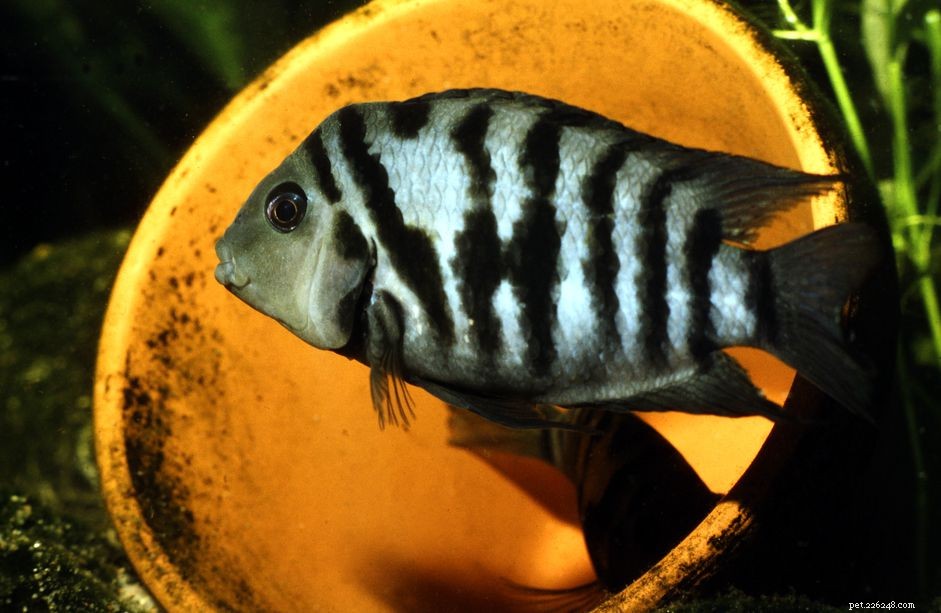
The Convict Cichlid is an aggressive Central American cichlid. Named for their striking black bars along their body, these freshwater fish are good for intermediate hobbyists with an established background in cichlids. Due to their aggressive nature, they are not suited for community tanks.
Species Overview
Common Names: Convict Cichlid, Black Convict Cichlid, Zebra Cichlid
Scientific Name: Archocentrus nigrofasciatus
Adult Size: 6 inches
Life Expectancy: 8 to 10 years
Characteristics
Origin and Distribution
Native to Central America, the Convict Cichlid has been raised in captivity for many generations, providing some protection for native fishes. Their scientific name, Amatitlania nigrofasciataI, describes them as from a region known for its rustic paper made from the Rock Fig (Ficus petiolaris).
Colors and Markings
The Convict Cichlid most commonly has a grey to silver body with multiple black vertical bars along the length of its body. These fishes may have iridescent patches along their elongated anal and dorsal fins. During breeding, female Convict Cichlid bellies may be slightly orange or red. There is an "albino" variety bred in the aquarium community that is also referred to as a Pink, White, or Gold Convict Cichlid. These leucistic fishes lack the Convict Cichlids' black barring.
Tankmates
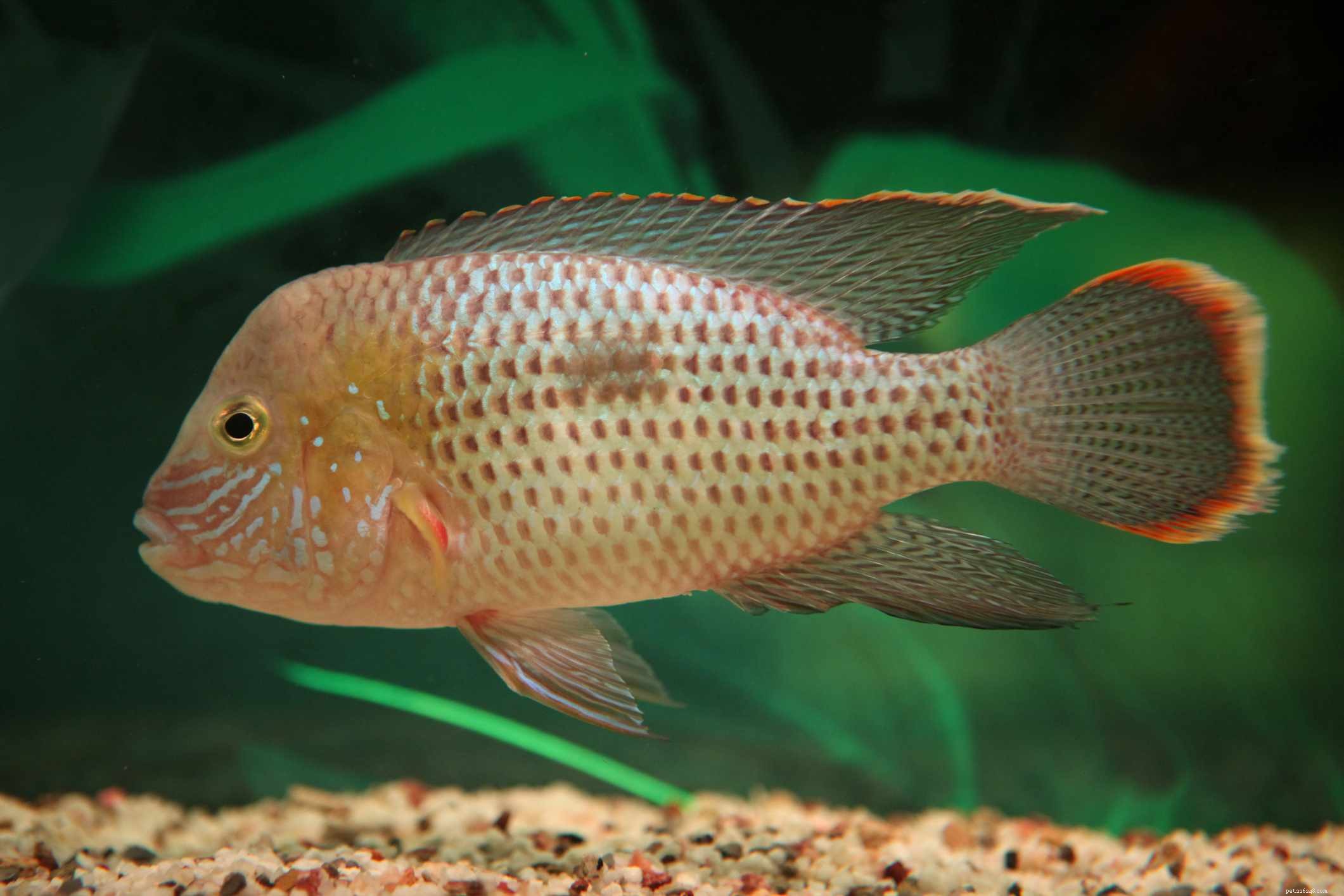
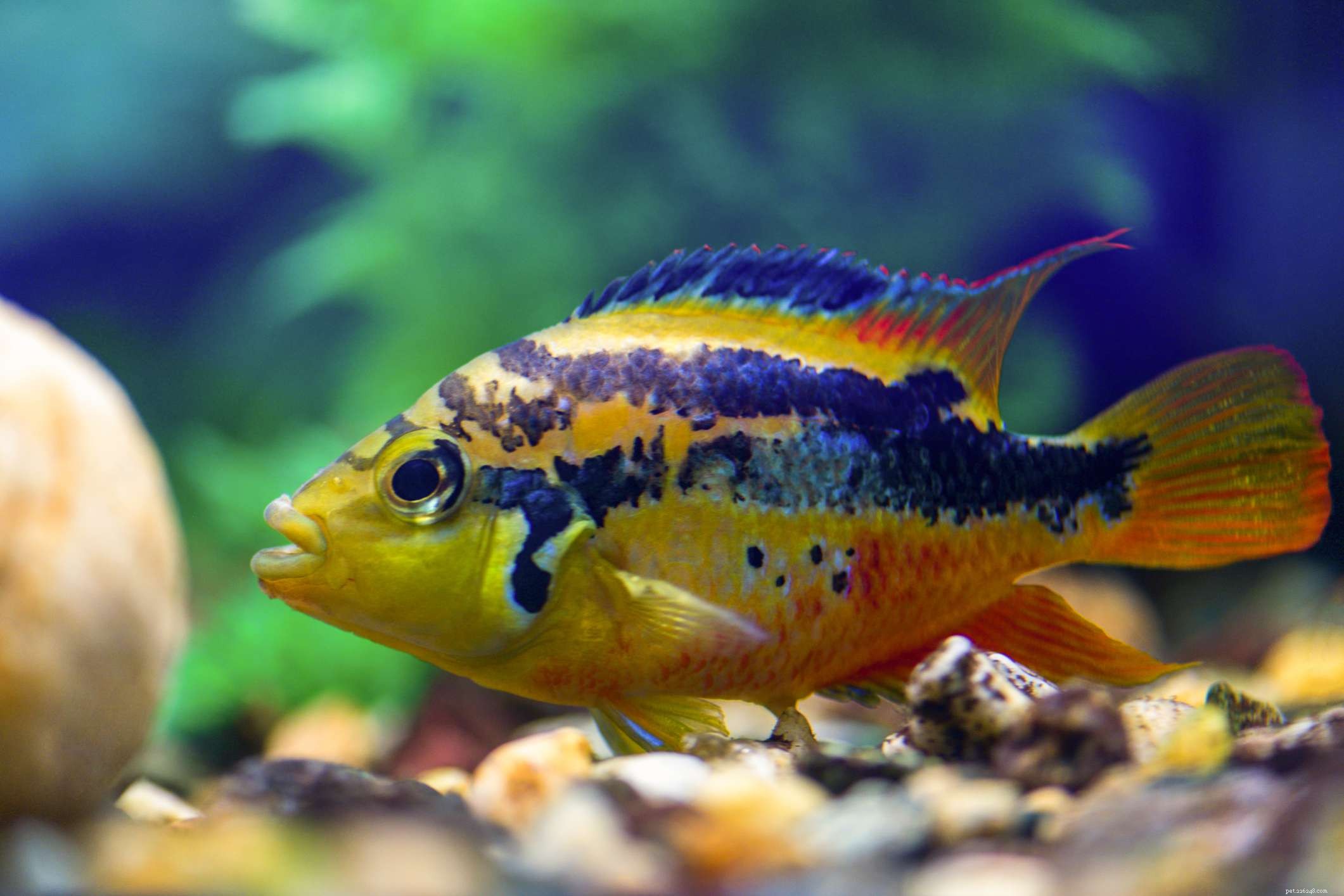
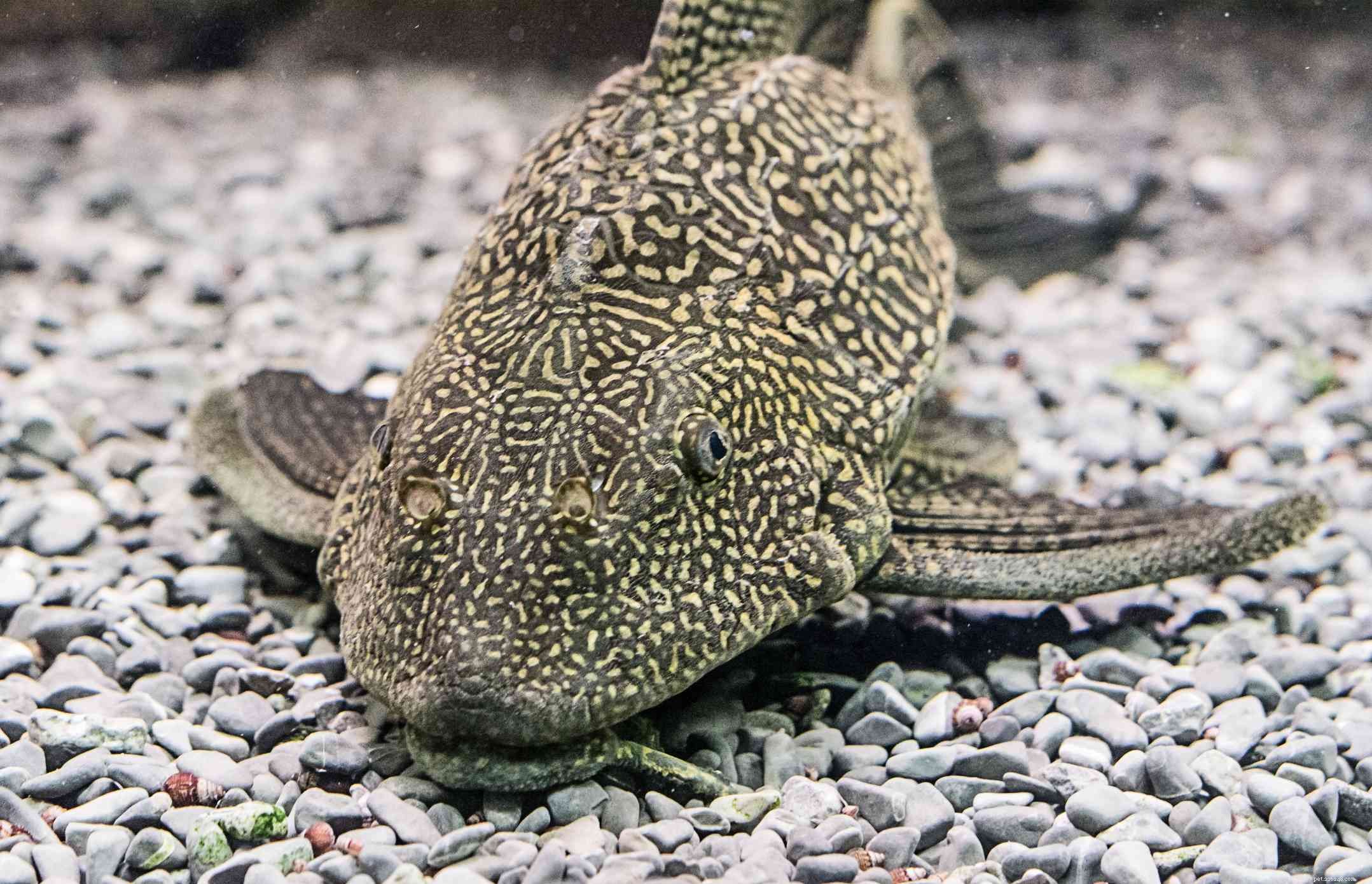
Due to their aggressive nature, be careful when selecting tank mates for the Convict Cichlid. Try to choose similar South American cichlid species that can hold their own. If you plan on breeding a pair of Convict Cichlids, it is best to keep them isolated from other fishes, given the pair will viciously protect their egg mass. Suitable tankmates include Green Terrors, Salvini Cichlid or Suckermouth Catfish.
Convict Cichlid Habitat and Care
Due to their environmental requirements, Convict Cichlids are not recommended for beginners. Although fairly tolerant of water quality, Convict Cichlids are very territorial and need to have an appropriate environment of plants, rocky substrate, and solid caves, such as branches or pots, in order to do well in captivity. If you plan on breeding your Convict Cichlids, they will require a cave and loose, rocky substrate to lay their eggs.
Being aggressive fish, if you are adding a Convict Cichlid or a pair to an established tank, be sure to add them last. This will allow less aggressive fish to stake their territory first. But be aware, if there isn't enough room for everyone with suitable places to call their own, the Convict Cichlid will quickly oust less aggressive fishes.
Convict Cichlid Diet and Feeding
Since they are raised in captivity, the Convict Cichlid readily accepts a pelleted diet. There are many cichlid diets that are appropriate for a South/Central American cichlid tank. They will snack on some plants and invertebrates in their tank, so keep shrimp and snails away! Their omnivore nature allows them to snack on all sorts of treats, from fresh vegetables to frozen or dried meaty treats.
Gender Differences
If they are young or not interested in breeding, it is very hard to differentiate male from female Convict Cichlids. During spawning season, the females will develop a orange patch on their bellies. Males may start to grow a more prominent forehead, which is actually a hormone-directed coalescence of fat.
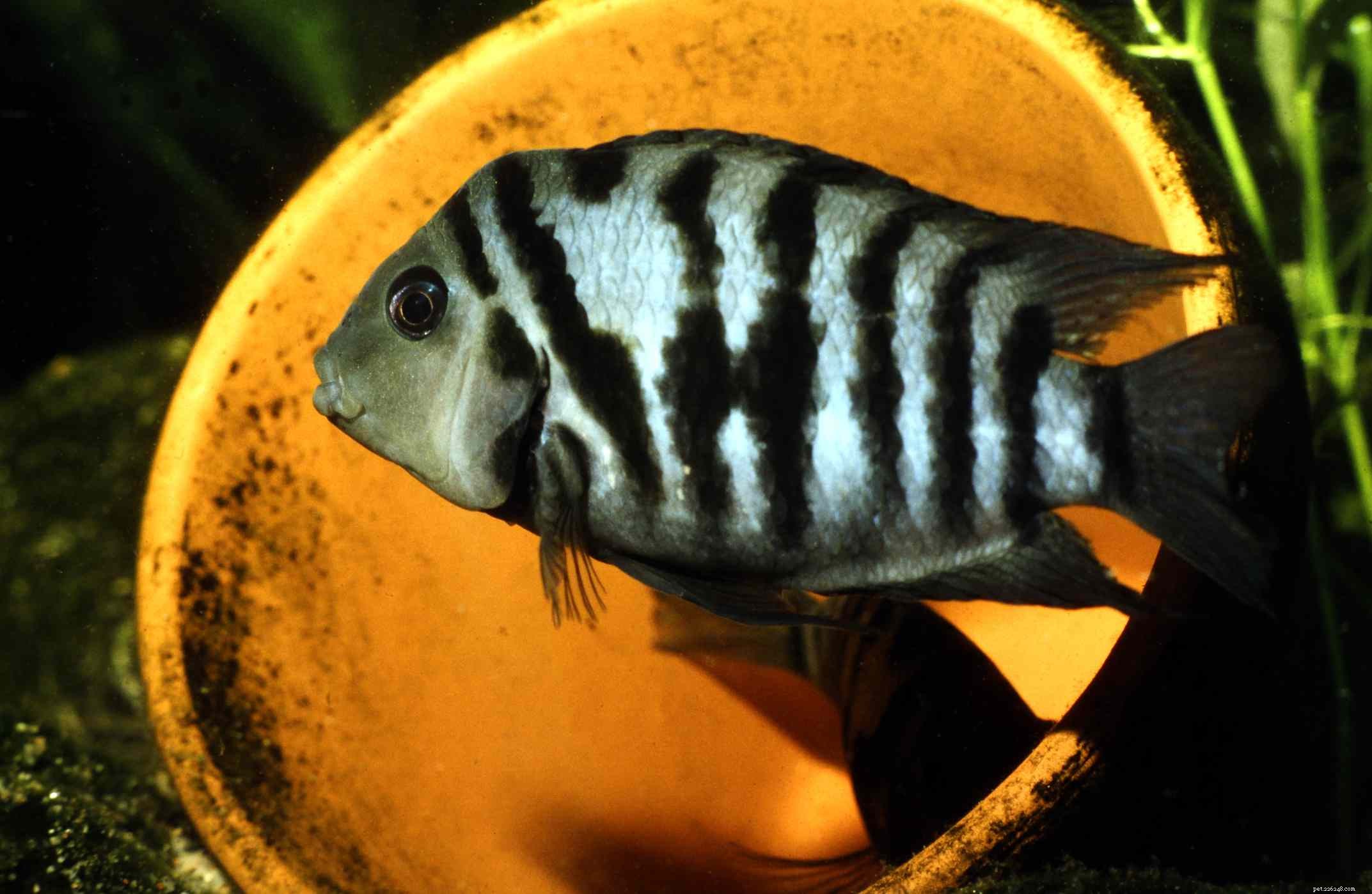
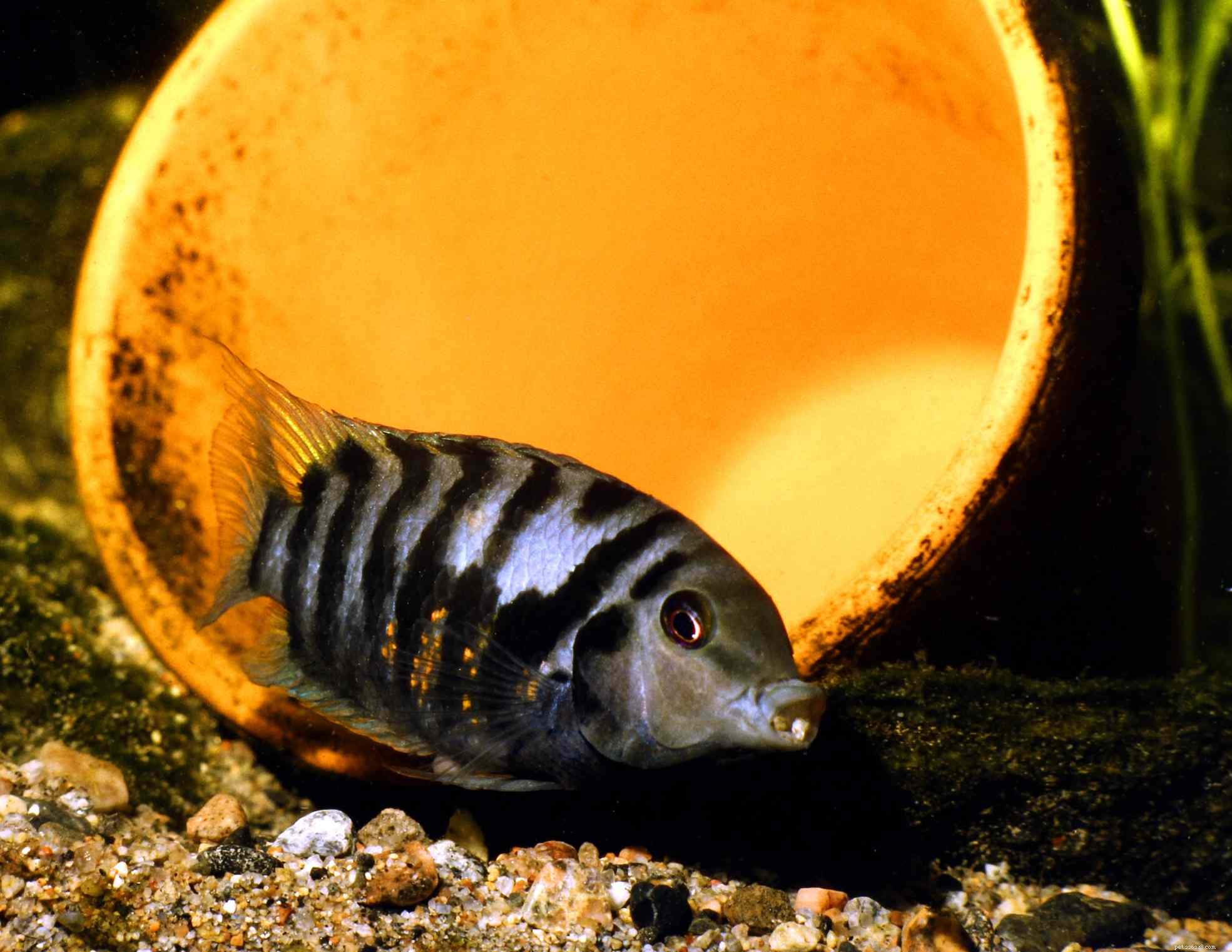
Breeding the Convict Cichlid
Most Convict Cichlid breeding pairs will require a cave or crevice to lay their eggs. The super-sticky eggs will adhere to the walls of the cave and be viciously guarded and fanned to provide aeration by both parents. You can encourage your Convict Cichlids to breed by providing a suitable cave, often supplemented by a pot turned on its side (see above images), and slightly increasing the water temperature to 75 to 79 F (24 to 26 C).
Fertilized eggs will hatch approximately 3 days later. The fry will stick closely to their cave, but venture out during the night to forage for food. It is critical to provided additional protein and fat to developing fry. Most Convict Cichlids are bred in separate breeding tanks where the diet can be more controlled and competition from other fish is limited. You may see your adult Convict Cichlids sucking their babies into their mouths. This is normal behavior, exhibited by many cichlid species, to protect their young and transport them safely.
More Pet Fish Species and Further Research
If you like the Convict Cichlid, check out these other similar species:
- Blood Parrot Cichlid Fish Species Profile
- Texas Cichlid (Rio Grande Perch) Fish Species Profile
- Jewelfish (Ruby Cichlid) Fish Species Profile
Check out additional fish breed profiles for more information on other freshwater fish.
- Convict Tang (Acanthurus triostegus): A Comprehensive Species Profile
- Koi Carp: Comprehensive Species Guide – Colors, Care, and Breeding
- Comet Goldfish: Complete Species Guide for Beginners
- Oscar Fish (Cichlidae) – Comprehensive Species Profile
- The Dottyback (Pseudochromis spp.): A Comprehensive Fish Species Profile
- Texas Cichlid (Rio Grande Perch): Comprehensive Species Profile & Care Guide
- Kribensis Cichlid: A Comprehensive Guide to Care, Color, and Breeding