

Hamster Cage Setup: Expert Guide to a Healthy, Enriching Home
Whether you’re new to hamsters or looking to upgrade your pet’s space, this guide offers a comprehensive, science‑backed approach to building a cozy, stimulating cage.
By thoughtfully designing your hamster’s enclosure, you provide a dynamic environment that encourages natural activities—exploration, digging, and foraging—while preventing stress‑related behaviors such as cage biting.
While minimalist cages may seem convenient, they fail to meet a hamster’s inherent need for space. These rodents can run up to 6 miles a day in the wild, and a cramped cage restricts that essential exercise, leading to unhappiness.
A Suitable Cage
Start with a cage that meets ethical minimums: at least 775 square inches (5,000 cm²). Pet‑shop “mini” cages typically fall short, lacking room for deep bedding, a wheel, a sand bath, and enrichment items.
Options include a ready‑made cage of the appropriate size, a spacious aquarium, or a DIY setup using a plastic bin or a repurposed IKEA closet like the Detolf.
For more sizing guidance, see our best hamster cages guide and use our cage calculator to confirm your enclosure meets the minimum requirements.
Safe & Deep Bedding
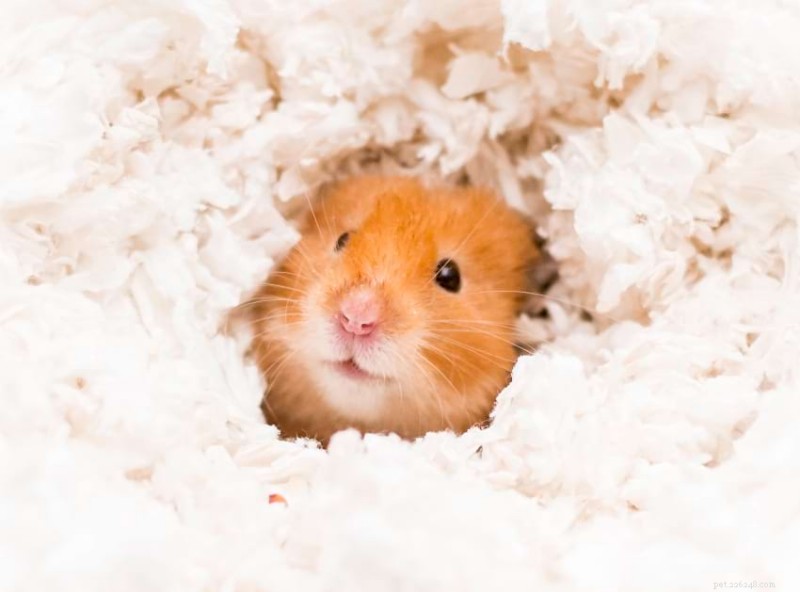
Deep, safe bedding is crucial because hamsters are burrowers. They need at least 6 inches of bedding for dwarf or Chinese species and 10 inches for Syrians—12 inches is ideal for the latter.
Research indicates that hamsters housed in deeper bedding exhibit significantly fewer signs of stress, such as cage biting.
How Much Bedding to Use?
- Dwarf & Chinese: minimum 6″, 10″ recommended.
- Syrian: minimum 10″, 12″ preferred.
Use our bedding calculator to determine the exact quantity needed for your cage size.
Choosing Bedding
- Paper bedding (non‑scented, burrow‑friendly)
- Aspen shavings (may need reinforcement with paper or hay)
- Optional textures: coconut fiber, shredded cardboard, coco husk, sphagnum moss.
All substrates should be non‑scented, non‑toxic, and capable of holding burrows. Mixing materials adds variety and tactile interest.
Nesting Material
Provide soft hay—botanical or orchard—as a base for nest building, and consider adding toilet paper sheets or paper napkins for additional nesting options.
Hidey House

A wooden hideout offers chew‑safe material and can be purchased floor‑free for easy cleaning. Multi‑room houses allow your hamster to separate nesting from food storage, mirroring natural behavior.
A Wheel
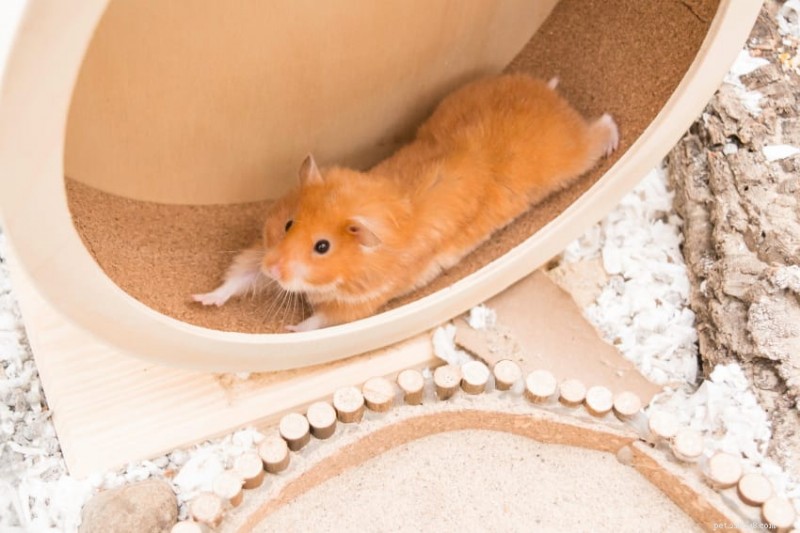
Wheels must be solid, without bars or mesh, and appropriately sized: 8″ for dwarfs, 10″ for Chinese, 11″ for Syrians. Avoid flying saucers; they do not provide the same exercise benefit.
Sand Bath

A shallow container filled with hamster‑safe sand keeps fur clean without the stress of water. Suitable sands include reptile sand, chinchilla bathing sand, or heat‑treated children’s play sand (sifted to remove large grains).
Avoid dust, scented, or mineral‑added sands, as they can cause respiratory irritation.
Food & Water Accessories
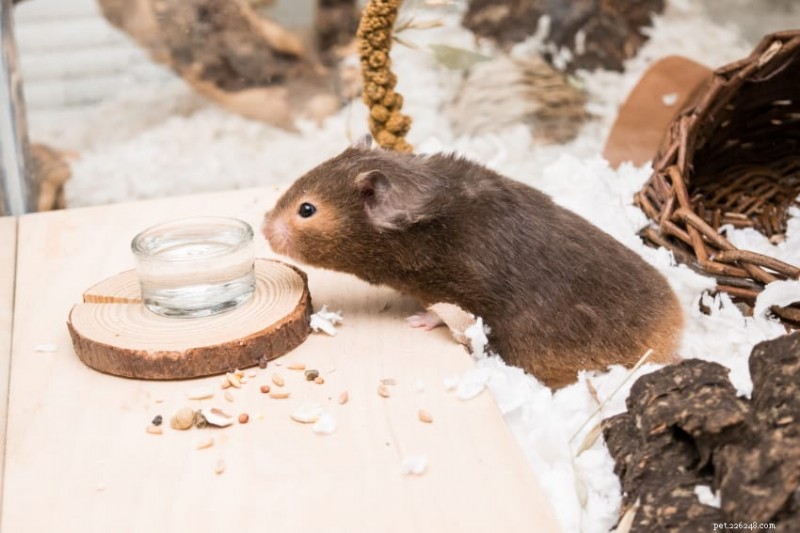
Scatter dry food to encourage foraging, and use a small bowl or bottle for water. Both are safe if the bowl is <3 inches (8 cm) in diameter. Regularly check bottles for blockages.
Cage Accessories
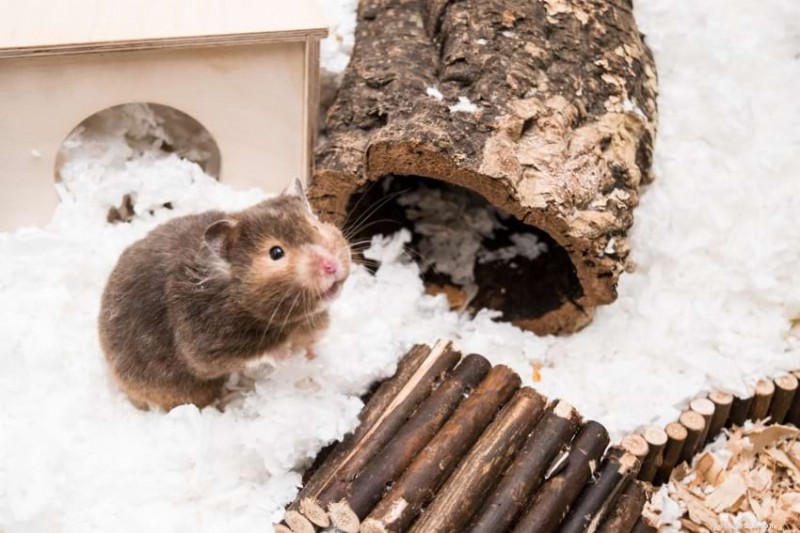
Enhance enrichment with bridges, cork logs, tunnels, and chew toys. Safe chewables include herbs, branches (cleaned and dried), cardboard tubes, and willow balls. Ensure any natural wood is free of chemicals and parasites.
Common Mistakes to Avoid
Typical errors include: cages that are too small, insufficient bedding, unsuitable bedding that blocks burrowing, wheels that are too small, and a lack of enrichment.
Maintenance Schedule
Clean your cage once a month if it’s 775 in² or larger, after spot‑cleaning regularly. Keep at least ¼ of the old bedding to maintain a familiar scent and reduce stress during cleaning.
The Impact of a Well‑Designed Cage
Your hamster’s enclosure is its entire world. A thoughtfully arranged cage promotes natural behaviors, improves health, and enhances overall wellbeing. Design from the hamster’s perspective to create a habitat that reflects their wild instincts.
- 74 Celebrity Dog Names: Star-Studded Inspiration for Your Furry Friend
- Why Dogs Are Attracted to Dirty Underwear: Understanding the Behavior
- Do Cats Exhibit Autism-Like Traits? Understanding the Debate
- Dartmoor Pony: Comprehensive Breed Profile & Care Guide
- Why Cats Groom Each Other: Bonding, Instinct, and Health Insights
- Can Birds Safely Eat Potatoes? Benefits, How to Prepare, and Key Precautions
- Entropion in Dogs: Causes, Symptoms & Effective Treatments