

How Much Bedding Do Hamsters Need? A Practical Guide & Bedding Calculator
Hamsters are instinctive burrowers, naturally constructing intricate underground networks where they sleep, store food, and even have dedicated toilet chambers. While a wild hamster’s burrow can reach depths of 55–65 cm (22–26 in), pet owners can’t match that, but they can still create a comfortable, stimulating environment by providing adequate bedding.
Only an inch or two of bedding will not satisfy a hamster’s natural digging instinct. The following guide details the optimal bedding depth for each species, explains the benefits of deep bedding, and shows how to calculate the exact amount you need.
How Many Inches of Bedding Does a Hamster Need?
The required bedding depth varies by species. Use the following guidelines to ensure your hamster can burrow comfortably.
Syrian Hamsters
Syrians are the largest pet hamster, reaching 5–7 in (13–18 cm). They need a generous bedding layer to support their size and activity. Aim for 12 in (30 cm) of bedding, but never drop below the minimum of 10 in (25 cm). A simple visual check: imagine three Syrians stacked; if you can bury the top one, the bedding is adequate.
Dwarf & Chinese Hamsters
Smaller dwarf and Chinese species should have at least 10 in (25 cm) of bedding, with a firm minimum of 6 in (15 cm). Sufficient bedding encourages natural burrowing and reduces stress, lowering the likelihood of destructive behaviors such as bar gnawing or escape attempts.
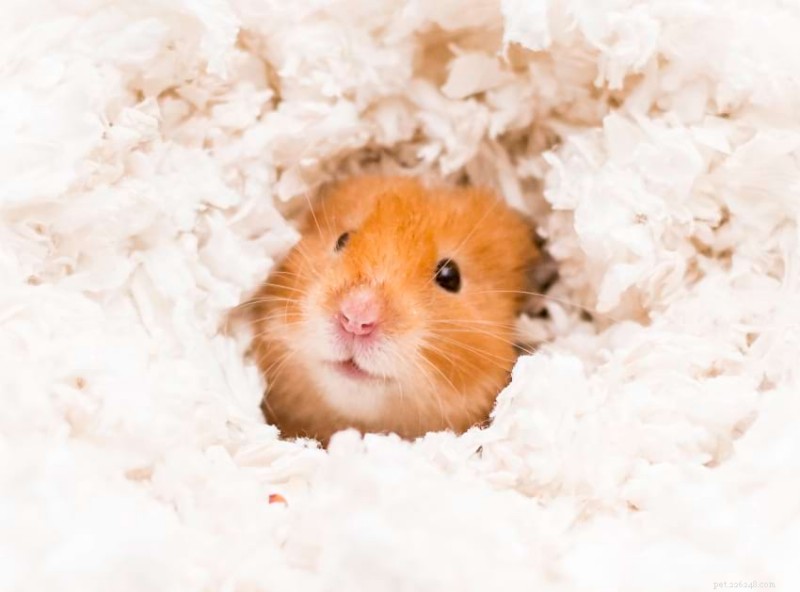
How Does Deep Bedding Benefit Hamsters?
Less Stress
Studies have shown that Syrian hamsters housed with 10 cm (4 in) of bedding exhibit increased wire gnawing and wheel activity compared to those with 40 cm (16 in) or 80 cm (32 in). In fact, hamsters with 80 cm of bedding did not gnaw at all, and all groups with 40 cm or more successfully dug burrows. These findings underscore that deeper bedding enhances comfort and reduces stress.
It Fulfills Their Natural Burrowing Instinct
Burrowing provides hamsters with a safe refuge from predators. Even in a domestic setting, the inability to dig can trigger escape behaviors. Providing ample bedding lets them build tunnels, offering a sense of security and reducing anxiety.
Your Hamster Cage Should Allow Burrowing
Many commercial cages are too shallow to accommodate proper bedding. An ethically sized cage should allow a minimum bedding depth of 6 in (15 cm) for metal‑barred models; deeper bedding is preferable. Alternatives such as aquariums or plastic bins can hold more bedding, but ensure the base remains high enough to accommodate a suitable wheel on top.
For elongated but shallow cages—like the DIY Ikea Detolf model—fill one side with bedding to the top and reserve the other side for a wheel and a sand bath.

What to Use as Hamster Bedding
Choose bedding that is:
- Dust‑free
- Unscented
- Non‑toxic (safe if ingested)
- Sturdy enough to hold burrows without collapsing
Preferred options include:
- Paper bedding (e.g., Kaytee Clean & Cozy, Carefresh)
- Aspen wood shavings (e.g., Niteangel)
Combining paper and aspen can offer varied textures. Some aspen shavings may not hold burrows well, so mixing with paper or hay improves stability.
A thin layer of long‑strand soft hay can be added on top as a nesting booster.
Avoid:
- Cedar or pine shavings – contain phenols that are hazardous to hamsters.
- Fluffy cotton bedding – risk of ingestion blockage and entanglement.
Safe but unsuitable as primary bedding:
- Paper pellets – do not support burrowing.
- Soft granule bedding – adds variety but lacks burrow stability.
- Toilet paper – good nesting but poor odor control; must be changed daily.
How to Calculate How Much Bedding You Need to Buy
Follow these steps to determine the exact volume of bedding required for your cage:
- Compute the cage’s footprint: width × length (in inches). Example: 36″ × 18″ = 648 sq in.
- Multiply the area by the desired bedding depth (in inches). 648 sq in × 10 in = 6,480 cubic in.
- Convert cubic inches to liters: multiply by 0.016387. 6,480 × 0.016387 ≈ 106 L.
Paper bedding is typically compressed; its expansion volume is listed on the package. Since you will press it down for burrowing, purchase approximately double the expansion volume to ensure a full 10 in depth. For instance, if the calculator indicates 100 L, buy 150–200 L of paper bedding.
Hamster Bedding Calculator
Use our online calculator by entering cage width, length, and desired bedding depth (inches or centimeters). It will output the required liters of bedding.
Remember: for paper bedding, purchase 1.5–2× the expansion volume to account for compaction.
Deep Bedding = Happier Hamster
Deep bedding is fundamental to a hamster’s physical and mental well‑being. It enables natural digging, burrow construction, and a sense of safety. If your hamster displays stress signs—bar gnawing, constant escape attempts—reassess the cage and bedding depth. Provide at least 10 in (12 in for Syrians) of bedding; if your current cage cannot accommodate this, upgrade to a larger, more suitable enclosure.
- Nose Work for Dogs: Enrich Your Pet’s Life with Scent‑Based Activities
- Are Strawberries Safe for Dogs? Nutritional Benefits & Feeding Tips
- Choosing the Ideal Dog Food: A Comprehensive Guide by Age, Weight, and Health
- Bloodhound FAQs: Expert Answers on the Loyal Tracking Hound
- Can a Landlord Legally Evict You for Owning a Pet?
- When a Cat Shows Love: Simon’s TikTok Moment Proves Feline Affection Matches Dog Devotion
- Unveiling the Mystery: Why Cats Are Attracted to Squares