

Hamster Nutrition Guide: Safe Foods, Unsafe Foods, and Feeding Tips
Hamsters are delicate pets that thrive on a balanced diet. Incorrect food choices can compromise their health, but with a clear guide, you can ensure your pet receives the nutrition it needs.
Below is a comprehensive, evidence‑based list of safe and unsafe foods for all hamster species, plus practical feeding guidelines.
Subscribe to our newsletter on the sign‑up form or here to receive free printables, including the Safe & Unsafe Hamster Food List. Print it and keep it handy for quick reference.
Let’s get started!
How to Feed Fresh Food to Hamsters
Fresh vegetables and greens should complement your hamster’s standard diet. Offer a variety of veggies or herbs a few times a week, or a small piece daily. A good rule of thumb is to serve a portion the size of your hamster’s ear.
Introduce new foods slowly to avoid digestive upset. If a food triggers “wet tail” (diarrhea) or any adverse reaction, discontinue it immediately.
Because fresh produce spoils quickly, remove any uneaten portions the same day you offer them, and check the hamster’s stash for hidden leftovers.
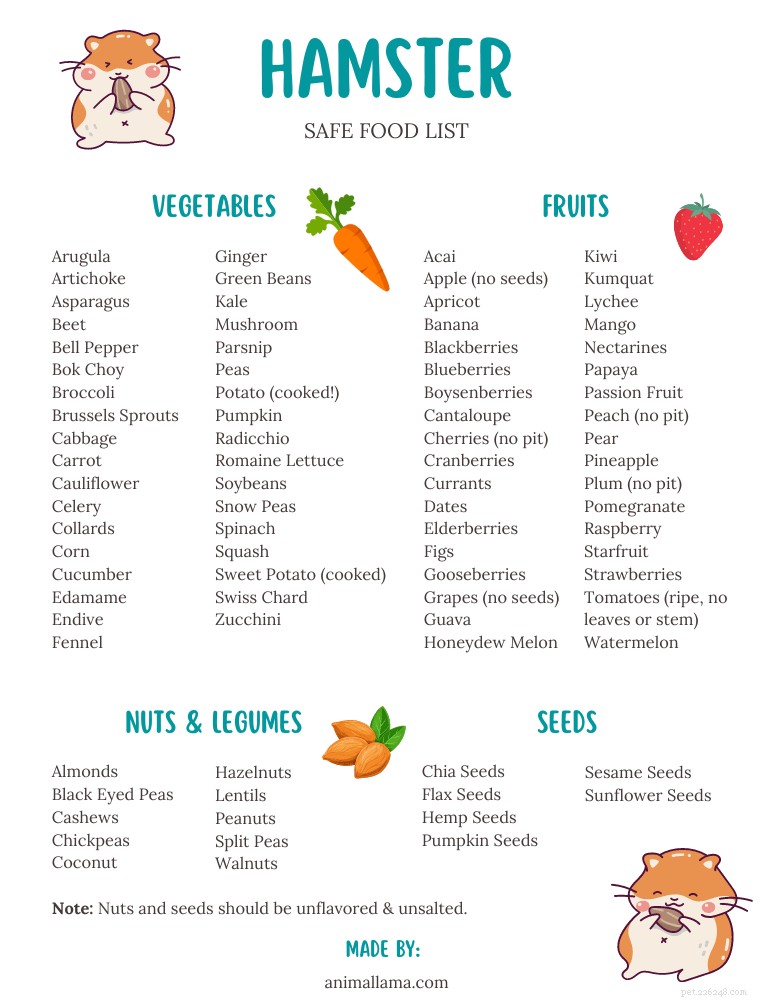
Safe Vegetables List for Hamsters
Arugula, Ginger, Artichoke, Green Beans, Asparagus, Kale, Beet, Mushroom, Bell Pepper, Parsnip, Bok Choy, Peas, Broccoli, Potato (cooked), Brussels Sprouts, Pumpkin, Cabbage, Radicchio, Carrot, Romaine Lettuce, Cauliflower, Soybeans, Celery, Snow Peas, Collards, Spinach, Corn, Squash, Cucumber, Sweet Potato (cooked), Edamame, Swiss Chard, Endive, Zucchini, Fennel, and more.
Key guidelines:
- Green, raw potatoes contain solanine and should never be fed raw. Only cooked, unsalted potatoes are safe.
- Garlic and onion can be offered cooked, but feed them in moderation. Raw versions may upset sensitive stomachs.
Foods to avoid:
- Hot peppers (e.g., chili)
- Eggplant (aubergine)
- Raw broad and kidney beans (high in lectin). Cook these beans before feeding.
Safe Fruits List for Hamsters
Many dwarf species (Campbell’s, Chinese) are prone to diabetes, so fruit should be a treat rather than a staple. Syrian hamsters are less susceptible but still benefit from limited fruit.
Recommended fruits (seed‑free where applicable): Acai, Kiwi, Apple, Kumquat, Apricot, Lychee, Banana, Mango, Blackberries, Nectarines, Blueberries, Papaya, Boysenberries, Passion Fruit, Cantaloupe, Peach (no pit), Cherries (no pit), Pear, Cranberries, Pineapple, Currants, Plum (no pit), Dates, Pomegranate, Elderberries, Raspberry, Figs, Starfruit, Gooseberries, Strawberries, Grapes (seed‑free), Ripe Tomatoes, Guava, Watermelon, Honeydew Melon.
Avocado is high in fat; feed only in small amounts and avoid pit, skin, and leaves.
Citrus fruits are acidic but safe in moderation. They can even offer health benefits. Avoid excessive quantities due to sugar content.
Ripe tomatoes are fine, but never give leaves or stems, which are toxic.
Steer clear of fruit pits and seeds that contain amygdalin (cyanide precursor) if you suspect large ingestion.
Nuts & Legumes
Almonds, Hazelnuts, Black‑Eyed Peas, Lentils, Cashews, Peanuts, Chickpeas, Split Peas, Coconut, Walnuts.
Offer unflavored, unsalted nuts. Human‑grade almonds are safe; avoid bitter almonds that contain hydrogen cyanide.
Because nuts are calorie‑dense, use them sparingly as enrichment treats.
Seeds
Chia, Pumpkin, Flax, Sesame, Hemp, Sunflower seeds.
Like nuts, keep seeds unsalted and unflavored. A few per meal is sufficient.
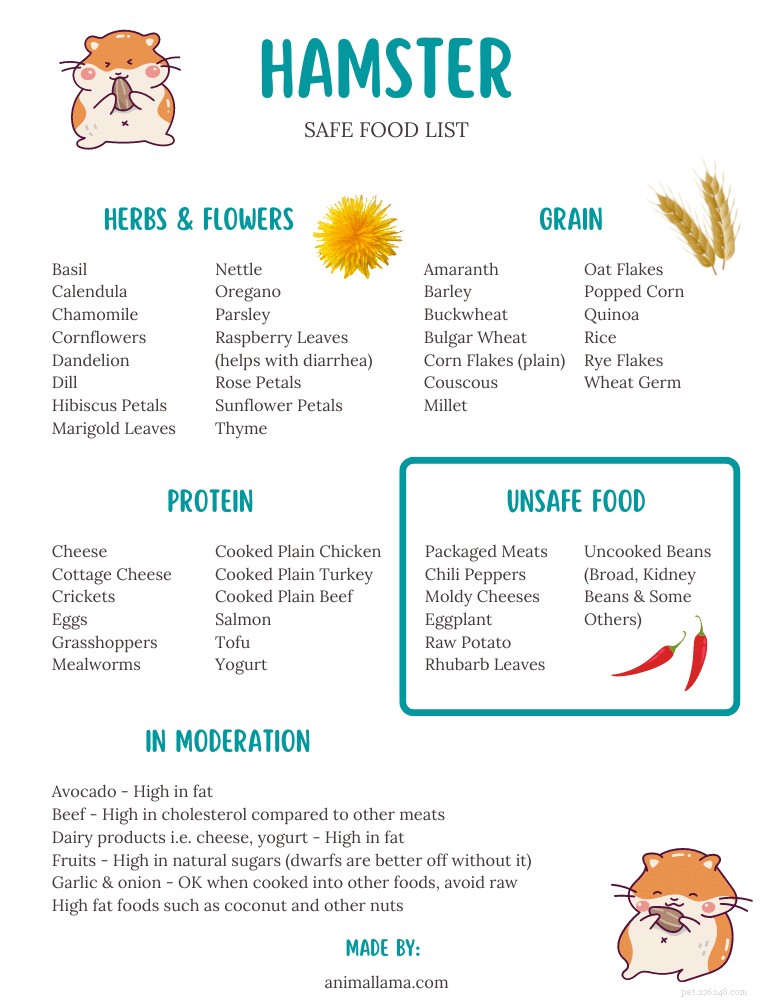
Herbs & Flowers
Basil, Nettle, Calendula, Oregano, Chamomile, Parsley, Cornflowers, Raspberry Leaves, Dandelion, Rose Petals, Dill, Sunflower Petals, Hibiscus Petals, Thyme, Marigold Leaves.
Fresh culinary herbs or dried varieties enrich foraging behavior and add variety.
Grains
Amaranth, Oat Flakes, Barley, Popped Corn, Buckwheat, Quinoa, Bulgur, Wheat, Rice, Corn Flakes (plain), Rye Flakes, Couscous, Wheat Germ, Millet.
Grains form a major part of commercial hamster mixes. Offer a small supplementary amount as a treat.
Protein
Cheese, Cooked Plain Chicken, Cottage Cheese, Cooked Plain Turkey, Crickets, Cooked Plain Beef, Eggs, Salmon, Grasshoppers, Tofu, Mealworms, Yogurt.
Hamsters are omnivores; insect proteins like mealworms, crickets, and grasshoppers closely mimic their natural diet. Cooked, unseasoned meats and eggs are acceptable, but limit beef due to cholesterol; lean chicken is preferable.
Foods to Offer in Moderation
High‑fat or high‑sugar items should be limited:
- Avocado – small, infrequent portions.
- Beef – occasional treat.
- Dairy (cheese, yogurt) – occasional.
- Dried fruits – avoid for diabetes‑prone dwarfs; use fresh only.
- Cooked garlic & onion – okay; raw versions not recommended.
- High‑fat nuts and coconut.
- Sugary treats (e.g., yogurt drops).
Unsafe Foods for Hamsters
These items pose significant health risks and should be excluded:
- Raw broad and kidney beans (high lectin).
- Packaged meats (deli or canned).
- Hot peppers.
- Blue cheese or other moldy cheeses.
- Eggplant (solanine).
- Raw green potatoes.
- Rhubarb leaves.
References
- Ontario Hamster Club: “Safe & Unsafe Foods” – scientific research on controversial foods.
- Happy Paws Hamsters: “Food & Nutrition.”
- Hamster Society Singapore: “Hamster Fresh Food Guide.”
Get the Printable Food List
Enter your email in the sign‑up form or here to receive the “Safe & Unsafe Hamster Food List” printable and additional care printables.
- Tick Paralysis in Dogs: Immediate Steps to Take When Your Pet Appears Paralyzed
- Whippet Dog Breed Profile: Origin, Traits, and Care Guide
- 11 Definitive Signs Your Leopard Gecko Is Dying: Care & Timeline Guide
- Why Do Cats Paw At Their Water? Understanding Their Curious Drinking Habits
- How I Empowered My Dog With a Life‑Changing Skill
- Black Phantom Tetra (Hemigrammus sp.) – Comprehensive Care, Breeding & Habitat Guide
- Veteran Reunites With Retired Military Dog After Four-Year Separation