

Optimal Temperature Ranges for Hamsters: Keeping Your Pet Warm and Healthy
Your tiny companion’s comfort hinges on a stable, warm environment. While hamsters appear resilient, they rely on specific temperature ranges that reflect their natural burrow habitats.
Most hamsters thrive best between 68–72 °F, mirroring typical indoor temperatures. Even brief exposure below 65 °F can trigger health issues, as their desert‑dwelling ancestors evolved in arid climates. Wild relatives retreat to tunnels where temperatures hover around 60 °F.
This guide offers practical strategies to safeguard your pocket‑sized pal throughout the year. You’ll learn how seasonal shifts affect different breeds and why precise climate control is as vital as balanced nutrition. We’ll share expert tips for monitoring your pet’s space and adjusting to temperature changes effectively.
Whether you’re setting up a new habitat or optimizing an existing one, understanding these needs helps prevent dangerous situations. By the end, you’ll be equipped to create a safe haven where your little friend can flourish, no matter what the thermostat says outdoors.
Understanding Your Hamster’s Temperature Needs
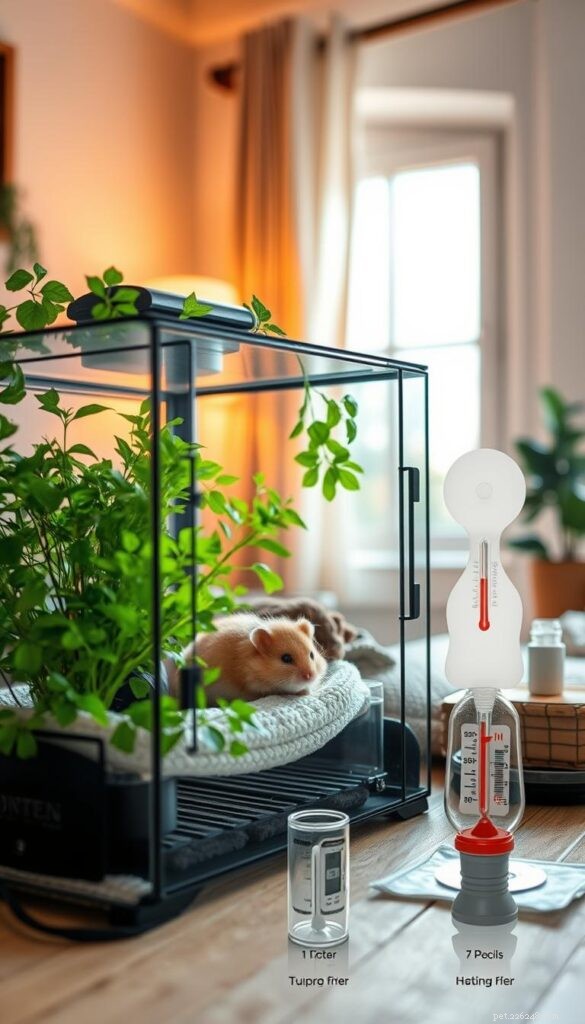
Creating the perfect environment for your furry friend starts with understanding their unique climate requirements. These small animals rely on steady warmth to stay active and healthy, just like their wild ancestors who thrived in dry, temperature‑controlled burrows.
What Temperatures Are Ideal?
Your pet’s habitat should stay between 65–75 °F, with 68–72 °F being the most comfortable range. This mimics the conditions of underground tunnels where wild hamsters avoid extreme heat or cold. Sudden drops below 65 °F can lead to lethargy or even hypothermia, especially for domesticated breeds.
How Different Species Adapt
Syrian hamsters prefer slightly warmer environments compared to dwarf varieties. Roborovski and Campbell’s species handle cooler spots better but still need stable warmth. All types share one trait: they can’t regulate their body temperature as effectively as larger animals. This makes consistent monitoring crucial, particularly when preparing for winter months.
Wild hamsters survive harsh climates by digging intricate burrows that maintain near‑60 °F temperatures year‑round. Your pet retains these instincts, so provide extra bedding during colder periods. Knowing your hamster’s species helps tailor their habitat for optimal comfort and energy levels.
Key Temperature Guidelines for Hamster Care

Did you know your pet’s health directly links to their environment’s warmth? These small creatures thrive when their surroundings mirror the stable conditions of their natural habitats. Proper climate management prevents stress and keeps them energetic throughout the day.
Regional Recommendations Across the U.S.
Most areas in the United States require careful adjustments to maintain ideal conditions. 68–72 °F remains the sweet spot for daily activities and healthy eating habits. While brief dips to 65 °F or spikes to 75 °F won’t cause immediate harm, consistency matters more than occasional perfect readings.
Northern states with harsh winters demand insulated cage placements away from drafty windows. Southern regions might need cooling pads during summer heatwaves. Always use a digital thermometer near their habitat – your home’s thermostat won’t account for microclimates around their space.
Danger arises when readings approach 50 °F. Unlike wild relatives, domesticated pets lack survival instincts for hibernation. Their bodies might shut down unexpectedly in prolonged cold, leading to life‑threatening complications. Extra bedding and ceramic heat emitters become essential during power outages or seasonal chills.
Remember: these animals evolved in arid regions where burrows provided natural insulation. Recreate that security with paper‑based bedding layers and hideouts. Regular checks ensure your tiny friend stays toasty whether you’re in snowy Montana or breezy Florida.
Recognizing Warning Signs of Cold Stress

Is your hamster acting differently? Sudden changes in behavior often signal temperature‑related distress. Early detection helps prevent serious health complications and ensures your furry companion stays comfortable.
Key Indicators to Watch For
Shivering or hunched posture means immediate action is needed. Check if your pet avoids its wheel or ignores favorite snacks – reduced interest in food and water often precedes more severe symptoms.
| Symptom | Urgency Level | Recommended Action |
|---|---|---|
| Cold ears/feet | Moderate | Add warm bedding |
| Labored breathing | High | Consult vet immediately |
| Lethargy lasting 6+ hours | Critical | Use heating pad (low setting) |
Syrian breeds face unique risks – their bodies might mimic hibernation when temperatures drop below 60 °F. Unlike wild cousins, domestic pets lack fat reserves for this process, leading to dangerous dehydration. Dwarf varieties show different patterns, becoming unusually still instead of entering torpor.
For specialized care strategies tailored to specific breeds, monitor breathing patterns and activity levels daily during colder months. Gentle warmth restoration and veterinary guidance can reverse early‑stage cold stress effectively.
Practical Tips for Keeping Your Hamster Warm

When temperatures drop, your pet’s comfort relies on creative solutions that balance safety with natural behaviors. Two key approaches – smart heating tools and habitat adjustments – work together to maintain ideal conditions without overwhelming your tiny friend.
Heating Equipment Safety Essentials
Space heaters work best when warming the entire room rather than blasting heat directly at the cage. Keep them at least 3 ft from the habitat and always unplug when you leave the room. For targeted warmth, try chew‑proof pads designed for small pets:
| Heating Method | Safety Tip | Best For |
|---|---|---|
| Ceramic heat emitter | Use thermostat control | Large cages |
| Microwaveable disc | Wrap in cloth first | Quick warmth |
| Heated pad | Cover 25% of cage floor | Nighttime use |
Remember: Your hamster needs temperature choices. “Pets should always have an unheated area to retreat to,” advises a rodent care specialist from the ASPCA. This prevents overheating and mimics their natural burrow‑hopping behavior.
Cage Setup for Maximum Warmth
Move your pet’s home to a smaller room during winter – bathrooms and laundry rooms often stay warmer. Layer 4+ inches of paper‑based bedding for burrowing, and add shredded toilet paper for nest‑building. Avoid cedar shavings, which can irritate sensitive lungs.
Position water bottles away from heat sources to prevent freezing. Check twice daily to ensure proper flow. Draft‑proof the cage by elevating it 6 inches off cold floors and using cardboard barriers against chilly walls.
These simple changes help recreate the insulated burrows wild hamsters rely on. Combined with smart heating tools, they create a safe haven where your pet can thrive through frosty days and nights.
Managing Risks of Hamster Hibernation
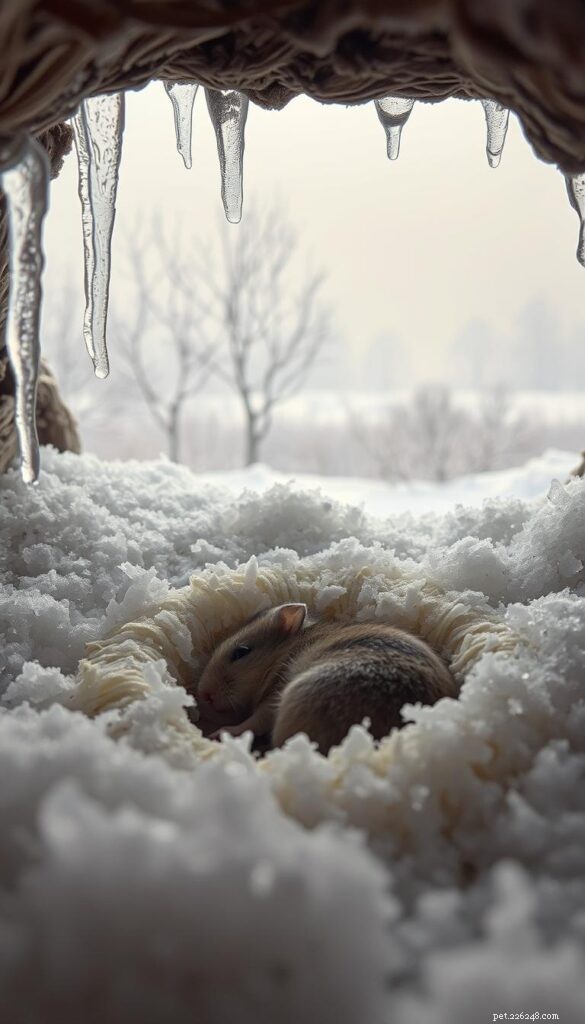
Your pet’s survival might depend on recognizing this hidden winter threat. Domestic hamsters lack the biological programming for safe hibernation, turning what’s natural for wild animals into a life‑or‑death situation.
When Dormancy Turns Deadly
Syrian hamsters face the greatest danger, as cold environments below 60 °F may trigger false hibernation attempts. Unlike their wild cousins, these pets haven’t stored enough fat reserves or learned proper survival techniques. Dehydration can develop within hours, silently threatening their organs.
Watch for these critical signs:
- Limp body with faint breathing (hibernation attempt)
- Stiff limbs and no chest movement (potential fatality)
- Refusal to eat/drink for 12+ hours
| Situation | Immediate Action | Vet Needed? |
|---|---|---|
| Cold, flexible body | Gradual warming | Within 2 hrs |
| Unresponsive but breathing | Emergency heat pad | Yes |
Never attempt revival without professional guidance. “Rapid temperature changes can shock their system,” warns Dr. Ellen Parker, exotic animal specialist. Always contact your vet first – they might recommend controlled warming methods like placing the habitat near (not on) a heating source.
Dwarf varieties rarely hibernate but still suffer in cold spaces. Keep all habitats above 65 °F using digital thermometers. Prevention through consistent monitoring remains your best strategy against these silent emergencies.
Keeping Your Hamster Cozy: Final Thoughts on Care
Your furry companion’s well‑being hinges on thoughtful climate management. Temperature stability ranks equally with fresh meals and clean water in daily care routines. Like tuning a musical instrument, perfecting their environment requires regular attention and small adjustments.
Position the cage away from sunny windows and radiators – even brief exposure to 90 °F+ heat risks dehydration. Choose a room with steady airflow but no chilly drafts near floors or vents. Paper bedding and ceramic hides offer safer warmth than heat lamps that might overdo it.
Invest in a digital thermometer near their habitat. This simple tool helps spot temperature swings before they stress your pet. Check water bottles twice daily during cold snaps, as metal spouts freeze faster than you’d expect.
Remember: You’re their whole world. While wild animals adapt to seasons, your hamster relies on your watchful care to thrive. With these strategies, you’ll create a snug home where your little friend stays lively and content all year round.
FAQ
What’s the safest temperature range for my hamster’s habitat?
Your pet thrives best between 65–75 °F. Temperatures below 60 °F can stress their tiny bodies, so avoid drafts or sudden drops. Always monitor their cage with a thermometer for consistent comfort.
Do dwarf hamsters handle cold differently than Syrians?
Yes! Dwarf species, like Roborovski or Winter White hamsters, tolerate slightly cooler temps due to their natural habitats. Syrians prefer warmer conditions. Adjust bedding and heating based on your pet’s breed for optimal care.
How do I prevent cold stress in my hamster during winter?
Keep their cage away from windows and use cozy bedding like paper‑based or aspen shavings. Add hideouts and check their water bottle daily to ensure it doesn’t freeze. A heating pad under part of the cage (never inside!) can help safely.
What are signs my hamster is too cold?
Watch for shivering, lethargy, or loss of appetite. Cold pets might curl up tightly or burrow deeper. If you notice these symptoms, warm their room gradually and offer extra food like oats or seeds to boost energy.
Can I use a space heater near my hamster’s cage?
Avoid direct heat sources like space heaters, which can overheat the habitat or cause drafts. Instead, insulate the cage with thick bedding and place it in a stable, warm room. Ceramic heat emitters designed for small pets are a safer choice.
When does hibernation become risky for hamsters?
True hibernation is rare and dangerous in domestic hamsters. If your pet becomes unresponsive or cold to the touch, gently warm them and contact a vet immediately. Always maintain their habitat above 60 °F to prevent this life‑threatening state.
How does bedding type affect my hamster’s warmth?
Soft, layered bedding holds heat better. Avoid cedar or pine shavings—they can irritate airways. Paper‑based options or shredded tissue create a snug environment. Add hay or fleece for extra insulation, especially near their nesting area.
- Otterhound Dog Breed Profile: Traits, Care, and History
- Do Dogs' Jaws Lock? Separating Fact from Fiction
- NYC’s 5-Day Interactive Cat Gallery Opens – A Must-Visit for Feline Fans
- Build 8 Custom Ferret Hammocks – Easy DIY Plans for Comfort & Style
- Weimaraner: German Hunting Dog – Origin, Traits & Care
- 10 Essential Dog Health Problems Every Owner Should Know
- Why Dogs Choose Their Favorite Person: The Science of Attachment