

Can Hamsters Overexert and Risk Their Lives? A Guide to Safe Exercise and Care
If you’ve ever watched your furry friend sprint endlessly on a wheel, you might wonder: how much exercise is too much? While these energetic pets thrive on activity, their enthusiasm can sometimes lead to dangerous overexertion. This guide dives into the surprising reality behind hamster exercise habits and what every owner needs to know to keep their pet safe.
Hamsters naturally love to run, but their tiny bodies have limits. Factors like age, hydration levels, and overall health play a critical role in determining how much activity is safe. Dehydration or weakness can turn a harmless jog into a life‑threatening situation, especially for older pets.
You’ll learn to spot subtle signs of fatigue—labored breathing, reduced appetite, or sudden collapse—that indicate it’s time to intervene. We’ll also debunk common myths, such as the assumption that all wheel designs are equally safe and that constant running always signals happiness.
By understanding your pet’s unique needs, you can create a habitat that encourages natural behavior without risking their well‑being. From selecting the right exercise equipment to monitoring daily activity patterns, this article provides actionable steps to keep your companion healthy and happy.
Understanding Hamster Behavior and Health

Spotting subtle changes in your pet’s routine can be the difference between timely care and an emergency. These small animals evolved to conceal weakness—a survival tactic that makes sudden health declines particularly dangerous. Daily observation becomes your most powerful tool for early intervention.
Common Health Issues and Risks
Respiratory infections often announce themselves through wet‑sounding breaths or clicking noises. Diabetes shows up as excessive thirst and weight fluctuations, while heart disease may cause lethargy. Stained fur around the bottom can indicate digestive problems. Lumps demand immediate attention, as they might signal cancer. Females may experience vaginal bleeding unrelated to their reproductive cycle. Regular weight checks help catch problems before they worsen.
How Behavior Indicates Wellness
Normal activity peaks at dawn and dusk—restlessness during daylight hours might signal stress. Chewing cage bars or frantic digging often points to environmental dissatisfaction. A hunched posture with flattened ears usually means discomfort. Appetite changes often come first; fewer food stashes or disinterest in favorite treats can be an early warning. Dull fur or messy grooming habits suggest your pet isn’t feeling their best. Addressing these issues early can prevent minor concerns from becoming critical.
Can Hamsters Run Themselves To Death? Examining the Facts
It’s easy to assume that a hamster knows its exercise limits, but reality paints a different picture. These energetic creatures often push beyond safe boundaries, especially when health issues or environmental stressors cloud their natural instincts. Understanding this balance between enthusiasm and risk could save your furry companion’s life.
Myths vs. Reality in Hamster Activity
One dangerous misconception suggests hamsters always stop running when exhausted. In truth, elderly or sick pets may lose this self‑preservation ability. A dehydrated hamster might sprint relentlessly despite severe weakness, unaware of the looming danger.
Environmental factors like high temperatures or poor cage ventilation amplify risks. Young hamsters typically regulate activity better than seniors, but even healthy pets can overexert during stress‑induced hyperactivity. Watch for labored breathing or sudden collapses after wheel sessions—these signal immediate intervention is needed.
Contrary to popular belief, constant running doesn’t always indicate happiness. It might reflect boredom or anxiety. Pairing exercise with proper hydration and regular health checks helps prevent sudden health declines. Remember: a silent wheel at night could mean your pet’s finally resting—or struggling silently.
By recognizing these nuances, you create safer routines. Adjust wheel access for older pets and prioritize vet visits if activity patterns shift abruptly. Your awareness bridges the gap between their instincts and well‑being.
Factors Contributing to Health Decline in Hamsters

Your furry companion’s golden years bring unique challenges that require careful attention. Three key elements—aging, environmental pressures, and physical changes—often work together to accelerate health problems. Recognizing these interconnected factors helps you provide better support during their senior phase.
When Time Takes Its Toll
Cardiovascular changes rank among the most critical age‑related risks. A weakening heart muscle makes even moderate exercise dangerous, potentially leading to sudden death during routine activities. Vision deterioration compounds these risks—many older pets stumble or panic when surroundings become blurry.
Chronic stress worsens existing conditions. Repetitive cage biting or unusual vocalizations often signal distress that weakens immunity. Pair this with diabetes symptoms like excessive thirst and rapid weight loss, and you’ve got a recipe for rapid health decline.
| Age Factor | Common Symptoms | Management Tips |
|---|---|---|
| Heart Muscle Weakness | Lethargy, labored breathing | Low‑impact exercise options |
| Vision Loss | Bumping into objects | Consistent cage layout |
| Diabetes | Increased urination | Reduced sugar intake |
| Joint Stiffness | Difficulty climbing | Ramped accessories |
Physical limitations often go unnoticed. Your pet might attempt youthful feats despite arthritic joints or weakened muscles. Regular habitat adjustments—like lowering water bottles or adding textured pathways—help prevent accidents.
Environmental triggers like loud noises or frequent handling add unnecessary stress. Combine these with natural aging processes, and minor issues can spiral quickly. Weekly weight checks and tailored care routines become essential safeguards.
Preventative Measures for a Healthy Hamster Life

Keeping your small companion thriving requires smart daily choices. Nutrition and activity monitoring work together to build resilience against common health threats. Let’s explore how to balance these elements effectively.
Fueling Energy Through Smart Nutrition
Many commercial food mixes lack sufficient protein for optimal energy. Boost meals with cooked eggs or mealworms alongside fresh veggies. Leafy greens like kale and spinach deliver vitamins that strengthen heart function.
| Food Type | Key Benefits | Serving Tips |
|---|---|---|
| Fresh Vegetables | Supports digestion | Rotate varieties daily |
| Fruits (apple slices) | Natural hydration | Limit to 2x weekly |
| High‑Protein Snacks | Muscle maintenance | Offer every 3 days |
| Whole Grains | Sustained energy | Mix with regular feed |
Watch how your pet interacts with new diet items. Uneaten fruits should be removed within hours to prevent spoilage. Pair these changes with weekly weight checks using a kitchen scale.
Decoding Subtle Health Signals
Learn to tell when your hamster needs rest. Slower wheel speeds or frequent pauses during play often come before visible exhaustion. Track nightly activity levels—sudden increases might indicate stress rather than fitness.
Schedule vet visits every six months, even if your pet seems healthy. Professionals spot early signs of diabetes or dental issues owners often miss. Combine these appointments with daily grooming checks—matted fur usually means trouble.
Create a simple log to tell if your hamster’s behavior shifts over time. Note food intake, exercise duration, and sleep patterns. This record becomes invaluable during vet consultations, helping pinpoint concerns faster.
Creating a Safe and Stimulating Home Environment
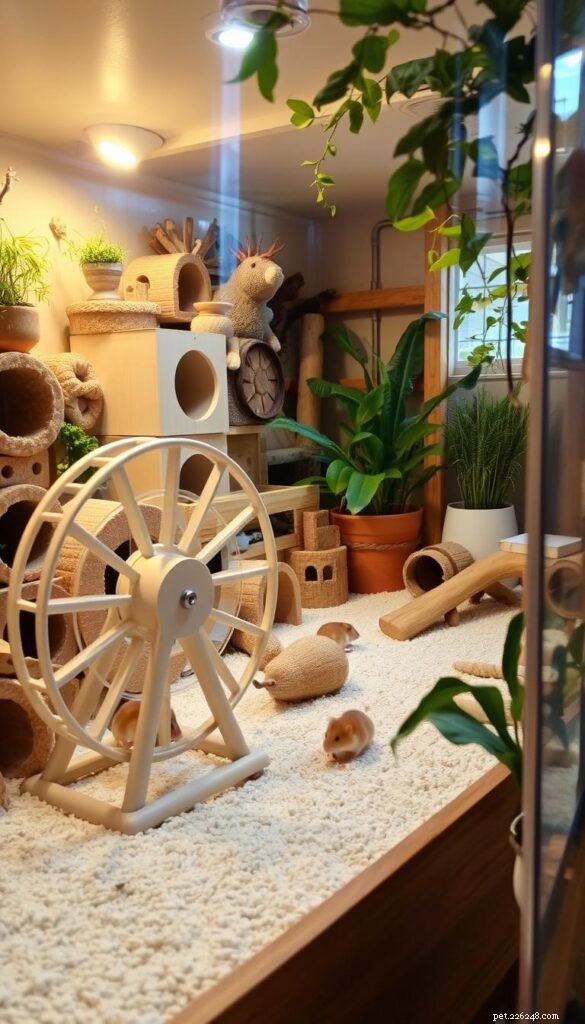
Designing the perfect habitat goes beyond basic necessities—it’s about crafting an ecosystem that supports natural instincts. Start with space as your foundation—the California Hamster Association recommends at least 600 square inches for any species. This allows proper burrowing and exploration while reducing stress‑related behaviors.
Selecting the Right Cage and Bedding
Your choice of cage impacts everything from air quality to safety. Glass tanks or modular plastic systems work better than wire‑bottom enclosures. Pair this with 3–4 inches of paper‑based bedding like Kaytee Clean & Cozy, which controls odors without harming delicate lungs.
| Bedding Type | Safety Level | Absorbency |
|---|---|---|
| Paper‑based | Excellent | High |
| Aspen shavings | Good | Medium |
| Cedar/pine | Dangerous | Low |
Include essential supplies like hideouts and chew blocks when setting up your pet’s home. Avoid scented products—they might smell pleasant to you but can overwhelm small respiratory systems.
Choosing Toys and Running Wheels Correctly
Not all toys are created equal. Syrian varieties need 12″ solid‑surface wheels, while dwarf types require 8″ models. Mesh designs risk toe injuries—opt for smooth plastic or cork instead.
| Accessory | Syrian Size | Dwarf Size |
|---|---|---|
| Exercise wheel | 9–12″ | 6–8″ |
| Sand bath dish | 8″ diameter | 6″ diameter |
| Chew sticks | 4–6″ length | 3–4″ length |
Rotate toys weekly to prevent boredom. Add child‑safe play sand (baked at 400°F) for grooming needs. Remember—the right kind of enrichment turns a basic cage into a thriving home.
Monitoring Your Hamster’s Health and Well‑Being

Your pet’s survival instincts make spotting health changes tricky—they’ll often hide weakness until symptoms become severe. Daily checks help you catch red flags early, from odd breathing patterns to shifts in grooming habits. Owners who learn these warning signs become their hamster’s first line of defense against escalating issues.
Silent Signals Demanding Attention
Listen closely during playtime. Wet‑sounding breaths or clicking noises often point to respiratory infections needing vet care. Check bedding daily for diarrhea stains—a messy bottom could mean digestive trouble from spoiled food or bacterial growth.
Notice how your pet holds itself. A hunched posture with flattened ears usually signals pain. Female hamsters require extra vigilance—vaginal bleeding unrelated to heat cycles demands immediate professional evaluation. Regular handling helps spot lumps that might indicate tumors.
Track food consumption weekly. Sudden weight loss or ignored treats often precede visible illness. Pair this with fur checks—dull or matted coats suggest your animal isn’t grooming properly due to stress or physical discomfort.
Build a relationship with an exotic vet before emergencies strike. They’ll guide you on creating symptom logs and interpreting subtle changes. Remember: hamsters deteriorate rapidly, so prompt action saves lives when you notice multiple concerning health signs.
Final Thoughts on Keeping Your Hamster Happy and Healthy
Building trust with your small companion takes time but brings lasting rewards. These animals thrive when their home balances safety with mental stimulation. Offering occasional treats like blueberries or walnuts strengthens your bond while respecting their natural instincts as prey animals.
Your role as a pet owner directly shapes your friend’s quality of life. Proper nutrition and habitat design prevent stress while supporting physical health. Many hamsters in ideal conditions live full lifespans, becoming cherished family members.
Understanding potential risks helps you act before problems escalate. Regular health checks and activity monitoring let you enjoy peace of mind. While losing a pet hurts, knowing you’ve provided excellent care brings comfort.
Remember: your hamster isn’t just an animal—they’re a partnership. Each choice you make, from wheel selection to handling techniques, builds mutual trust. Stay observant, stay informed, and celebrate the joy these tiny friends bring to your daily life.
FAQ
Can excessive wheel use harm my pet?
While exercise is vital, overexertion from nonstop running can strain their heart muscle. Always monitor activity levels and provide rest periods. Choose a solid‑surface wheel (like Silent Runner) to prevent injuries.
What sudden health issues should I watch for?
Lethargy, diarrhea, rapid weight loss, or labored breathing may signal stress or disease. Dwarf hamsters are prone to diabetes, so avoid sugary fruits. Schedule a vet visit immediately if symptoms arise.
How do I create a stress‑free environment?
Use odor‑free paper bedding (Kaytee Clean & Cozy works well) and avoid overcrowding toys. Ensure the cage has 600+ square inches of space. Provide hideouts and chew toys to mimic their natural habitat.
Are there risks linked to aging pets?
Older hamsters may develop heart issues or arthritis, reducing mobility. Adjust their diet with senior‑specific pellets and replace steep ramps with low platforms. Regular vet checkups help manage age‑related decline.
What diet prevents obesity and fatigue?
Balance commercial mixes (Oxbow Essentials) with fresh veggies like broccoli. Limit fatty seeds and fruits. Overweight pets struggle on wheels, increasing heart strain. Weigh them weekly using a kitchen scale.
How do I spot early signs of illness?
Watch for wet tail (watery diarrhea), crusty eyes, or hunched posture. Changes in sleep patterns or sudden aggression also raise red flags. Isolate sick pets quickly to avoid spreading infections.
Are silent wheels safer than metal ones?
Yes! Wire wheels can trap tiny feet or cause bumblefoot. Opt for 8–12″ plastic wheels with back support. Avoid saucer‑style wheels for long‑tailed breeds like Syrians to prevent spinal injuries.
- Adopt a Cat with Confidence: Find Your Furry Friend Today
- The Science of Dog Dominance: How They Build Social Hierarchies
- Help! My New Dog Is Too Problematic – Quick Fixes & Expert Tips
- Safely Ending a Dog Fight: Step-by-Step Guide for Pet Owners
- Freeze‑Dried vs. Dehydrated Dog Food: Which Is Best for Your Pet?
- How to Litter Train Your Kitten: A Simple, Effective Guide
- Pistachios for Parrots: Safe, Nutritious, and How Much Is Too Much?