

Expert Guide: Trimming Your Guinea Pig’s Nails Safely and Stress‑Free
Regular nail care is essential for your guinea pig’s paw health. Unlike their wild relatives, domestic guinea pigs rely on owners to keep claws short. Overgrown nails can curl into footpads or create open wounds that lead to infections such as bumblefoot.
Trimming every 4–6 weeks offers several benefits: it keeps the quick (the living part of the nail) from approaching the tip, making future sessions easier; it allows your pet to move comfortably during their signature “popcorning” jumps; and it reduces the risk of joint strain and foot injuries.
When neglected, curved nails can pierce sensitive tissue and uneven pressure can cause joint problems. Our step‑by‑step guide simplifies the process while keeping stress levels low for both you and your companion.
Consistent trimming keeps your guinea pig active, pain‑free, and able to express natural behaviors—key components of overall well‑being.
Essential Tools and Preparation
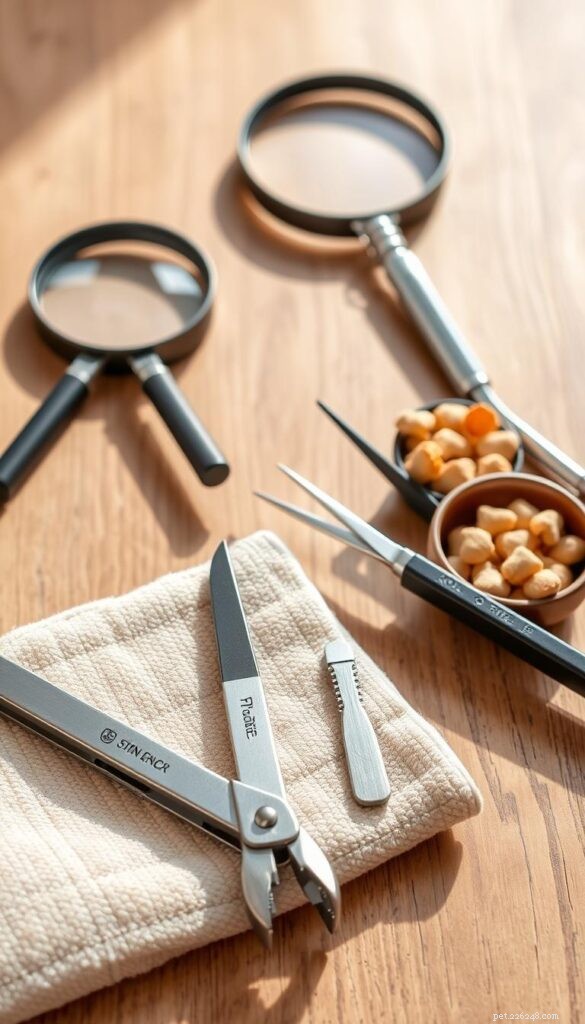
Having the right supplies turns nail care from a chore into a smooth routine. It ensures safety for your pet and confidence for you.
Gathering Your Supplies
Start with small‑animal nail clippers—guillotine‑style clippers handle thicker nails better than human clippers. Keep styptic powder nearby to stop bleeding if you nick the quick. A clean towel provides secure handling, and treats such as cilantro or bell pepper reward cooperation.
| Tool | Purpose | Pro Tip |
|---|---|---|
| Guillotine clippers | Clean cuts without splintering | Test on uncooked spaghetti first |
| Styptic powder | Stops bleeding fast | Dip cotton swab for precise application |
| Fleece liner | Familiar footing | Use one from their cage |
Setting Up a Calm, Pet‑Friendly Area
Select a quiet room with natural light so you can see the quick clearly. Place a GuineaDad liner on your lap or table—its familiar scent comforts the animal. Keep sessions under 10 minutes and offer treats between paws.
“Calm energy is contagious. If you’re relaxed, your guinea pig will mirror that.”
Position supplies within reach and consider a helper to soothe while you trim. This setup minimizes stress and creates positive associations with grooming.
Step‑by‑Step Guide: How to Cut a Guinea Pig’s Nails
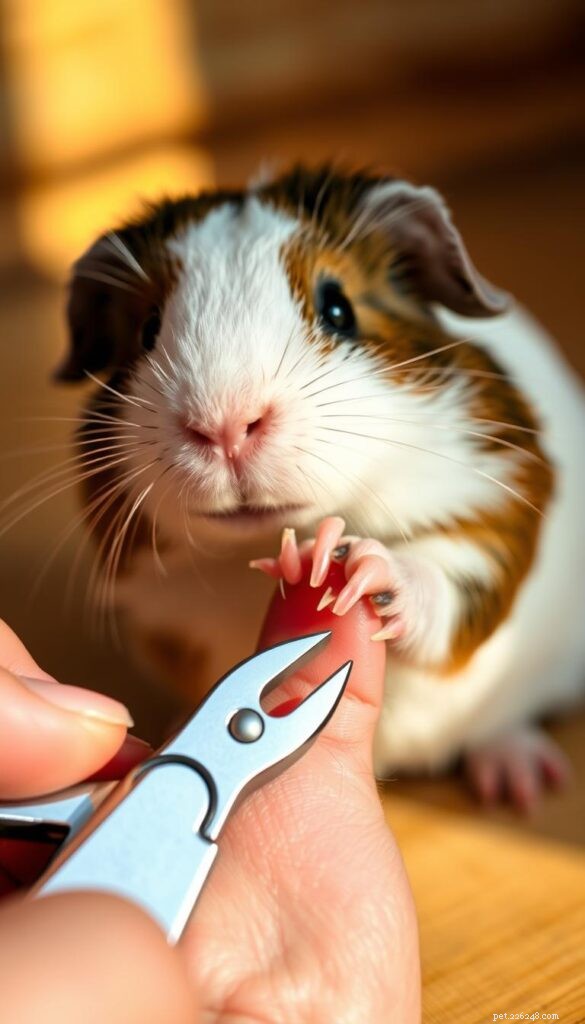
Start by sitting comfortably on the floor with your pet on a non‑slip surface. Support the hindquarters with one hand while gently extending each paw.
Safe Positioning Methods
Wrap your companion in a soft towel, leaving one foot exposed at a time. Keep their body snug against your chest to prevent squirming. For wiggly pets, try a low table with a familiar fleece mat.
“Always trim in natural light—it reveals the quick better than artificial bulbs.”
| Nail Type | Quick Visibility | Pro Tip |
|---|---|---|
| Light/Translucent | Pink center visible | Cut 2 mm below the quick |
| Dark/Black | Shine light underneath | Trim small amounts weekly |
Precision Cutting Strategies
Angle the clippers sideways to avoid crushing the nail. Make swift, clean cuts while steering clear of the curved tip. If you nick the quick, apply styptic powder immediately with a cotton swab.
Offer a favorite veggie treat after each paw. Watch for stress signs—teeth chattering, pawing—and pause if needed. With practice, you’ll finish in under five minutes while keeping your pet content.
Tips for a Stress‑Free Nail Trimming Experience
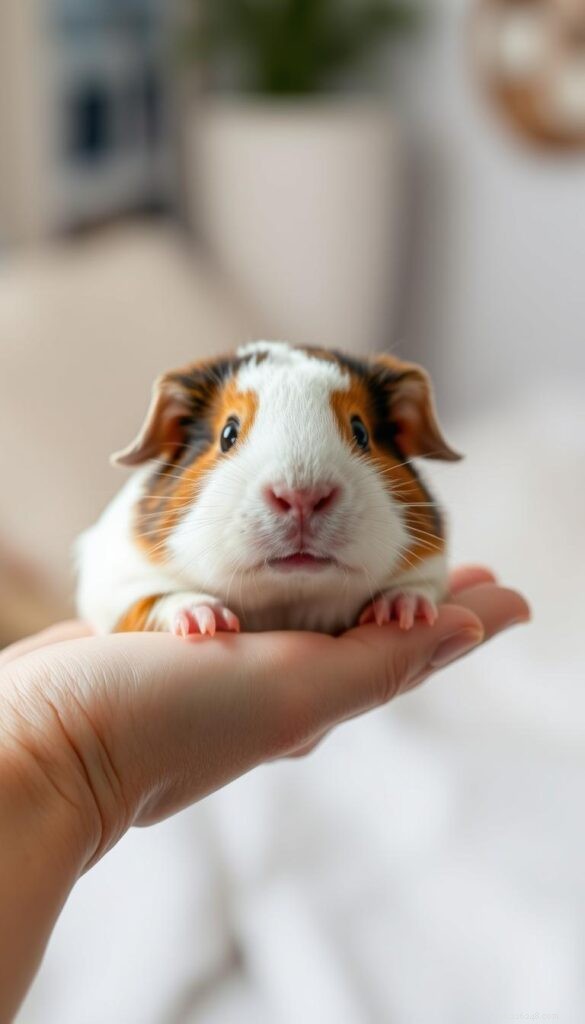
Building trust through thoughtful grooming practices helps both new and seasoned owners. Pair nail care with positive interactions to reduce anxiety.
Treat‑Based Bonding Techniques
Offer bite‑sized veggies during the process. Hold a cilantro sprig while handling paws—many pets focus on nibbling rather than the trimming. End sessions with their favorite snack as a success celebration.
| Strategy | Benefit | Timing |
|---|---|---|
| Pre‑trimming treats | Sets positive tone | 5 min before start |
| Mid‑session rewards | Maintains calm | After each paw |
| Post‑care feast | Reinforces cooperation | Immediately after finish |
Gentle Approaches for Anxious Companions
First‑time trims require extra patience. Begin with short practice sessions—hold their paw for 10 seconds while offering kale. Gradually increase contact over several days before attempting cuts.
“Never force completion. Three successful nails today beat eight stressful ones tomorrow.”
For nervous pets, wrap them in a warm towel from their cage. Dim lights and soft music ease tension. If they struggle, pause and resume later—partial trims still count as progress.
Preventing Common Nail Care Issues
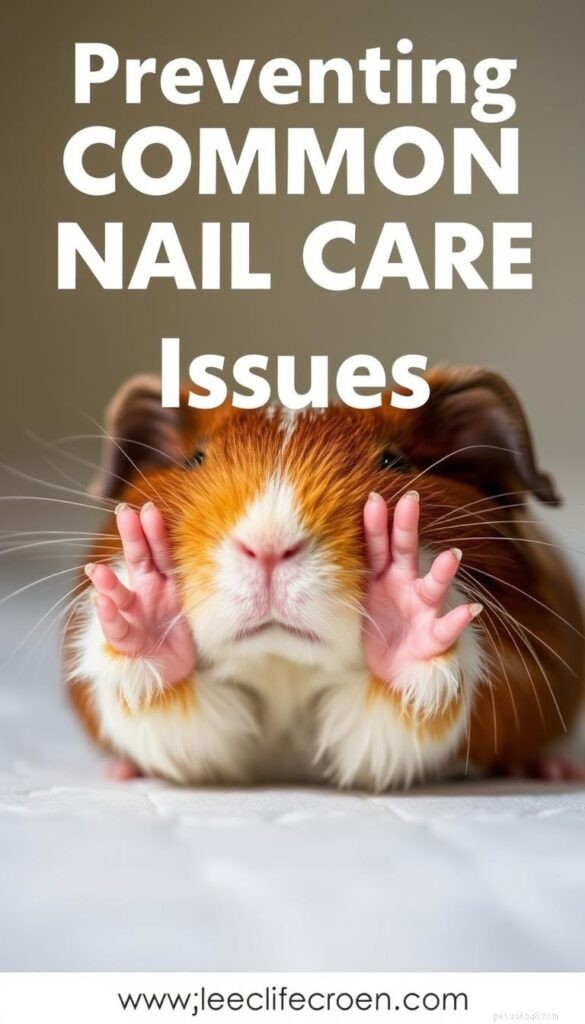
Smart prevention keeps paws healthy and avoids nail‑related complications. Regular checks spot early warning signs before they become urgent problems.
Recognizing When Nails Are Too Long
Listen for clicking sounds on hard floors—this indicates nails need attention. Check for curved tips that point sideways or downward. Front paws usually need more frequent trims than back feet.
Dark nails grow the quick longer, making future trims trickier. Trim 1/16″ every 10–14 days to encourage quick recession. This gradual approach minimizes bleeding risks.
| Nail Condition | Action Required | Frequency |
|---|---|---|
| Clicking sounds | Full trim | Immediately |
| Slight curve | Maintenance cut | Every 2 weeks |
| Visible quick | Professional help | As needed |
Managing Accidental Bleeding with Styptic Powder
Even careful trims can nick the quick. Keep styptic powder within arm’s reach. Dip a cotton swab in the powder and press gently for 15 seconds.
For severe bleeding, apply cornstarch as an alternative. Monitor the foot for 24 hours—prolonged bleeding requires vet attention. Most minor cases resolve quickly with proper care.
“Stay calm if bleeding occurs—your composure helps your pet stay relaxed too.”
Remember: Front paws have four nails each, back paws three. Missing a nail during trims can lead to uneven growth. Regular maintenance prevents most emergencies before they start.
Parting Words for Happy, Healthy Guinea Pigs
Mastering nail care becomes second nature with time. What feels tricky initially turns into a smooth routine through regular practice. Your companions grow more comfortable with each session, especially when paired with their favorite veggie rewards.
Professional support remains available if you need assistance. Many vets offer affordable trimming services or coaching sessions. This safety net lets you learn proper techniques while ensuring your pet’s comfort.
Consistency proves vital for success. Monthly trims maintain ideal nail length and help the quick recede gradually. This proactive approach reduces bleeding risks and keeps your guinea pig’s feet in top shape for exploring their habitat.
View these sessions as bonding moments that strengthen trust. Gentle handling and positive reinforcement create calm experiences. Over time, you’ll notice your pets becoming more relaxed during grooming.
Remember: Well‑maintained nails directly support your guinea pig’s joyful hops and sprints. By prioritizing this care, you’re ensuring years of comfortable movement and natural behaviors for your beloved companions.
FAQ
What tools do I need to trim my guinea pig’s nails?
You’ll need small‑animal nail clippers (scissor‑style or guillotine), styptic powder to stop bleeding if needed, and treats to reward cooperation. A towel or blanket helps keep them calm.
How do I hold my guinea pig safely while trimming?
Gently wrap them in a towel, exposing one paw at a time. Keep their back supported against your chest or lap to prevent squirming. Work quickly but calmly to minimize stress.
What if I accidentally cut the quick and cause bleeding?
Apply styptic powder immediately to stop the blood. Stay calm—your pet will sense your energy. Offer a treat afterward to rebuild trust. If bleeding persists, contact a vet.
How often should I trim my guinea pig’s nails?
Check their nails every 3–4 weeks. Light‑colored nails make the pink quick easier to spot, while dark ones require extra caution. Trim only the curved tip to avoid injury.
My guinea pig hates nail trims. How can I make it easier?
Pair trimming with positive rewards like veggies or gentle praise. Start with short sessions, focusing on one paw at a time. For very nervous pets, ask a helper to hold them or consult a vet.
How do I know if my guinea pig’s nails are too long?
Overgrown nails may curl sideways, snag on fabric, or cause uneven walking. Regular trims prevent painful splits or infections. If unsure, compare their nail length to reference photos online.
Can I use human nail clippers for my guinea pig?
Small pet‑specific clippers are safer because they’re designed for delicate nails. Human clippers might crush or split the nail, causing discomfort. Invest in proper tools for a smoother experience.
- Fall‑Ready Guide: Expert Tips to Transition Your Dog for Autumn
- Why Dogs Sniff Like That: Insights into Their Powerful Sense of Smell
- Cat Urinary Tract Infections: Signs, Symptoms & How to Help Your Feline
- Winner Announced: Exclusive Kritter Kondo Pink Cat Enclosure Giveaway
- 25 Hilarious Animal Photos That Will Brighten Your Day
- Topical Flea Killers: Are They Truly Safe for Your Dog?
- Is Toast Safe for Dogs? A Practical Guide for Pet Owners