

What Guinea Pigs Purr Means – Decoding Their Sounds & Body Language
The gentle rumbling noises your guinea pig makes are more than random; they form a unique communication system. These small rodents use vocalizations to convey everything from contentment to subtle frustration, allowing you to build a deeper bond and respond to their needs promptly.
A relaxed, steady purr usually signals happiness—often heard during a gentle stroke or while munching on a favorite treat. However, the same sound can flip meaning when paired with head‑butting or restless movements, indicating the animal has had enough interaction for the moment.
Context is essential. Pay attention to accompanying body language—ear position, pacing, and posture—because even mealtime purrs can shift from joy to impatience. For a deeper dive into decoding these cues, consult our guide to understanding guinea pig communication.
Observation is key. Watch how your pet interacts with cage mates or reacts to new environments. Over time, you’ll recognize the difference between a “keep petting me” hum and a “give me space” vibration, strengthening your bond and ensuring their wellbeing.
Why Do Guinea Pigs Purr?
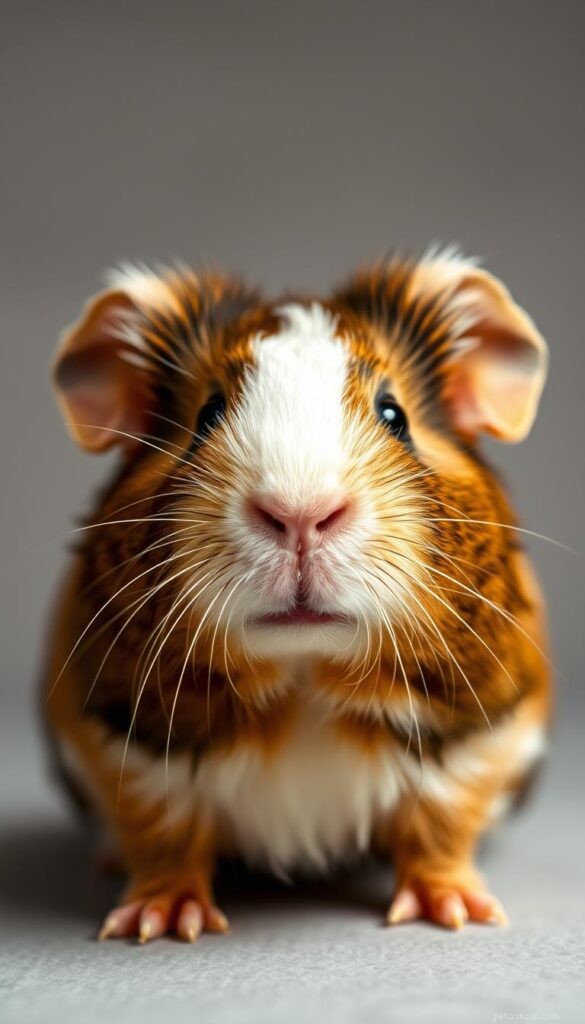
Guinea pigs emit two main types of purrs: warm contentment and subtle irritation. Understanding the distinction transforms how you respond to your companion’s needs.
Happy Purrs: Bubbles of Contentment
A deep, steady rumble indicates all is well. You’ll hear this bubbling sound during chin scratches or nap time. Notice the “pancake mode”—legs stretched flat—signifying total trust and a secure environment.
Stress Signals in Sound
Sharp, choppy purrs signal the need to back off. High‑pitched vibrations often accompany:
- Stiffened posture
- Head nudges against your hand
- Nervous teeth chattering
Additional signs such as twitchy whiskers or rapid breathing indicate irritation. Timing matters—what begins as a content purr during meals can turn to annoyance if treats run low. Pair vocal clues with physical cues for accurate interpretation: a relaxed pet sprawls loosely, while a stressed one hunches tightly.
Interpreting Guinea Pig Sounds and Body Language
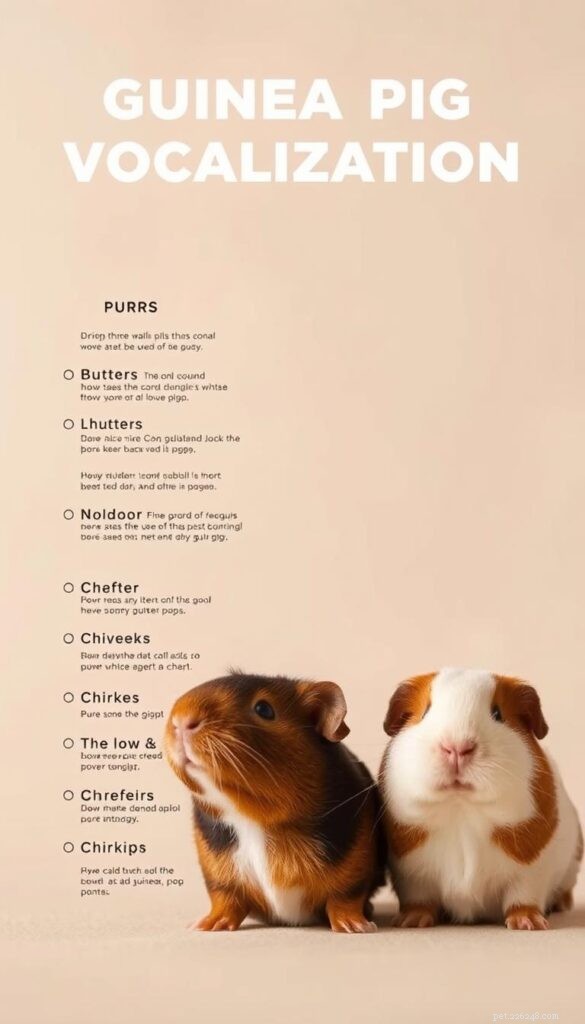
Your guinea pig’s vocal range is surprisingly diverse. Recognizing these unique noises helps you respond appropriately to their moods. Below is a breakdown of common sounds and their meanings.
From Wheeking to Hissing: A Sound Overview
The excited wheeking you hear is their way of ringing a dinner bell—a rising squeal demanding snacks, especially when fresh veggies appear in the bowl.
Soft chuttering during cuddle sessions signals bliss. Sharp teeth clicks—known as chattering—serve as a clear “back off” warning to cage mates or humans.
- High‑pitched shrieks indicate panic or pain—check for injuries immediately.
- Hissing resembles a cat’s warning when threatened.
- Bird‑like chirps are puzzling but often occur during tense moments.
Chattering, Chirping, and Other Noises Explained
Low rumbles often accompany dominance displays; watch for strutting behavior. Grunts and growls typically mean territorial disputes brewing. Whining may signal dislike of bedding or a desire for fresh water.
During play:
- Popcorning jumps with quick squeaks equal pure joy.
- Soft whimpers while exploring denote mild uncertainty.
- Persistent grumbling signals “This hidey‑house is mine!”
Pro tip: Pair unusual noises with posture changes. Fluffed fur or flattened ears often confirm whether the sounds are playful or problematic.
Mealtime Melodies and Social Signals
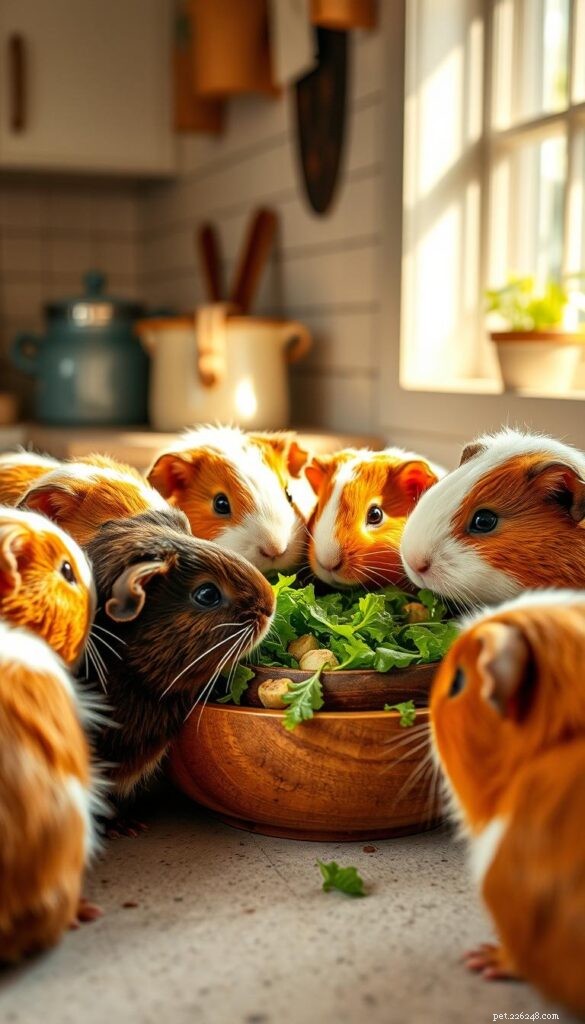
Dinnertime chatter carries special meaning in guinea pig communities. These fluffy foodies communicate through sound and movement while eating, revealing delight and disputes alike. Recognizing these cues helps you support their social needs.
Purring During Feeding Time
A contented munching melody often accompanies snack time. You may hear soft rumbles as your pet nibbles kale or bell peppers, sometimes paired with joyful hops called popcorning. These bursts of energy show they’re thrilled with their meal.
Not all food noises mean happiness. Low growls paired with hip‑swaying walks—known as rumble strutting—signal that the animal is guarding treats from cage mates. Males often use this display to assert dominance or impress females.
Manage mealtime tensions with these strategies:
- Place multiple food bowls in different cage areas.
- Offer larger leafy greens that require sharing.
- Separate overly competitive eaters during feeding.
Teeth chattering near the food dish? That’s a clear “back off” warning. Peaceful eaters keep their bodies relaxed, while stressed ones hunch over their snacks. Tracking these patterns helps create harmony at mealtimes.
Pro tip: Rotate feeding locations weekly to prevent territorial claims. This simple change reduces food‑related squabbles and keeps your furry crew focused on enjoying their veggies.
Tips for Enhancing Your Guinea Pig’s Happiness
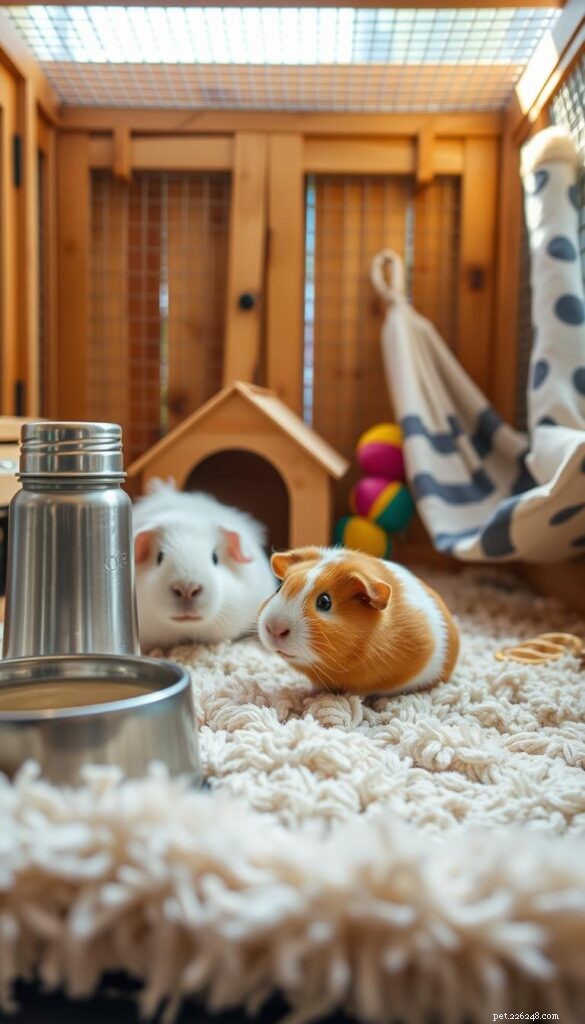
Creating a joyful environment for your small companion requires understanding their core needs. Three pillars form the foundation of their wellbeing: thoughtful habitat design, proper nutrition, and social fulfillment.
Providing a Safe and Stimulating Environment
Your pet’s home setup directly impacts their mood. Choose cages exceeding 7.5 square feet for single occupants—bigger is always better. Layer the floor with paper bedding topped with timothy hay to encourage natural foraging behavior.
Include hideouts and chew toys to prevent boredom. Rotate accessories weekly to maintain novelty. A stressed pet may over‑groom, while a happy one explores every corner.
| Essential | Purpose | Examples |
|---|---|---|
| Space | Encourages exercise | Multi‑level ramps, open play areas |
| Enrichment | Reduces stress | Tunnels, untreated wood blocks |
| Companionship | Supports social needs | Same‑sex pair, daily interaction |
Diet, Space, and Companionship Essentials
Fresh veggies should make up 15% of daily food intake—try bell peppers and cilantro. Always keep hay racks full to support dental health and digestion.
Schedule outdoor playtime in secure pens. Pair these sessions with gentle handling to build trust. Remember: lonely pets often develop depression, so consider adopting bonded pairs.
Annual vet checks catch issues early. Watch for bright eyes and smooth fur—these signal your care routine works. A content pet will greet you with soft coos and curious nibbles.
Wrapping Up: Nurturing Your Furry Friend’s Communication
Every chirp and rumble from your guinea pig tells a heartfelt story. These social pets thrive when their unique language receives your attention. Like people, they have distinct personalities—some chatter nonstop, while others prefer quiet moments.
Sudden shifts in noises or behavior demand action. Raspy breathing, coughing, or unusual silence could signal health trouble. Always consult a veterinarian familiar with guinea pig behavior and respiratory issues. Early detection prevents bigger problems.
Watch for emotional cues too. A once‑playful piggy hiding constantly might feel stressed. Hissing or head tossing often means they need space. Adjust their environment—add hideouts or reduce noise—to restore calm.
Your bond grows stronger as you learn their sounds and habits. Celebrate progress, whether it’s recognizing a happy wheek or spotting subtle body language. With time, you’ll become their trusted translator, creating a lifetime of shared understanding.
FAQ
What does it mean when my guinea pig purrs?
Purring can signal happiness or anxiety. A relaxed posture and soft purrs often mean contentment, while a stiff body or higher‑pitched sounds may indicate fear. Always observe their body language for context.
How do I tell if my guinea pig’s purr is happy or stressed?
Happy purrs are usually low and steady, paired with calm movements. Anxious purrs sound sharper and may include teeth chattering or hiding. Check their environment for stressors like loud noises or unfamiliar scents.
What other sounds should I listen for?
Wheeking often means excitement (like at mealtime), while hissing or teeth chattering signals irritation. Chirping is rare and might mean confusion. Rumble strutting—a deep purr with swaying—signals dominance.
Why does my guinea pig purr during feeding?
Mealtime purring is usually a happy sound! They might “talk” to express excitement for fresh veggies or hay. Pair this with popcorn‑like jumps (popcorning) for a clear sign of joy.
How can I make my guinea pig feel safer?
Provide hiding spots, chew toys, and a spacious cage. Offer a balanced diet with unlimited hay, and ensure they have a same‑species companion. Avoid sudden changes to their routine or environment.
What does teeth chattering mean?
Rapid teeth grinding or clicking often signals annoyance or territorial behavior. It’s common during introductions to new pets or if they feel threatened. Give them space to calm down.
Do guinea pigs need friends to stay happy?
Yes! These social animals thrive with companionship. A bonded pair will groom each other, share food, and communicate through sounds. Solo piggies may become lonely or depressed.
Why does my guinea pig rumble strut?
This low, vibrating purr combined with a swaying walk is typically a dominance behavior. It’s common during mating or when establishing hierarchy in a group. Monitor interactions to ensure no aggression arises.
- Sunset Ball Python Morph: Stunning Color, Longevity & Care Guide
- Ayurveda for Animals: Holistic Care for Pets and Livestock
- Do Dogs Experience Depression? Understanding Signs and Care
- Do Dogs Deserve to Earn Affection? Examining the 'Nothing in Life is Free' Approach
- Cymric Cat: A Comprehensive Breed Profile – History, Care, and Health
- The Green Frog (Lithobates clamitans): Key Facts for Amphibian Enthusiasts – Part 2
- Are Ferns Safe for Cats? Expert Guide to Toxic and Non‑Toxic Fern Varieties