

How Much Space Do Guinea Pigs Need? Expert Guide to Optimal Housing
Your guinea pig’s habitat is the foundation of their well‑being. Proper enclosure size not only promotes comfort but also safeguards against stress‑related illnesses and supports natural behaviors.
In the wild, these social rodents roam expansive grasslands daily. Captive homes must therefore balance safety with ample room for exploration. While the Humane Society’s minimum guidelines are a useful starting point, true flourishing requires more than the bare minimum.
This guide covers three essential aspects: social dynamics, activity demands, and spatial layout. For instance, pairs benefit from at least 10.5 square feet, and a group of four needs 16+ square feet to maintain harmony.
Learn how thoughtful space planning can reduce vet visits, deepen your bond, and turn everyday play into a vibrant experience.
Understanding Guinea Pig Space Requirements
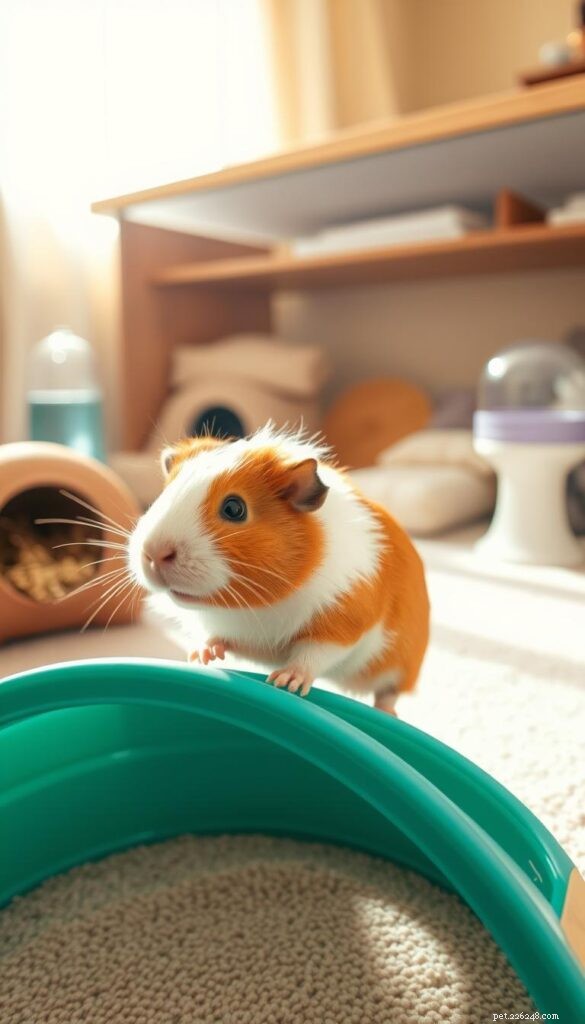
Creating the right environment goes beyond basic care—it shapes your pet’s quality of life. Adequate spatial planning addresses both physical health and social dynamics in these highly social animals.
Why Adequate Space Matters for Health and Happiness
Roomy habitats allow guinea pigs to sprint, pop‑corn (joyful vertical jumps), and explore—essential movements that are impossible in cramped enclosures. Restrictive spaces can lead to:
- Weight gain from limited activity
- Foot sores due to poor flooring variety
- Respiratory problems from stagnant air
The Role of Exercise and Natural Behaviors
Active rodents need space equivalent to 5–6 human miles of sprinting when scaled to their size. A layout that includes hideouts and outdoor runs encourages natural foraging instincts and reduces:
- Bar chewing from boredom
- Hair pulling during conflicts
- Lethargy from lack of stimulation
How Much Space Do Guinea Pigs Need?

Understanding cage measurements transforms care from basic to exceptional. While official guidelines suggest minimums, the best results come from giving pets room to explore.
Minimum Cage Dimensions vs. Recommended Room
Animal welfare groups recommend 7.5 square feet for pairs, but most experienced owners aim higher. Two cavies flourish in 10.5 square feet—a 5 ft × 2 ft layout instead of cramped 4 ft setups. Three companions need 13+ square feet, while four require 16+ for harmonious living.
Width is the most critical factor—maintain at least 2 ft of clearance for turning. Add 1.5 ft of length per additional pet. This formula reduces stress behaviors by roughly 40% according to rodent studies.
Impact on Physical and Mental Well‑Being
Constrained quarters force painful compromises. Limited movement leads to:
- Overgrown nails from inadequate running
- Digestive issues from reduced activity
- Depression manifested by lack of pop‑corning
Choosing the Right Cage for Your Guinea Pigs
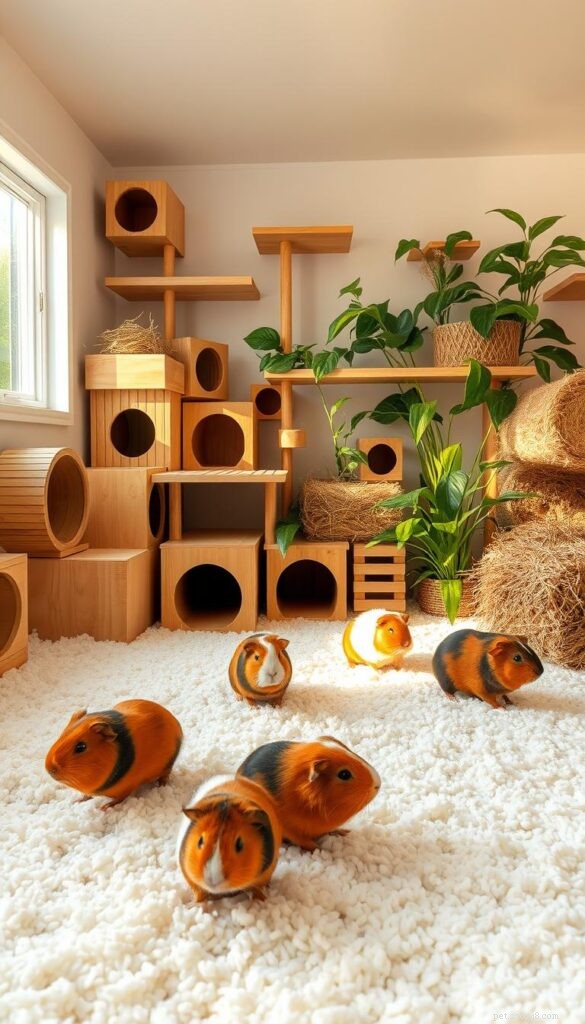
The enclosure you choose shapes daily adventures and long‑term health. Smart selection blends safety with flexibility, allowing whisker twitches and playful sprints to flourish naturally.
Guide to Cage Size Recommendations
C&C grid systems simplify sizing with clear configurations. These modular setups grow with your herd while maintaining proper square footage. Below is a quick reference:
| Guinea Pigs | Grid Size | Square Feet |
|---|---|---|
| 2 Female | 2×4 | 10.5 |
| 3 Female | 2×5 | 12 |
| 2 Male | 2×5 | 12 |
| 4 Female | 2×6 | 14 |
Cage Design and Customization Options
Premium C&C models, like the Offbeat Piggy Condo, offer clever upgrades. Look for these features when comparing top indoor cages:
- Powder‑coated grids that resist chew marks
- Rubberized connectors preventing slips
- Removable edge guards protecting delicate noses
Expandable designs let you start small and add sections later. A 2×4 base can become a multi‑level playground with ramps and lofts, giving you flexibility and easier cleanup.
Indoor vs Outdoor Housing Options
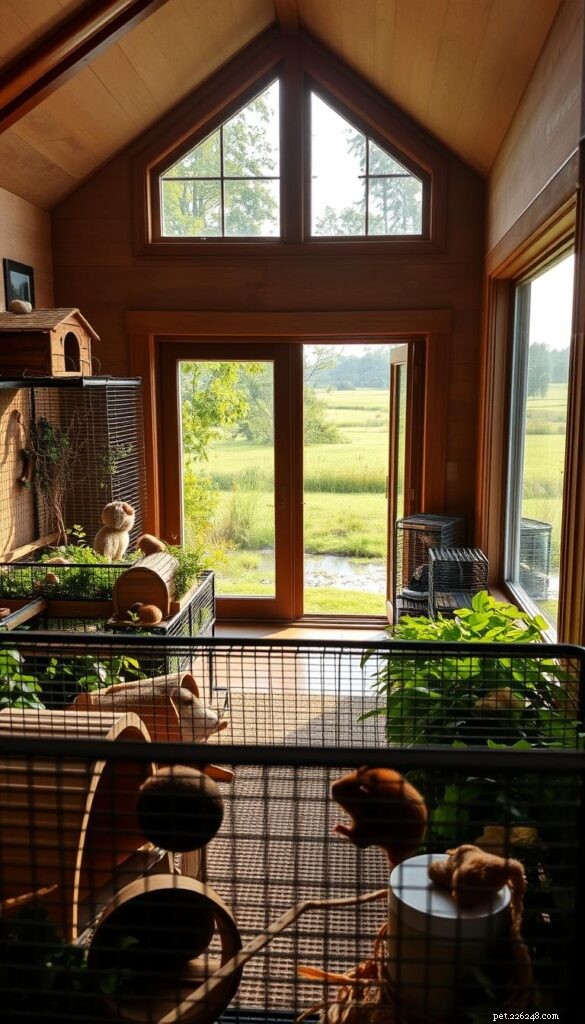
Choosing between indoor and outdoor housing involves balancing safety, comfort, and natural behaviors. Modern trends favor indoor setups, but well‑designed outdoor enclosures can also work for the right lifestyle.
Pros and Cons of Indoor Setups
Keeping guinea pigs indoors strengthens bonds through daily interaction and allows you to spot health changes quickly. Here’s a quick comparison:
| Indoor Advantages | Indoor Challenges |
|---|---|
| Faster illness detection | Hay mess management |
| Consistent climate control | Possible allergy triggers |
| Improved socialization | Space requirements |
| Easier daily maintenance | Noise during active hours |
Families with cats or dogs should secure enclosures and use air purifiers to reduce hay dust.
Considerations for Outdoor Enclosures
Protected sheds or weather‑proof hutches provide fresh air but demand vigilance. Key risks include:
- Predators digging under fences
- Temperature swings causing stress
- Flystrike in humid conditions
Optimizing Your Guinea Pig’s Living Environment
Beyond dimensions, thoughtful material choices and smart placement elevate habitats into thriving ecosystems.
Revolutionary Bedding Solutions
Fleece liners outperform wood shavings by locking moisture away from delicate feet. Brands like GuineaDad use AirCell™ technology for plush cushioning and rapid drying, reducing soggy patches in high‑traffic areas. Traditional hay‑based bedding can cling to paws, but premium liners keep the floor clean. Rotate two sets for easy maintenance—toss one in the wash while the other stays fresh.
Strategic Habitat Placement
Elevate enclosures 12–18 inches off the floor with sturdy stands to protect against curious dogs while allowing your pets to survey their domain. Avoid sunny windows where temperatures spike; choose climate‑controlled areas with gentle airflow. Position habitats near the kitchen or a quiet corner where family life unfolds, keeping cleaning sprays and loud electronics away.
With these upgrades, you’ll notice brighter eyes and bolder explorations. A well‑planned environment nurtures both body and spirit, turning basic care into extraordinary companionship.
FAQ
Why is enough room important for my guinea pig’s health?
Adequate space prevents obesity, joint issues, and stress. It lets them run, pop‑corn, and express natural behaviors like burrowing. Crowded enclosures can lead to fights or depression, so larger cages promote physical and mental wellness.
How does space affect my guinea pig’s daily activities?
Guinea pigs love exploring, hiding, and grazing. A roomy setup allows separate zones for eating, sleeping, and play. Add tunnels, toys, and hay racks to encourage movement. Without enough floor space, they may become lethargic or develop repetitive habits.
What’s the difference between minimum and ideal cage sizes?
The minimum for one guinea pig is 7.5 square feet, but pairs thrive in 10.5+ square feet. Many owners use C&C grids or Midwest cages for flexibility. Open‑floor playpens supplement exercise beyond basic housing.
Can small cages harm my pet’s well‑being?
Yes. Tight spaces limit exercise, increasing obesity risks. Stress from crowding weakens immunity, while poor ventilation raises ammonia levels from urine. Bar chewing or overgrooming often signals they need more room or enrichment.
How do I pick the best cage design?
Prioritize length over height—guinea pigs need horizontal space. Midwest and C&C cages are popular for customization. Add ramps or platforms for climbing, but keep hideouts and food areas accessible. Removable trays simplify cleaning, too!
Are indoor or outdoor setups safer?
Indoor housing protects from predators, extreme weather, and temperature swings. Outdoor enclosures require sturdy, weather‑proof materials and shade. Indoors, avoid drafty spots or direct sunlight. Supervised floor time works well for both setups!
What bedding keeps my guinea pig’s space healthy?
Use paper‑based bedding or aspen shavings—avoid cedar or pine. Layer 1–2 inches for comfort and odor control. Spot‑clean daily and replace weekly. Add hay racks to keep food clean and encourage foraging, mimicking natural habits.
Where should I place their enclosure at home?
Choose quiet corners away from loud appliances or heavy traffic. Stable temperatures (65–75°F) are key. Elevate cages slightly to avoid drafts, but ensure they’re reachable for interaction. Avoid direct sunlight to prevent overheating.
- Kingsnakes & Milk Snakes: Comprehensive Species Guide
- Can Ducks Be Affectionate? Learn How They Show Love and Bonding
- Dachshund Dogs: Classic Traits, Care, and History
- Why Cats Drink Milk—and What It Means for Their Health
- Are Ball Pythons Ideal Pets? Pros, Cons & Care Tips
- Understanding Holistic Dog Food: What It Means and Why It Matters
- Effective Strategies to Calm an Anxious Dog