

How to Pet a Dog Properly: A Vet’s Guide to Positive First Encounters
The saying “first impressions count” applies not only to people, but also to interactions with pets. When meeting a dog for the first time, it’s important to make the interaction a positive event for both you and the dog.
Many people assume they can pet any dog they meet, but that’s a misconception. Dogs are individuals with unique preferences for physical contact.
Do Dogs Like Being Pet?
Some friendly dogs will gladly greet strangers, while others may prefer to keep their distance. Knowing a dog’s comfort level is essential.
Signs a dog is open to petting include:
- Soft, relaxed body language – loose lips, a relaxed tail, soft eyes, and calm facial features.
- Moving forward toward you when you speak.
- Maintaining eye contact.
Signs a dog wants to be left alone:
- Tucked tail
- Lip‑licking
- Avoiding eye contact
- White of the eye visible (“whale eye”)
- Ears pulled to the side or back
- Weight shifted backward
- Creases at the corners of the mouth
- Furrowed brows
- Lowered head
- Slight crouch
If you see any of these cues, give the dog space and refrain from petting.
When you’re ready to interact, follow these steps for a smooth, respectful encounter.
1. Ask the Pet Owner
Always obtain permission from the owner before approaching. Start the conversation off‑to‑the‑side of the dog so they can evaluate you safely.
Even with consent, pause to observe the dog’s body language. Some dogs are comfortable with strangers, while others are not.
2. Approach Calmly
Speak softly and avoid a direct stare. Make brief eye contact, then look away to gauge the dog’s comfort.
Stand sideways, keeping 3–4 feet between you and the dog. You may crouch or kneel, but never loom over them. Extend your hand loosely by your side—no reach toward the head.
3. Invite the Dog to Come
Let the dog sniff your hand first. Once it has explored and seems comfortable, gently pet under the chin—a safe, non‑threatening area.
4. Observe the Response
Give one or two gentle strokes, then withdraw your hand. This signals “is this okay?” If the dog stays or comes closer, continue with soothing strokes along the neck or chest. If the dog pulls away, stop immediately and step back.
Each dog is unique; some will be enthusiastic, others reserved. Respect their signals at all times.
Where Dogs Prefer to Be Pet
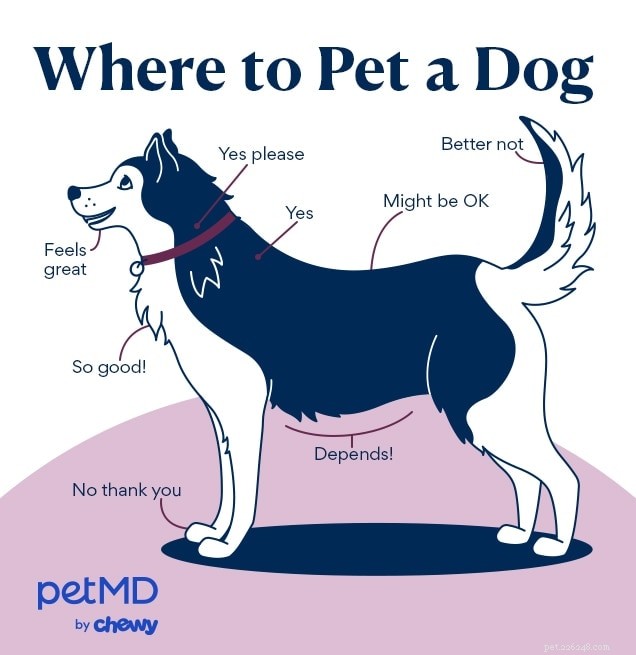
Most dogs enjoy touch on:
- Under the chin
- Along the side of the neck
- On the shoulders
- On the chest
Approach the top of the back slowly; reactions vary. Avoid the paws, tail, ears, lips, or stomach, even if the dog rolls over. A belly rub request is not universal.
When a dog rolls over, give them space and do not touch the belly unless they’re a known family member who has repeatedly accepted it.
Remember: Taking it slow with an unfamiliar dog builds trust and sets the stage for a lasting, positive relationship.

Written by
Wailani Sung, MS, PhD, DVM, DACVB
Veterinarian
Dr. Wailani Sung has a passion for helping owners prevent or effectively manage behavior problems in companion animals, enabling them to…
- How to Properly Feed Your Kitten: Expert Tips for Healthy Growth
- Why Dogs Bark at Mirrors: Understanding Their Reflexive Response
- Tuxedo Cats: The Classic Coat Pattern, Genetics, and Why They Make Great Companions
- Celebrating Trigg’s 11th Birthday: A Joyful Tribute to a Happy Cat
- The Risks of Dogs Eating Wood: Health Consequences and What to Do
- Stop Your Dog from Jumping on Guests: Proven Training Techniques
- Do Dogs Truly Experience Fear? Understanding Their Emotional World