

A Pandemonium of Parrots: The Science Behind the Wild Collective Noun
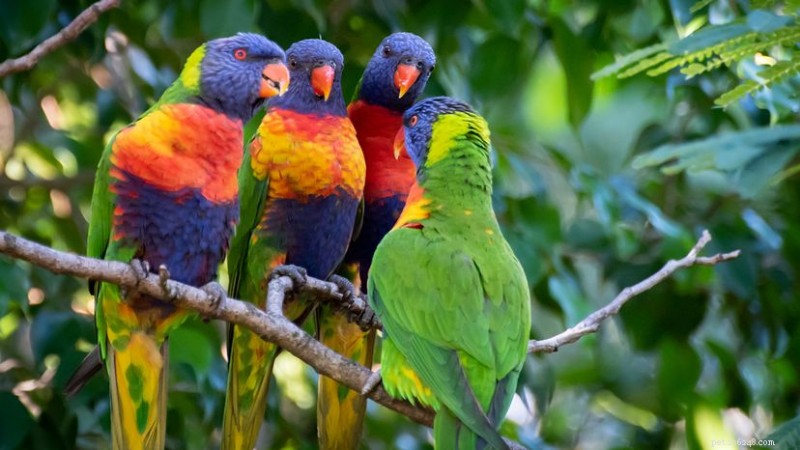
In the animal kingdom, collective nouns capture more than numbers—they hint at behavior, culture, and ecology. While lions form a pride and crows a murder, parrots belong to a pandemonium. This term reflects their noisy, colorful, and highly social nature.
Why “Pandemonium” Fits Parrots
Parrots are among the world’s most vocal birds. Their calls can reach 90 dB, rivaling many human-made noises. When dozens or even hundreds gather, the canopy turns into a living symphony—hence the term “pandemonium,” originally coined by John Milton to describe the capital of Hell and now used to denote uproar or disorder.
Structured Social Life
Contrary to the chaotic image, parrot societies are remarkably structured. Research on Amazonian macaws (Ara spp.) and Australian cockatoos (Cacatua spp.) shows clear age‑graded hierarchies, cooperative breeding, and division of foraging roles. These patterns mirror social structures seen in primates and dolphins.
The Power of Vocal Learning
Parrots are vocal learners—capable of mimicking sounds and creating new calls. This ability allows each flock to develop a unique “dialect,” reinforcing group identity. Field studies of budgerigars (Melopsittacus undulatus) demonstrate that juveniles learn their flock’s calls from elders, similar to language acquisition in human children.
Other Collective Nouns in Context
- A murder of crows
- A gaggle of geese
- A charm of hummingbirds
- A parliament of owls
- A mischief of magpies
- A covey of quail
- A convocation of eagles
- A cast of hawks
- A muster of storks
- An unkindness of ravens
These colorful terms help observers describe not just numbers but mood and motion. “Pandemonium” joins that tradition by conveying both the visual spectacle and the sonic frenzy of parrots.
Scientific Versus Popular Usage
While wildlife biologists usually use “flock” in formal reports, birders and naturalists enjoy the vividness of terms like pandemonium. The name instantly signals the expectation of bright plumage, constant chatter, and dynamic flight patterns.
The Importance of Naming
Collective nouns serve as shorthand for complex ecological interactions. They remind us that animals are not merely numbers; they are communities with rituals, hierarchies, and cultural practices.
Parrots in the Broader Context of Social Species
From troop‑structured monkeys to dolphin pods, social organization is a common thread in the animal kingdom. Parrots exemplify how even in the wild, community and cooperation are vital for survival.
This article was developed with AI assistance and subsequently reviewed by a HowStuffWorks editor for accuracy and clarity.
- Florida Liquor Store Break-In: Opossum Drinks Bourbon, Owner Surprised
- Roberto Cavalli’s Exclusive Dog Line: Luxury Pet Fashion
- 12 Fluffiest Cat Breeds: Your Guide to Cuddly Companions
- Mastering Food Elimination Trials: The Key to Accurate Allergy Diagnosis
- Deciding If Your Working Dog Needs Performance Food: Key Factors & Guidance
- Is My Hamster Overweight? Key Signs & Solutions
- Teaching Your Dog to Catch Frisbee: A Step-by-Step Guide