

Lovebirds vs. Parakeets: What Sets These Popular Parrots Apart?
Choosing a pet that brings joy and companionship can be a rewarding experience. Birds, especially parrots, are beloved for their vibrant personalities and engaging presence.
Among the many parrots available, lovebirds and parakeets are two of the most popular choices. Although they belong to the same family, they exhibit distinct characteristics that can influence your decision.
In the sections below, we outline the most important differences between lovebirds and parakeets, covering lifespan, appearance, vocal habits, and care requirements.
Lifespan
Parrots are known for their longevity, with some species living more than 50 years. Lovebirds typically live between 10 and 15 years on average, though exceptional individuals have reached 34 years. Factors such as diet, environment, and companionship can affect their lifespan.
Parakeets, by contrast, usually live 5 to 10 years. Their longest‑lived member recorded 29 years, close to the upper range of lovebirds. A calm, enrichment‑rich environment can help a parakeet approach the 10‑year mark.
Physical Traits
Visual cues are the easiest way to tell these two parrots apart.
Parakeets are slender with a graceful, elongated tail. Their plumage is predominantly green, accented with yellow around the head and subtle blue markings. They possess a relatively small, hooked beak.
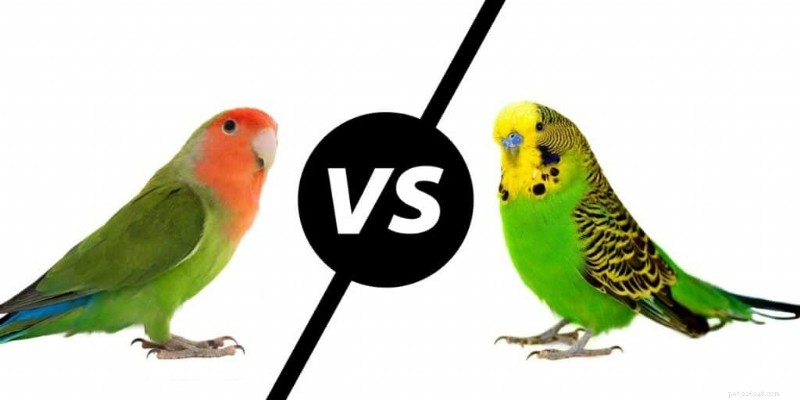
Lovebirds have a more robust, stocky build and shorter tail feathers. They come in a wide palette—from white to green, blue, orange, and more—thanks to selective breeding. Their beaks are larger and stronger, suitable for cracking nuts and seeds.
Level of Noise
Noise tolerance is a key consideration, especially in shared living spaces.
Parakeets are generally quiet, communicating with soft “babbling” sounds. When startled or stressed, they may emit a brief screech, but overall their vocalization remains low‑volume.
Lovebirds are markedly louder and more vocal. They communicate mainly through sharp, high‑volume screeches that can be disruptive if you have close neighbors or prefer a quieter environment.
Care and Handling
Understanding daily care demands helps ensure you can meet a bird’s needs.
Parakeets thrive on daily interaction. Consistent handling builds trust and encourages socialization, while regular training keeps them mentally stimulated. Skipping training sessions can lead to regressing behaviors that require retraining.
Lovebirds also benefit from daily handling, though they are slightly more forgiving in training retention. Many owners keep lovebirds in pairs, providing companionship that can reduce the need for constant human interaction, yet regular handling remains essential for bonding.
Final Thoughts
Although both lovebirds and parakeets share the parrot family, they differ in appearance, vocalization, lifespan, and care requirements.
Parakeets tend to be quieter and demand more hands‑on training, while lovebirds are louder and can manage well when kept in pairs.
By weighing these factors against your lifestyle and preferences, you can choose the bird that best fits your home and offers a lasting companionship.
- Golden Retriever: Comprehensive Guide to Traits, Care, and Health
- eBook: 25 Vet‑Approved Homemade Dog Food Recipes – Healthy, Nutritious Meals for Your Pet
- Why Penguins Are the Planet’s Funniest Animals: 24 Hilarious Memes
- Professional Dog Sitting for Otto: Medication, Care, and Comfort
- How to Return Food Purchased from PetSmart – Simple, Hassle-Free
- Do Dogs Experience Demotivation? Signs & Solutions
- Cat Worms Explained: Symptoms, Causes, and Treatment