

Are Scentsy Wax Melts Safe for Your Pets? A Comprehensive Review
It smells amazing, it’s lovely to have the fragrance in your home, but is Scentsy toxic to pets? This is the major issue with air fresheners, so cat owners must always do their research before using this type of product.
Scentsy’s signature products are wax melts, which are certainly a superior alternative to traditional candles because the wax is only warmed, but it does not reach a temperature high enough to cause injuries.
With cats, this is one of the major concerns. If the cat knocks down a burning candle, the hot wax could burn it. Moreover, this is a huge fire hazard, so using flameless wax melts eliminates this concern. But does this make them safe for cats?
Please note that this article may contain affiliate links. That means that if you buy something, I may earn a small commission. You can read my full disclosure at the bottom of the page.
It smells amazing, it's lovely to have the fragrance in your home, but is Scentsy toxic to pets? Click To TweetWhat Are the Concerns for Cats Surrounding Scentsy?
Scentsy wax melts are wickless candles, there is no danger to your cat getting burnt or starting a fire when knocking down the wax warmer. But some major concerns remain:
1. Ingesting the Wax
Cats are drawn to a wide variety of smells and they might be tempted to lick, chew, or even ingest the wax, melted or not. This should be a cause for concern for cat owners because this could be potentially dangerous for the cat.
Even though Scentsy wax bars are made from food-grade paraffin wax and their products do not include toxic substances, they could still be dangerous for cats. These wax melts include very concentrated substances that spread the pleasant smells, which could still be very dangerous for cats if ingested.
For instance, here are some oils that are often used in wax melts, which are toxic for cats:
- wintergreen oil
- citrus oil
- pine oil
- Ylang Ylang oil
- peppermint oil
- clove oil
- pennyroyal oil
- eucalyptus oil
- tea tree oil
- bergamot oil
- bitter almond oil
- lavender oil
- lime oil
- lemongrass oil
- orange oil
- thyme oil
- rosemary oil
Is Scentsy wax toxic to cats if ingested?
Keep in mind that Scentsy products are not meant to be ingested. They are not toxic as long as they are not ingested. If this happens, a new set of risks arises because they do include concentrated substances. These risks are different for people, cats, dogs, birds, and other pets. When purchasing these products, you have to make sure that your cat does not ingest them to avoid complications. We will provide more advice on how to do that.
Cat Health-Related Reading:
Toxic Air Fresheners
Critterzone Air Freshener
What Does a Heavy Breathing Cat Mean?
2. Inhaling the Volatile Oils
When the wax melts are warmed, they release volatile oils, which provide a pleasant scent in your home. While these are not toxic to humans, their toxicity to pets may be more difficult to assess.
This depends a lot on the quantity of volatile oils inhaled by the cat, which, in turn, depends on how close the cat was to the wax melt warmer, on the quantity of wax that was melted, and on the concentration of the oils in their composition. The more wax melted, the more volatile oils in the air, and the closer to the warmer, the more concentrated the volatile oils are.
Naturally, you should make sure that your cat is not close to the wax melts and that it inhales as few volatile oils as possible. Even so, in some situations, these oils may still be dangerous for cats (the oils mentioned above are toxic to cats if inhaled, as well as ingested).
Keep in mind that cats lack an enzyme required to break down these volatile oils, which makes it difficult for them to metabolize and eliminate large quantities of these oils. Moreover, if the cat suffers from respiratory diseases or from liver disease, it may be particularly sensitive to volatile oils.
Compared to essential oils, which are very dangerous for cats, wax melts pose less of a threat because the volatile oils released are less concentrated.
So, Is Scentsy Toxic to Pets?
If used correctly and safely, and if your cat is not sensitive to volatile oils, then no, Scentsy is not toxic to pets, but it does have the potential to be. So, you need to make sure that you are using Scentsy safely in your home. To do that, you need to make sure that:
- Your cat does not ingest the wax melts.
- Your cat is not close to the wax melt warmer.
- Ask your veterinarian about your cat’s sensitivity to volatile oil.
How to Prevent Your Cat from Ingesting Wax Melts
The simplest way to make sure that your cat does not ingest wax melts is to keep them in a locked drawer or cabinet, just as you should keep cleaning products or other potentially toxic substances in your home. When you are not using them, keep them in a place that your cat does not have access to. We strongly recommend that this place be locked because cats are extremely resourceful.
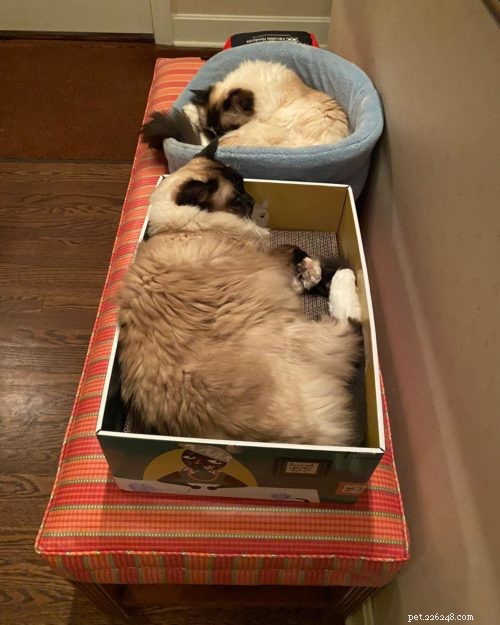
When you are using them, the safest thing to do is to keep your cat in another room. This way, it is not exposed to volatile oils released from the was either. But if your cat is present, you can place the warmer somewhere high, where the cat can’t jump to. You should be in the room during the entire period that the wax is in the warmer. This way, you can monitor your cat and know for sure that it has not ingested any wax.
What to Do if Your Cat Does Ingest Wax Melts
Accidents happen and even if you try your best, your cat could still have ingested wax melts. If this is the case, you have to act quickly. The first thing you need to do is remove any remaining wax from the cat’s mouth to prevent it from ingesting more of it.
Take the cat away from the wax, clean its mouth and monitor its reactions. You need to call your veterinarian as soon as possible. Please note that this is a potential medical emergency, so you shouldn’t wait. While the wax melts are not made with chemicals, they are made with very concentrated substances that could have toxic effects in cats, if ingested. Wax melts are not meant to be ingested, so the manufacturer’s indications will not cover this instance, least of all for cats.
Tell your doctor what happened and what product your cat has ingested. Then take your cat to the vet’s office immediately. By the time you get there, the vet can research the ingredients in the wax melts to determine any potentially toxic substances. When you get to the vet, the doctor will perform a complete work-up and administer treatment if needed.
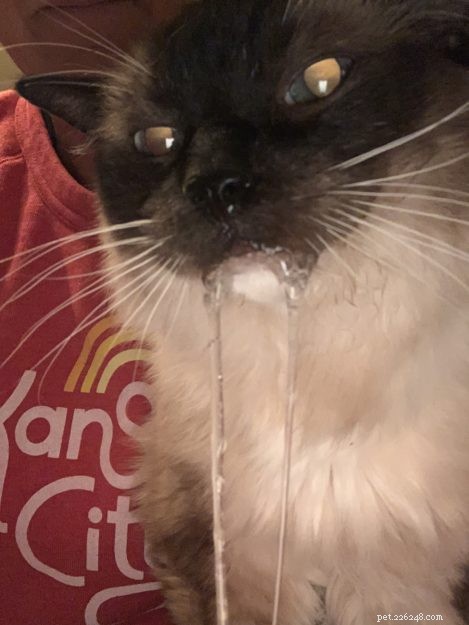
Among the symptoms you may notice are vomiting, hypersalivation, difficulty breathing, stomach cramps, diarrhea, tremors, ataxia (wobbliness), low heart rate, low body temperature, liver failure. However, the specific symptoms depend on the ingredients in the wax melts and differ greatly from one product to another.
Keep in mind that when it comes to exposure to toxic substances, the effects could be extremely damaging, so it is best to act quickly rather than regret not having taken your cat to the doctor in due time.
How to Prevent Your Cat from Inhaling Volatile Oils
As mentioned above, the best course of action is to limit the cat’s access to the wax melts entirely. Preferably, the cat should not be in the room with you when you use the wax melts. If this is not possible, what you can do is place the wax melt warmer in an elevated place. This ensures that it is located far from your cat and that the cat will not inhale concentrated volatile oils. As the oils dissipate in the air, their concentration decreases, and any potentially toxic effect is decreased.
Exposure to concentrated volatile oils could be dangerous for the cat’s respiratory and digestive tract and could cause lesions. This is why it should be avoided for all cats. However, if your cat already suffers from respiratory issues, then exposing it even to low concentrations of volatile oils must be avoided. Cats suffering from liver disease should also be kept from inhaling volatile oils because these strong smells could cause nausea and vomiting.
After using the wax melts, you should always air out the room to dissipate the volatile oils even further. Then, you can let the cat back in the room safely.
What to Do if Your Cat Suffers from Respiratory or Liver Issues
If your cat has acute or chronic respiratory issues – so, if it recently suffered from tracheitis, laryngitis, bronchitis, or even pneumonia, but has recovered, or if it has asthma or rhinitis, which are chronic – you should avoid Scentsy wax melts altogether.
The volatile oils in these products are irritant to a respiratory system that is already weakened, so you must ensure that they are not exposed to strong smells. If your cat suffers from liver disease, it has an increased sensitivity to strong smells, which could trigger episodes of nausea or even vomiting. These are usually followed by loss of appetite.
If your cat has any of the issues described above, you should keep them away from strong fragrances of all kinds that extend further than wax melts. These also include perfumes, flowers, or even the smells in your kitchen when you cook. Your veterinarian will talk to you about this sensitivity and will provide you with further instructions on how to keep the cat safe.
So, are wax melts safe for pets? The short answer is yes, as long as the pets are not close to them and do not ingest them. Do you use Scentsy wax melts? Are your cats interested in them? Tell us all about it in the comments section below.
- Pet Behavior
- Pet Breeds
- Pet Names
- Pet Adoption
- Pet Training
- Cat Stories
- Pet Health
- Adorable Pets
- Cats
- Is Coconut Oil Safe for Dogs? Benefits & Precautions
- Are Your Favorite Garden Plants Poisonous to Pets? Find Out and Protect Your Furry Friends
- Protect Your Pets: The Most Toxic Holiday Plants to Avoid
- 10 Pet‑Dangerous Foods You Must Avoid for Their Health
- Are Your Fragrances Harmful to Pets? Expert Tips to Safeguard Their Health
- Is Garlic Safe for Pets? Debunking the Myths
- Why Tea Tree Oil Is Dangerous for Rabbits