

Why Does My Cat Vomit After Eating Too Quickly? Causes & Solutions
Your cat is territorial
Territorial cats may gulp their food quickly to prevent other cats from stealing it. This behavior is common in multi‑cat homes, where the dominant cat feels the need to assert control by eating as much as possible or hoarding its meal. Territorial aggression can spill over into other areas—such as marking furniture or showing hostility toward other pets—so it’s a sign that shouldn’t be ignored.
Rapid eating can stem from many factors: an inadequate diet, boredom, or underlying health problems. When a cat consumes too much too fast, the food may not be digested properly, leading to regurgitation. Fortunately, there are proven ways to slow feeding, including treating medical issues, eliminating boredom, and using a slow‑feed bowl.
It’s important to understand that a “vomit” after a fast meal is often regurgitation—food that never reaches the stomach is expelled, usually in a semi‑formed shape. Knowing the difference can help you respond appropriately.
Why is my cat eating so fast?
Sudden changes in eating speed can be a red flag. If you notice your cat eating more rapidly than usual, schedule a vet visit to rule out medical causes. Below are common reasons for fast eating.
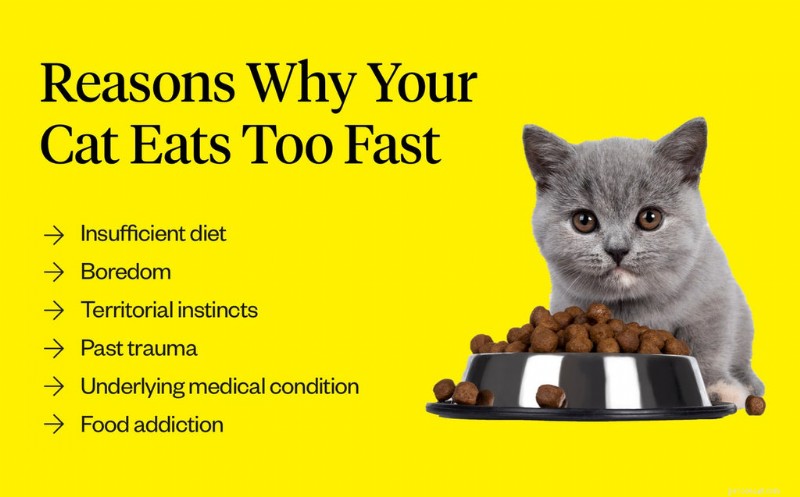
1. Insufficient or unbalanced diet
When a cat’s diet lacks essential nutrients, it may eat more quickly to compensate. Cats need a balanced mix of protein, fat, vitamins, and minerals that varies by life stage—kittens require more calories than seniors. Low‑carb, high‑protein formulas with an AAFCO “complete and balanced” statement are ideal. Feeding a diet high in carbohydrates or additives can leave a cat hungry for more, prompting faster eating.
Conversely, a thin cat may need more calories, while an overweight cat should avoid excess portions. Assess your cat’s ideal weight and adjust portions accordingly.
2. Boredom and mental stimulation
Like humans, cats may eat as a coping mechanism for boredom, loneliness, or anxiety. A fast, compulsive meal can provide the mental engagement they crave. Signs of boredom include repetitive pacing, aggression, lethargy, and overeating. Increasing playtime and interactive toys can redirect this energy.
3. Territorial behavior in multi‑cat households
As mentioned, dominant cats may rush their meals to prevent competitors from accessing food. This can lead to aggressive interactions and destructive behaviors such as scent marking. Separate feeding areas can reduce conflict.
4. Past trauma or uncertain food availability
Cats that grew up in environments where meals were unpredictable may develop a “pre‑emptive” eating style—eating rapidly to avoid missing a future meal. Outdoor hunters face a similar uncertainty, which can translate into fast feeding indoors. Anxiety and stress can also drive this habit.
5. Underlying medical conditions
Diseases such as hyperthyroidism or diabetes can increase appetite. Gastrointestinal parasites, present in up to 45% of some populations, can strip nutrients from food, prompting faster eating. If your cat shows persistent rapid eating, a vet exam is essential.
6. Food obsession or “addiction”
Some cats develop a compulsive need for food, leading to constant meowing, pacing, and even begging for human meals. This can result in over‑eating and rapid consumption. Treating the underlying behavior is key.
What happens when my cat eats too fast and vomits?
When a cat regurgitates after a fast meal, the expelled material is usually undigested food and fluid—often forming a tubular shape because it never passed the stomach. Over‑eating can also trigger true vomiting if the stomach is overloaded. Smaller, more frequent meals help prevent both regurgitation and true vomiting.
Food intolerances or sensitivity to additives can also cause gastrointestinal upset after eating. Monitor your cat’s reaction to different foods to identify potential triggers.
How to stop my cat from eating too fast
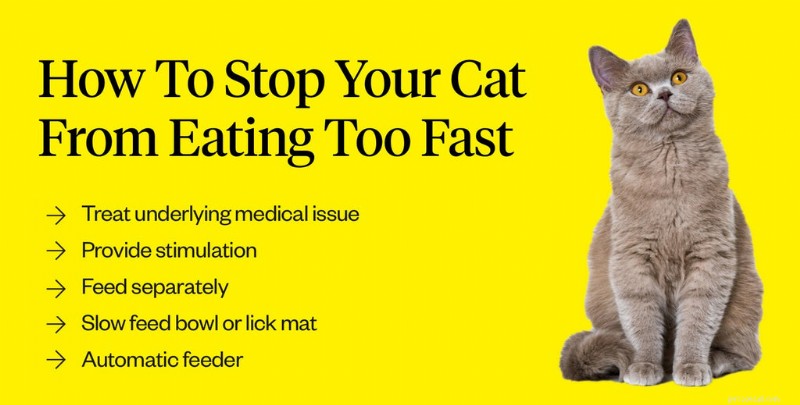
Before attempting behavioral changes, have your cat examined by a veterinarian to rule out medical issues. Once cleared, consider the following strategies:
1. Provide mental and physical enrichment
Regular play sessions, puzzle feeders, and interactive toys keep a cat engaged and reduce the urge to eat for stimulation.
2. Feed nutritionally balanced food
Choose AAFCO‑approved foods tailored to your cat’s life stage. A diet high in protein and low in carbohydrates supports satiety and reduces the temptation to over‑eat.
3. Feed separately in a calm environment
Separate feeding areas or microchip‑activated feeders prevent competition and allow you to monitor each cat’s intake.
4. Use a slow‑feed bowl or lick mat
These devices force the cat to eat slowly, reducing regurgitation and bloating. They also provide mental stimulation and can soothe anxious cats.
5. Install an automatic feeder
Automatic feeders can portion meals at scheduled times, ensuring your cat receives the correct amount without having access to food all day. This reduces binge eating driven by boredom.
Supporting your cat’s healthy eating habits
Rapid eating can be a symptom of a serious health issue. If vomiting or overeating persists, veterinary guidance is essential. Dutch veterinarians can help determine whether stress, anxiety, or a medical condition such as diabetes is at play, and design a personalized treatment plan.
Ask a Dutch vet for expert advice on your cat’s digestion.
- 24/7 care from top‑rated vets
- Unlimited vet calls & messaging
- Pet Behavior
- Pet Breeds
- Pet Names
- Pet Adoption
- Pet Training
- Cat Stories
- Pet Health
- Adorable Pets
- Cats
- Nighttime Activity of Hedgehogs: How Far They Run
- Peter’s Banded Skink: Rare, Docile African Lizard for Beginner Reptile Owners
- Why Rabbits Are Vulnerable: 6 Key Causes of Unexpected Death
- Study Reveals Cats Prefer One Paw: Insights into Feline Handedness
- Dog Trainers Reveal How Men and Women Train Dogs Differently
- Why Your Cat Is Extra Needy: Uncovering the Roots of Their Attachment
- Understanding Normal Liver Enzyme Levels in Dogs: A Guide for Pet Owners