

Why Cats Scratch: Instinct, Health, and How to Protect Your Home
If you’re a cat owner, you’ve probably noticed your feline spending a significant amount of time scratching—whether on a dedicated post or a piece of furniture. Cats’ claws are sharp, curved, and designed for hunting and defense. While retractable, these claws allow them to move silently but also to climb, scratch, and groom.
In this guide we’ll explore why cats scratch a variety of surfaces—including posts, furniture, carpets, and even people. If you notice excessive scratching or grooming, a veterinarian can help determine if an underlying issue exists.
Scratching is not a random habit; it’s an instinct inherited from wild ancestors. While cats don’t scratch for pleasure, they need to do it for several essential reasons—stress relief, scent marking, muscle stretching, and nail maintenance.
Reasons why cats scratch

To keep their nails in top condition
Scratching removes the outer sheath of the claw, revealing a sharper, healthier nail underneath. Pet owners often find discarded husks around scratching posts or on carpets; these are a normal part of the grooming cycle, not a sign of injury.
To mark territory with their scent
Cats have sebaceous glands on their paw pads that secrete an oily substance, leaving a scent mark when they scratch. This scent communication helps them establish territory, comfort themselves, and signal their presence to other animals and humans.
To stretch and exercise
Scratching provides a full-body workout for a cat’s back, shoulders, and limbs. It’s a natural form of stretching that keeps muscles toned and joints flexible, contributing to overall physical and mental health.
To express emotions
When stressed, excited, or bored, a cat may scratch as a coping mechanism. Excessive scratching can also indicate underlying anxiety or discomfort, so observing accompanying behaviors—such as over-grooming or body tension—can give clues to their emotional state.
What do cats like to scratch?
Cats don’t scratch out of spite; they scratch because it satisfies instinctual needs. In the wild, they use trees to mark territory; indoors, they target anything that offers a surface for their claws. Common targets include furniture, curtains, carpet, and door frames.
Providing dedicated scratching posts, mats, and toys in multiple rooms helps redirect this natural behavior and protects your furnishings.
Why do cats scratch people?
When a cat scratches you, it’s usually a sign of one of three situations:
- Play: Young or bored cats often rough‑play with humans, using their claws as they would with other cats. Redirecting this energy with interactive toys can reduce play‑scratching.
- Overstimulation: A play session that becomes too intense can trigger scratching. Calm the cat with gentle petting or a short break to prevent escalation.
- Defensive behavior: If a cat feels threatened or in pain, scratching is a defensive response. Persistent scratching warrants a veterinary examination to rule out medical causes.
Persistent or aggressive scratching may also signal anxiety or fear. In such cases, a veterinary behaviorist can offer targeted interventions.
Talk to a vet at Dutch about your cat's behaviors.
- 24/7 care from top‑rated vets
- Unlimited vet calls & messaging
How to stop cats from destructive scratching

Destructive scratching—scratching that damages furniture or personal belongings—is preventable with a few strategic steps. Because scratching is a normal behavior, the goal is to redirect rather than punish.
Give your cat something to scratch
Choose posts or pads that match your cat’s preferred scratching style. Some cats favor vertical, rope‑covered posts; others prefer horizontal, corrugated cardboard pads. Experiment until you find the material they prefer. Use catnip or synthetic pheromone sprays to entice them to use the new surfaces.
Make undesirable areas less appealing
Protect furniture and walls with protective coverings or sheets. A light citrus spray—cats dislike the scent—can deter them from specific spots. These deterrents work best while your cat is learning to use the appropriate scratching posts.
Routine nail care for cats

Regular trimming (every 2–4 weeks) reduces the need for scratching by keeping claws at a manageable length. Trim only the sharp tip of the nail; avoid cutting into the quick to prevent bleeding. Proper nail care prevents breakage, split nails, and reduces damage to furniture.
Declawing is not a viable solution. The procedure removes the distal phalanx of each toe, causing pain, infection, and long‑term mobility issues. It also eliminates a natural defense mechanism, often resulting in increased aggression or biting.
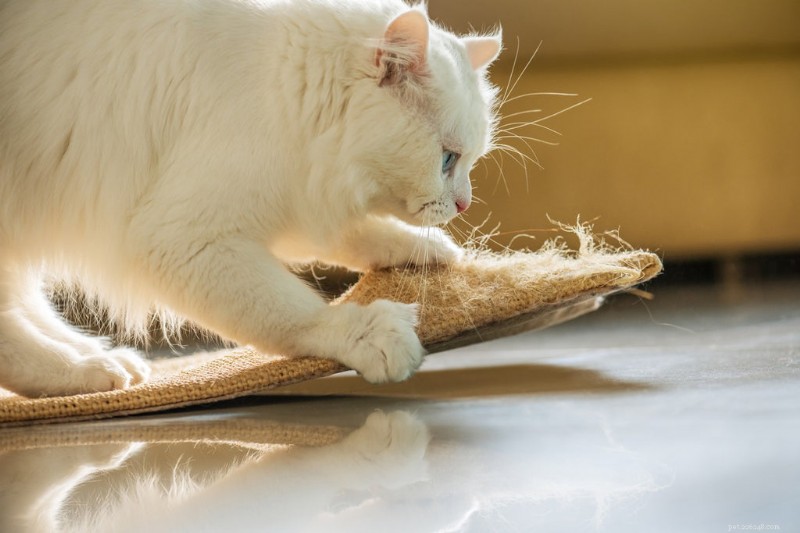
What to do when your cat scratches too much
While scratching is instinctual, a sudden increase in frequency—especially when accompanied by aggression—may signal anxiety or discomfort. If you’re concerned, schedule a veterinary check‑up to rule out medical causes such as pain or skin conditions.
Professional guidance can help you address behavioral triggers and implement strategies that promote a calm, happy environment for your cat.
Talk to a vet at Dutch about your cat's scratching.
- 24/7 care from top‑rated vets
- Unlimited vet calls & messaging
- Pet Behavior
- Pet Breeds
- Pet Names
- Pet Adoption
- Pet Training
- Cat Stories
- Pet Health
- Adorable Pets
- Cats
- 10 Things You Do That Make Your Cat Love You Even More
- How to Keep Your Small Pet Safe and Warm in Cold Weather
- How to Successfully Adopt a Senior Dog: A Practical Guide
- Meet Phoebe: The Elegant Ragdoll Cat of the Week
- Elevate Your Dog's Summer Fun: Try Dock Diving Today
- Great Dane Lifespan: How Long Do They Live & Ways to Extend Their Years
- Homemade Dog Treat Recipes: Show Your Pooch Love & Health