

Understanding and Preventing Matted Fur in Cats: A Complete Guide
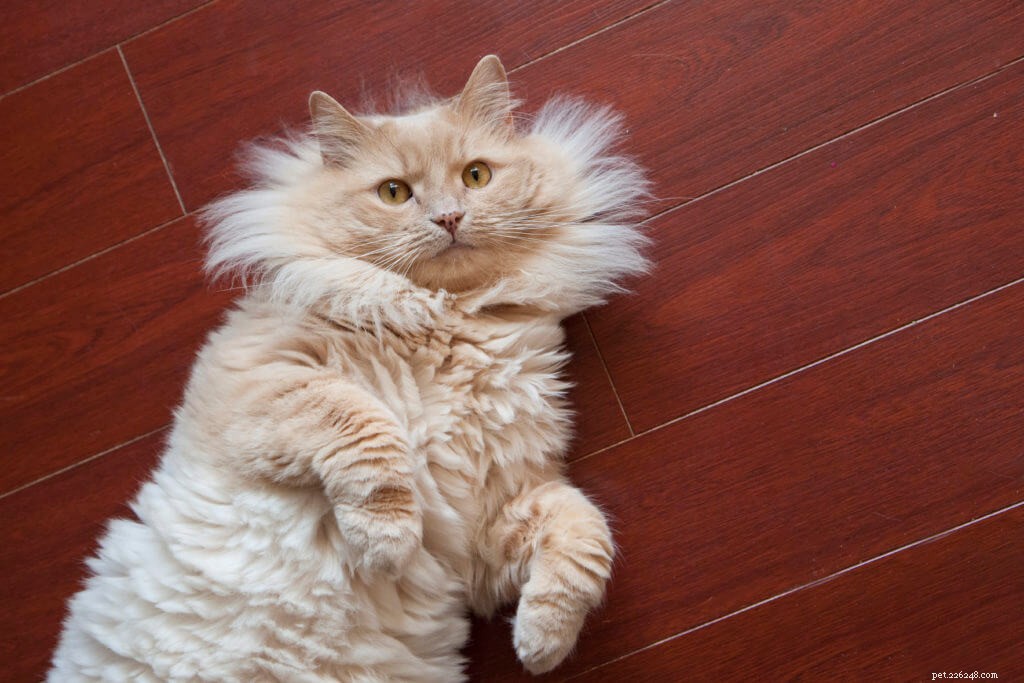
According to an estimate, cats have about 130,000 strands of hair per square inch of their body. Therefore, it’s not surprising that your cat needs a lot of grooming. Fortunately, cats are excellent self-groomers and take good care of their fur most of the times. However, they still require some help from the owners to avoid (and untangle) matted hair. Keep reading to get some useful information about matted fur and your cat.
Table of Contents
What’s matted fur?
The term ‘Matted Fur’ refers to a condition when the fur of your cat becomes knotted. This problem is usually associated with long-haired cats because their coats can easily become matted. However, Petful suggests that short-haired cats can also develop mats due to the accumulation of dust and dander on their coats.
Causes of matted fur in cats
Matting usually occurs on those parts of the body where there is a lot of rubbing between hair. For example, you are quite likely to find matted fur between the legs, in between the chest and the arms, around the collars and under the tail of your cat. There are other reasons which can create matted fur, which you can find below.
Lack of grooming
A lack of self-grooming in cats can produce matted fur and is one of the most common causes. Below are some reasons for matted fur in cats due to a lack of self-grooming.
- Ageing – As cats age, they become just like us – weaker and unable to care for themselves as much as they did in their youth. They sleep more and may even forget about grooming all together and that is when their fur can become quite matted.
- Medical reasons – It’s also common for cats to stop grooming themselves if they are ill, especially if they are suffering from arthritis. Likewise, cats with kidney disease, diabetes, and cancer are also more prone to matting.
- Dental issues – As Alder Grove Animal Clinic points out, a cat’s mouth is it’s main grooming tool. Therefore, if your cat has a periodontal disease, stomatitis or oral tumors, your cat may avoid grooming itself.
- Obesity – Obese cats become more vulnerable to matting because they are unable to clean themselves. They can’t access hard-to-reach body parts which can aid in the formation of mats.
Due to these reasons, it can be hard for cats to groom themselves properly. Therefore, you, as the cat owner need to take action and not only evaluate your cat’s fur coat, but brush out any mats you find. Your cat will enjoy added attention and will suffer less from matted fun.
Shedding
According to Petco, shedding is also a large reason for matted fur in cats. When a cat sheds hair from his/her undercoat, it can get caught in the top coat. This results in knots that can quickly grow into larger mats, and as they increase in size, they can grow closer to the skin which can become painful if left unattended.
To counter this problem, you should brush your cat regularly. This will help you to prevent the formation of mats by removing the loose hair.
Oily or dirty skin
The accumulation of oil, dust, or dander on your cat’s fur is ideal for matting. This is a primary reason that creates matted fur in short-haired cats. Regular brushing and proper cleaning of your kitty can solve the problem of dust and dander.
- Pet Behavior
- Pet Breeds
- Pet Names
- Pet Adoption
- Pet Training
- Cat Stories
- Pet Health
- Adorable Pets
- Cats
- Cat Seizures Explained: Causes, Symptoms, and Treatment Guide
- Pancreatitis in Cats: What Every Owner Should Know
- Understanding Cat Conjunctivitis: Causes, Symptoms, and Effective Treatments
- Understanding and Managing Cat Hairballs: Prevention, Symptoms, and Treatment
- Essential Guide to Cat Vaccinations: Protect Your Feline’s Health
- The Ultimate Guide to Catnip: How It Affects Your Cat
- Comprehensive Guide to Cat Worms: Prevention, Symptoms, and Treatment