

Understanding and Managing Cat Hairballs: Prevention, Symptoms, and Treatment
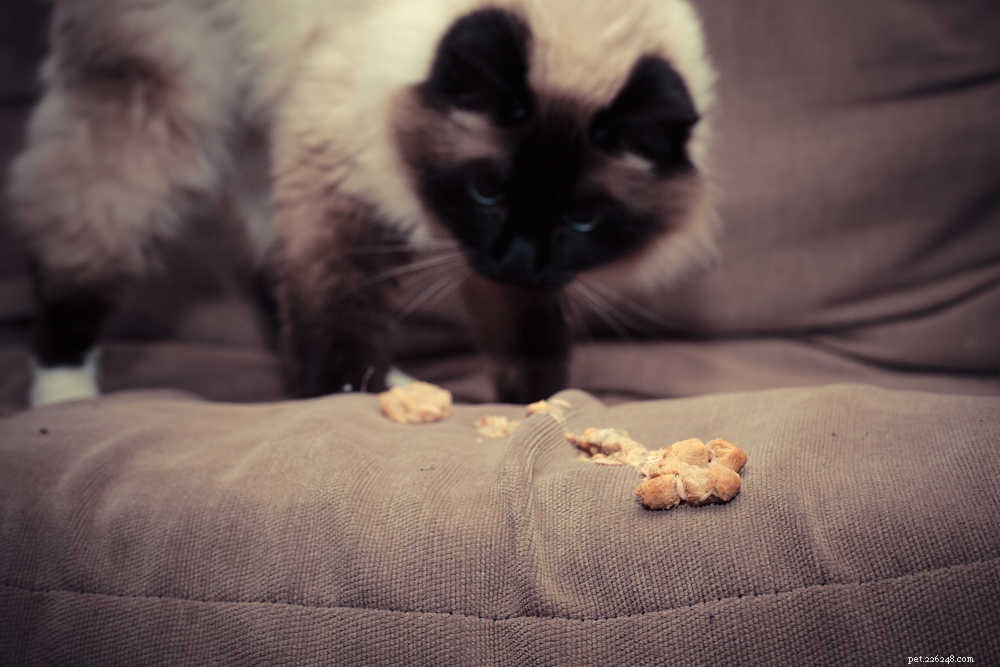
Have you ever noticed your cat vomiting a long, tubular mass of hair? If your answer is YES, you are not alone because hairballs are very common in cats. They are extremely unpleasant for the kitty and can also cause serious health concerns, like intestinal blockages. Keep reading to know about the methods that can be used to prevent (and treat) cat hairballs.
Table of Contents
Causes of cat hairballs
The self-grooming instinct of cats is, naturally the primary cause of hairballs. The tiny hook-like structures on a feline’s tongue lead to the swallowing of dead hair (while licking the coat). Most hair passes through the digestive tract without causing any problems. However, some of them can accumulate in the stomach to form a hairball.
When a kitty is feeling uncomfortable due to a hairball, he/she tends to vomit it out of his/her system. The vomited hairballs appear tubular because cats have a narrow esophagus. Sometimes, these hair are also accompanied by a slimy mucus. Therefore, it is quite distressful for cat owners to clean up the mess. In extreme cases, hairballs become significantly large and can cause a blockage in the gastrointestinal tract.
Symptoms of cat hairballs
It can be very disturbing to watch and hear your feline companion while he/she is trying to eliminate a hairball. All the coughing and retching are extremely unpleasant for cats as they try to vomit the discomfort out. In addition to these signs, according to Pet Web MD, a kitty suffering from hairballs can also exhibit the following (potentially dangerous) symptoms.
- Lack of appetite
- Continuous vomiting, gagging, or coughing without eliminating any hairball
- Lethargy
- Diarrhea
- Constipation
How common are cat hairballs?
Hairballs are a part and parcel of cats’ life because of their extensive grooming habits. Normally, adult cats tend to produce more hairballs (than kittens) because they have a fastidious grooming regime. Likewise, breeds with longer hair (like Persians and Ragdolls) are more prone to cat hairballs. If your kitty is producing TOO many hairballs, it’s highly recommended to visit a vet for a medical examination.
Are hairballs dangerous to cats?
Fortunately, hairballs are usually NOT dangerous for cats. However, if your feline is continuously retching without producing the hairball, Purina One, and I concur, recommends immediately taking the suffering feline to the vet. This is because it can be an indication that the hairball has resulted in a gastrointestinal obstruction. It is an extremely serious condition that can also lead to death, in extreme cases.
How can you prevent hairballs in cats?
Although they are harmful, it’s NOT possible to completely eliminate the problem of hairballs. This is because grooming is a part of feline nature and it can’t be controlled. However, there are several other ways in which ‘trichobezoars’ can be minimized. Some of the most effective remedies for preventing cat hairballs are discussed below.
Natural remedies for hairballs in cats
Regular brushing
Pet Living says regular brushing is actually one of the most effective way to prevent the accumulation of hair in your cat’s gastrointestinal tract. Felines swallow the dead hair from their fur while grooming themselves. Brushing allows you to remove these excess hair from their coat, which means that less fur is swallowed. As a result, the probability of hairball formation is reduced.
- Pet Behavior
- Pet Breeds
- Pet Names
- Pet Adoption
- Pet Training
- Cat Stories
- Pet Health
- Adorable Pets
- Cats
- Cat Seizures Explained: Causes, Symptoms, and Treatment Guide
- Pancreatitis in Cats: What Every Owner Should Know
- Understanding Cat Conjunctivitis: Causes, Symptoms, and Effective Treatments
- Essential Guide to Cat Vaccinations: Protect Your Feline’s Health
- The Ultimate Guide to Catnip: How It Affects Your Cat
- Comprehensive Guide to Cat Constipation: Causes, Symptoms, and Treatment
- Comprehensive Guide to Cat Worms: Prevention, Symptoms, and Treatment