

Understanding Cat Papillomas: Types, Causes, and Effective Treatments
Papillomas, also referred to as “warts” are small lumpy, nodular, or even hairy looking growths that most often occur on the skin or in/around the mouth. While they are rare in cats, that also means seeing one should prompt an exam with your vet. In this article, you’ll learn what causes papillomas, what to look for, and when they can be a medical concern.
Quick Overview: Papillomas in Cats
Other Names: Warts; (virus-associated lesions may be described as) viral plaques, Bowenoid in situ carcinoma (BISC)
Common Symptoms: Usually a small, rough “warty” skin growth (often <1 cm); may look lumpy/nodular or sometimes stringy/hairy; can occur on the head/nose or in/around the mouth (often under the tongue). Some virus-associated lesions look like flat, scaly plaques or dark, crusted/ulcerated growths; bleeding/crusting, rapid change, or multiple lesions are more concerning.
Requires Ongoing Medication: Usually no (many are treated with removal/biopsy; ongoing meds depend on the diagnosis—benign wart vs. cancerous lesion)
Vaccine Available: No (no feline papillomavirus vaccine is available)
 Treatment Options: Removal and biopsy (histopathology) is the standard approach in cats because true papillomas are rare and can be linked to more serious tumors. Small lesions may be removed with sedation + local anesthetic (often with a biopsy punch). Larger/sensitive-area lesions (nose, mouth) often need general anesthesia. Depending on diagnosis, options may include surgical excision, cryotherapy, or CO₂ laser; additional staging tests may be recommended for cancers (bloodwork, FeLV/FIV testing, imaging).
 Home Treatment: Don’t attempt home removal. Take a clear photo with the date first noticed and monitor for changes. Seek prompt veterinary evaluation for any wart-like growth—especially if it persists >3 months, bleeds, becomes crusted/ulcerated, grows quickly (within a month), or multiple lesions appear. Keeping bowls/bedding/surfaces clean may reduce fomite spread risk in multi-cat settings; maintaining routine wellness exams/labwork helps catch immune issues that can increase risk.
What is a Papilloma?
Papillomas are small growths found on the skin or in and around the mouth. They can have a few different appearances, but here are some characteristics:
- Typically small (less than 1cm in size)
- Consists of small nodules or lumps
- May have an almost hairy type of appearance
- The term “verrucous” is used to describe the “warty” appearance of these growths
Papillomas are very common in dogs, especially young dogs between about 7-8 months to 2 years. They most often occur in or around the mouth.
But in cats, papillomas are much more rare. They are not seen routinely in juvenile cats
Causes of Papillomas in Cats
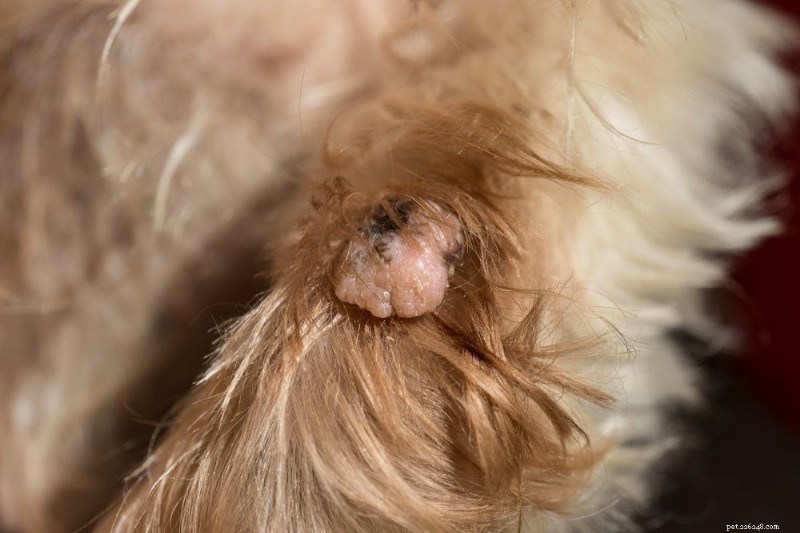
Nodular sebaceous hyperplasia, which is overgrowth of a skin gland, is commonly seen on older dogs and even more commonly confused with a wart. These can occur in older cats but are comparatively uncommon. Pumbastyle / Shutterstock.com
Papillomas, or true warts, are caused by one of several types of papillomaviruses. In cats, 8 papillomasviruses have been identified that can infect cats and cause warts or other disease.
For future reference, feline papillomaviruses are abbreviated as FcaPV’s. The different types of FcaPV’s are then designated by a number, like FcaPV1, FcaPV3 ,4, 5, etc.
How do papilloma viruses cause warts?
The viruses themselves can be passed somewhat easily to a cat. They can be passed directly from one cat to another, but even contact with any surface or object the virus is on (an inanimate surface or object that can facilitate disease transmission is called a fomite) can allow the virus to come in contact with the skin.
When a papillomavirus infects a cat, it stimulates the quick replication of skin cells, leading to a wart. Curiously, at the same time, the formation of the wart stimulates the immune system to prevent the virus from replicating further. Typically, this leads to spontaneous resolution of a wart, where it disappears on its own.
Research has shown in recent years that papillomaviruses are extremely common in cats but infect cats mostly around the time they’re born or shortly after. So in a large majority of cases in cats infected by a papillomavirus, the immune system addresses it before any wart ever appears. This is called a subclinical infection.
Research has also shown that in most cases, papillomaviruses cause very slow replication of skin cells, not rapid replication. That means that in many cases where a wart does form, it is perhaps barely raised or noticeable at all before it resolves on its own.
In dogs, we rarely worry about papillomas causing serious disease. Unless an immune system disorder is present, most warts resolve on their own within 1-3 months.
But in cats, we can see papillomaviruses linked to more serious skin tumors. In recent years, research has even determined which types of papillomaviruses are associated with dangerous skin tumors:
- FcaPV1 (a Lambdapapillomavirus): this papillomavirus more typically causes warts on the skin or in the mouth.
- FcaPV2 (a Dyothetapapillomavirus): this papillomavirus is associated with more concerning skin lesions like viral plaques, Bowenoid in situ carcinoma (BISC), cutaneous squamous cell carcinoma (SCC), Merkel cell carcinoma (MCC), and basal cell carcinoma.
- FcaPV3 (a Taupapillomavirus): this papillomavirus is also associated with concerning skin lesions like squamous cell carcinoma, other skin cancer, Bowenoid in situ carcinoma, and plaques.
- FcaPV 4, 5, and 6 (also Taupapillomaviruses) can have a variety of impacts. FcaPV 4 can contribute to stomatitis (inflammation inside the mouth) but also is associated with BISC. FcaPV 5 is similar to 3 in that it can cause plaques and BISC (but not SCC). FcaPV6 has been found on the front of the nose and may be associated with SCC.
- Cats may also be affected by a cow papilloma virus called bovine papillomavirus 14. A Deltapapillomavirus, it has been associated with a condition called feline sarcoids. A feline sarcoid is a very rare (even for cats that spend a lot of time around cattle) spindle cell tumor that develops with BPV-14. Instead of causing skin cell proliferation, it instead causes accelerated growth of fibroblasts, involved in underlying connective tissue. This causes a more invasive tumor that develops just beneath the skin.
While not a cause of papillomas specifically, there are conditions that appear to increase risk significantly for an actual growth occurring on the skin (as opposed to a subclinical infection that resolves on its own before a growth ever forms) or a more concerning skin lesion like skin cancer.
Other Factors Impacting Cause of Papillomas in Cats
Because the immune system is crucial for shutting down viral replication of papillomas, which leads to spontaneous resolution, any condition impacting the immune system can cause a worse condition of papillomatosis or other skin lesions or even cancer.
Feline leukemia (FeLV) and feline immunodeficiency virus (FIV) are both viruses more often found for the first time in young cats or kittens. A young cat or kitten with papillomas or other skin growth type lesions suspected to be papilloma-related should always be tested for FeLV and FIV.
Other situations where the immune system may be impacted include:
- Other chronic illnesses
- Other immune-mediated diseases (which have multiple types and causes)
- Cats on chemotherapy
- Cats on immunosuppressive medication (i.e. cyclosporine/Atopica)
Because papillomas in general are rare in cats, any cat that develops a visible true papilloma wart (and especially more than one) should have a full health assessment to evaluate for other underlying conditions affecting the immune system.
Symptoms of Papillomas in Cats
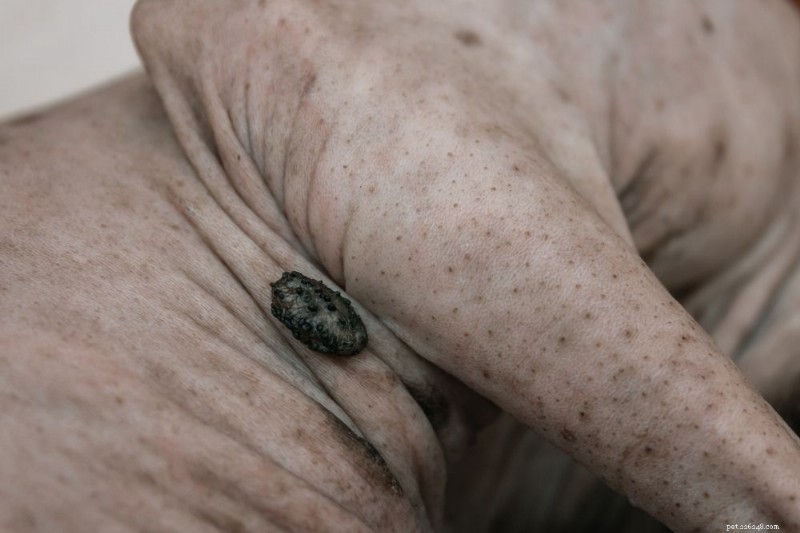
Bowenoid in situ carcinomas (BISC), a cancerous type of papilloma, can appear as a dark pigmented, rough-looking growth on the skin. A Sphynx cat, as pictured here, is a breed at higher risk for this tumor type, associated with several types of papillomaviruses. Olga by Shefer / Shutterstock.com
In general, papillomas have a verrucous appearance which describes a lumpy, bumpy, or even stringy/hairy type appearance. But there are some growths that have this appearance (such as sweat gland growths) that are not true papillomas and growths caused by papillomas can have varying appearances too.
This list of appearances is broken down into what growths might look like depending on their type, as caused by different papilloma viruses.
Skin Papillomas (Warts)
These are the least concerning but are still very rare in cats. They appear as a small thickening and folding of the skin, sometimes with a rough lumpy or bumpy appearance. They can appear anywhere, but the head and nose appear to be more common locations.
Oral Papillomas
These also occur uncommonly in cats. But as opposed to dogs where they are easily seen around the inside of the cheek, edges of the mouth and lips, oral papillomas tend to occur under the tongue in cats. This may mean that many are not found. When seen, these will appear similar to those of dogs as a kind of polyp with a bumpy or tendril type appearance, sometimes called a “cauliflower” appearance.
Hyperkeratotic Plaques
Associated with FacPV 2, 3, and 5, plaques are more flat but very slightly raised off the skin. They appear rough and scaly and may have a variety of pigmentation (may appear lighter or darker than the surrounding skin).
Bowenoid in Situ Carcinomas (BISC)
As mentioned earlier, there are specific feline papillomaviruses associated with this type of cancer (namely FacPV 2, 3, and 5). These appear as darkly pigmented raised, rough and crusted looking growths. Thin-haired or hairless cat breeds (like the Sphynx and Devon Rex) may be more predisposed and metastatic spread (multiple lesions being seen) has been documented in these breeds.
Feline Cutaneous Squamous Cell Carcinoma (Cutaneous SCC)
SCC on the skin appears less like a mass versus a roughened ulcerated and crusty type lesion. They often appear recurrently inflamed and crusted and are prone to bleeding. These almost always occur in areas of thin hair (the head, face, and belly). Sun exposure is a major contributing factor but certain papillomaviruses have also been associated with SCC development.
Feline Oral Squamous Cell Carcinoma (Oral SCC)
SCC in the mouth of cats can have more of a mass-like appearance combined with an ulcerated tissue prone to bleeding. Unfortunately, many oral SCC’s develop on the underside of the tongue in cats making them hard to see early on and without a thorough exam. They may also be associated with abnormal gum tissue around a tooth and eventual tooth loss.
Cats with oral SCC may have signs of off/on blood-tinged saliva, hypersalivation (excessive drooling), pain when eating, pawing at the mouth, or complete absence of interest in food due to mouth pain.
Feline basal cell tumors and carcinoma
Basal cell tumors, the benign non-cancerous form, appear as singular raised and often ulcerated masses on the skin. They arise from the layer just under the skin. Longhaired breeds like Persians and Himalayans appear more predisposed.
Basal cell carcinomas (BCC) appear much less raised, are more ulcerated, and may spread locally on the skin. Persians are more predisposed. Only FacPV2 is associated with BCC.
Feline sarcoids
These are a type of spindle cell tumor associated only with bovine papillomavirus 14. These are very nodular looking growths that may occur on their own or in groups. They most often affect the head, nose, neck and sometimes the belly and limbs.
Merkel cell carcinoma (MCC)
Merkel cells are a neuroendocrine cell found in countless places throughout the skin. They are responsible for tactile touch and feel and sending that feedback to the nervous system (think how much pressure do I need to hold a spoon vs. a 50lb weight).
This is also a very rare form of cancer in cats. One study in Italy looking at nearly 700 cats with different types of cancer didn’t find a single cat with MCC. As recently as 2022, FacPV2 was connected with MCC in a cat.
These appear in cats as firm, dome-shaped red and ulcerated skin nodules. In cats, they unfortunately spread often, so multiple lesions may be seen.
Complications of Having Papillomas
Technically, a large majority of cats infected with papillomaviruses have no issues. As mentioned earlier, a majority of cats likely have exposure at birth or shortly after but never develop a wart or other disease.
Complications occur in cats with poor immune systems or older cats whose immune systems don’t function as well. These factors, combined with others (such as sun exposure in the case of squamous cell cancer on the skin) are what can lead to a papillomavirus infection causing a skin tumor and/or cancer. It also clearly depends on the type of papillomavirus involved.
Diagnosis of Papillomas in Cats
Papillomas may be suspected based on their visual appearance but they cannot be accurately diagnosed without removal and biopsy. When the tissue is sent out to a lab, a pathologist can determine exactly what type of growth it is.
Small papilloma growths may be removed with only sedation and a local anesthetic. A tool called a biopsy punch can remove many small ones with good margins. These may also be used to get a small sample of a larger growth. Larger growths or those on more sensitive areas like the nose and in the mouth, require general anesthesia to completely remove.
Simple papillomas associated with FcaPV1 have a clear cause. Other forms of papillomas, including some skin cancers we’ve reviewed can be diagnosed, but papillomavirus may only be one contributing factor.
Determining the type of papillomavirus involved is more advanced and not routinely done. Viral DNA sequencing is often only available at universities and is not something currently that your veterinarian can easily find out. That may change in the near future as PCR (polymerase chain reaction) based diagnostic testing continues to become more common and available.
The presence of any skin growth on a cat, especially one that appears crusted, ulcerated, or “rough” looking should always be removed (or at least a portion of it biopsied if it is a larger area) to determine what it is.
Because papillomas are rare in cats, they should never be dismissed as a simple growth to be monitored, which is a common approach in dogs. The presence of one (and especially more than one) can suggest an underlying illness or immune system disorder has allowed a papilloma to develop.
Some cancers papillomaviruses contribute to, like MCC, BISC, and SCC may require more testing due to their severity.
For this reason, your veterinarian may advise more testing in addition to removal/biopsy of the papilloma. This may include:
- Complete blood count/blood chemistry
- Urinalysis
- FeLV/FIV testing
- X-rays (radiographs)
- Abdominal ultrasound
Treatments for Papillomas in Cats
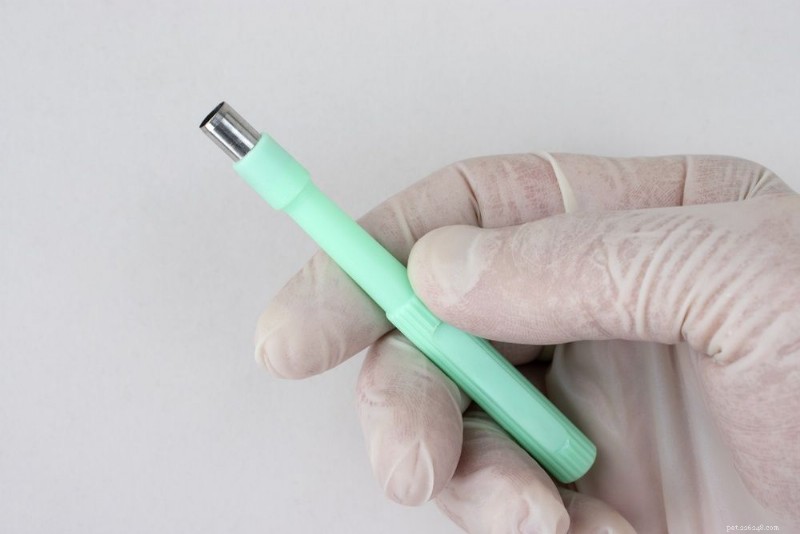
Many small papillomas on the skin can be removed with a biopsy punch. The growth can be removed and the tissue sample sent to a lab for a confirmed diagnosis at the same time. Nerdybordicua / Shutterstock.com
In general, surgical removal of papillomas in cats is a routine approach. In dogs, visible papillomas are common and resolve on their own. But in cats, papillomas are rare and can be connected with more concerning disease. Being proactive to remove any growth while it’s still small and can be removed easily is always preferable.
Depending on the type of growth, here is how treatment is approached and the expected outcome.
Skin papillomas (warts)
Some may spontaneously resolve, as they often do in dogs. But if one has persisted longer than 3 months or has other concerning qualities (ulceration, crusting, occurring in multiples) surgical removal is ideal. In cases where the papilloma is small, sedation, local anesthetic and removal with a biopsy punch may be successful at complete removal and getting an accurate diagnosis at the same time.
Any growth larger than about 6-8mm may be too large for a biopsy punch and require more involved surgical removal. This typically requires general anesthesia, but in many cases will still be a brief procedure.
Oral papillomas
Similar to dogs, oral papillomas may resolve on their own too. Single ones rarely cause too much issue with eating and grooming behavior. Multiple ones found in the mouth would be highly unusual for a cat (and many dogs).
Some doctors advocate crushing papillomas to push the immune system to take over and make them regress. This is one option to discuss with your vet if they persist longer than 3 months or are causing issues with eating, grooming, etc.
Surgical removal is also possible for these. Because the mouth is a sensitive location, very heavy sedation or general anesthesia is required.
Hyperkeratotic plaques
Some of these may spontaneously resolve while others may persist. They tend to be smaller and may be removable either with a biopsy punch or scalpel/surgical scissors.
Bowenoid in Situ Carcinomas (BISC)
Although a more aggressive type of tumor, some Bowenoid in situ carcinomas may resolve on their own. However, waiting does present risks. In some breeds like Sphynx and Devon Rex, metastatic spread to other parts of the body has been documented.
For the best outcome, removing these is best. Surgical (scalpel/surgical scissors) removal, cryotherapy (freezing them off) or removal with a surgical CO2 laser have all been successful approaches.
Imiquimod, a topical cream used in people for treatment of some similar types of skin tumors, may be an option but carries many precautions. Accidental ingestion by cats during grooming may cause GI upset and liver toxicity. Application site reactions are also very common causing burning and irritation. Further studies are also needed to determine how effective imiquimod is in cats and whether the side effects are worth the risk.
Feline cutaneous squamous cell carcinoma (cutaneous SCC)
Squamous cell carcinoma related to papillomaviruses as a cause can have a more favorable outcome than other forms of SCC. Determining viral involvement may be challenging to determine in everyday veterinary practice. In cats with fair skin and known sun exposure, viral involvement may be less likely a cause. Unless sun exposure is limited, these cats also often get recurrent or new SCC lesions.
Surgical removal of SCC lesions is usually best. Singular lesions can be removed successfully but this can also depend on where the lesions are located. Lesions on the face and ears can be more challenging to remove and almost always result in permanent appearance changes.
Feline oral squamous cell carcinoma (oral SCC)
Unfortunately, most cases of oral SCC carry a poor prognosis and result in euthanasia. Too many SCC lesions occur on the underside of the base of the tongue where surgical removal is challenging and sometimes not practical. Aggressive tissue removal is needed with SCC and this type of tissue removal would affect a cat’s ability to swallow and use their tongue.
These tend to be very painful as well, making medical management attempts very unrewarding. In the author’s experience, many cases sadly result in euthanasia within 1-2 weeks of diagnosis because of oral pain affecting a cat’s ability to eat.
In cases not affecting the tongue but other parts of the mouth, aggressive surgical removal is still often needed as recurrence is a common risk. Veterinary dental specialists can perform more advanced removal of tumors affecting the upper or lower jaw.
Feline basal cell tumors and carcinoma
In both cases (for benign basal cell tumors and for carcinoma) surgical removal is ideal. Even benign basal cell tumors can be ulcerated and prone to bleeding, causing discomfort and quality of life issues.
Basal cell carcinoma can spread to other areas of the skin. Surgical removal is still indicated in these cases.
Feline sarcoids
Surgical removal of sarcoids is the treatment of choice. The issue with successful treatment usually results from their locations (head, nose, etc.), making aggressive removal with clean tissue margins hard to achieve. Recurrence of these after surgical removal can thus be common. The silver lining is that while these are locally aggressive, they do not metastasize and spread to other areas of the body.
Merkel cell carcinoma (MCC)
MCC is fortunately extremely rare, because successful treatment is rarely possible and prognosis with MCC is often poor. The tumors themselves can be removed surgically, but MCC does tend to recur, even in cases where surgical margins were found to be clean of tumor cells by a pathologist.
MCC also tends to metastasize, or spread to other parts of the body. This means that even if the tumor on the skin is successfully removed, cancer may show up somewhere else, including inside the body.
Cat Care Tips
- If you do see a growth on your cat that looks like a wart, take a photo of it and note the date you first saw it. Any new wart-like growth should be examined by a vet but a higher priority is given to papillomas/warts (even tiny ones) that don’t resolve within 3 months.
- Any even small skin growth or lesion that develops bleeding, crusting, ulceration, or grows in size within one month or less should prompt immediate veterinary attention.
- Because more aggressive skin tumors in cats may appear as warts and their behavior is less predictable than what we see in dogs, the added expense of histopathology to confirm the growth type is worthwhile, even for very tiny warts.
Prevention of Papillomas in Cats
There is no clear way to prevent papillomas and other viral-related lesions in cats. For example, there is no papilloma virus vaccine actively available. As most cats get papilloma virus exposure at birth or shortly after and vaccines aren’t started until at least 6 weeks of age or later, vaccination would be an ineffective approach. The good news is that they tend to be rare in all forms and most cats never show signs of warts or other tumors when they are exposed to papillomaviruses.
But because they are rare, the presence of one or more visible papillomas may indicate other underlying health concerns affecting a cat’s immune system.
In this context, annual or biannual (for senior cats) wellness exams and routine labwork checks can be helpful to understand a cat’s general picture of health.
Papillomaviruses can be spread through fomites (non-living objects and surfaces that can facilitate virus transmission). On the one hand, this makes the potential for viral transmission quite unpredictable. On the other, keeping surfaces, food/water bowls, and bedding clean may reduce risk. This can especially be the case in high-volume cat homes, shelters, cat cafes, or where rescue cats may be coming and going often.
-
Egberink, H., Hartmann, K., Mueller, R., Pennisi, M. G., Belák, S., Tasker, S., Möstl, K., Addie, D. D., Boucraut-Baralon, C., Frymus, T., Hofmann-Lehmann, R., Marsilio, F., Thiry, E., Truyen, U., & Hosie, M. J. (2025). Feline papillomatosis. Viruses, 17(1), 59. https://doi.org/10.3390/v17010059
-
Medeiros-Fonseca, B., Faustino-Rocha, A. I., Medeiros, R., Oliveira, P. A., & Da Costa, R. M. G. (2023). Canine and feline papillomaviruses: an update. Frontiers in Veterinary Science, 10, 1174673. https://doi.org/10.3389/fvets.2023.1174673
-
Villalobos, A. (2024, September). Tumors in the Skin of Cats: Warts (Papillomas). Merck Veterinary Manual (Pet Owner Version).
-
Villalobos, A. (2024, September). Tumors in the Skin of Cats: Basal Cell Tumors and Carcinomas. Merck Veterinary Manual (Pet Owner Version).
-
Villalobos, A. (2024, September). Tumors in the Skin of Cats: Squamous Cell Carcinomas. Merck Veterinary Manual (Pet Owner Version).
-
Vetster Editorial Team. (2023, January 13). Warts (Papillomatosis) in Cats (M. Ricard, Ed.). Vetster.
-
Munday, J. S., Kiupel, M., French, A. F., Howe, L., & Squires, R. A. (2007). Detection of papillomaviral sequences in feline Bowenoid in situ carcinoma using consensus primers. Veterinary Dermatology, 18(4), 241–245. https://doi.org/10.1111/j.1365-3164.2007.00600.x
-
Jones, J. (2005, May 4). Feline sarcoid. Cornell University Library.
-
Godfrey, D. (n.d.). Feline sarcoid. Vetlexicon.
-
Hohenhaus, A. (2023, September 13). Merkel Cell Tumors: What can Jimmy Buffett’s Cancer Tell Us About our Pets. Schwarzman Animal Medical Center.
-
Manuali, E., Forte, C., Vichi, G., Genovese, D. A., Mancini, D., De Leo, A. a. P., Cavicchioli, L., Pierucci, P., & Zappulli, V. (2020). Tumours in European Shorthair cats: a retrospective study of 680 cases. Journal of Feline Medicine and Surgery, 22(12), 1095–1102. https://doi.org/10.1177/1098612x20905035
- Pet Behavior
- Pet Breeds
- Pet Names
- Pet Adoption
- Pet Training
- Cat Stories
- Pet Health
- Adorable Pets
- Cats
- Understanding Dog Aggression: Causes, Prevention, and Safe Intervention Strategies
- 2013: Launching the 'Year of the Snake' – A New Era for Snake Conservation
- Are Ginger Snaps Safe for Dogs? Benefits & Risks Explained
- Avoid These 7 Common Dog Training Mistakes for Faster, Better Results
- Immediate First Aid for Dogs Bitten by Snakes: What You Need to Know
- Parrot Einstein Mimics Matthew McConaughey’s Iconic Line – Must-See Viral Video
- Comprehensive Rainbow Boa Care Guide