

18 Most Common Spiders in Alabama
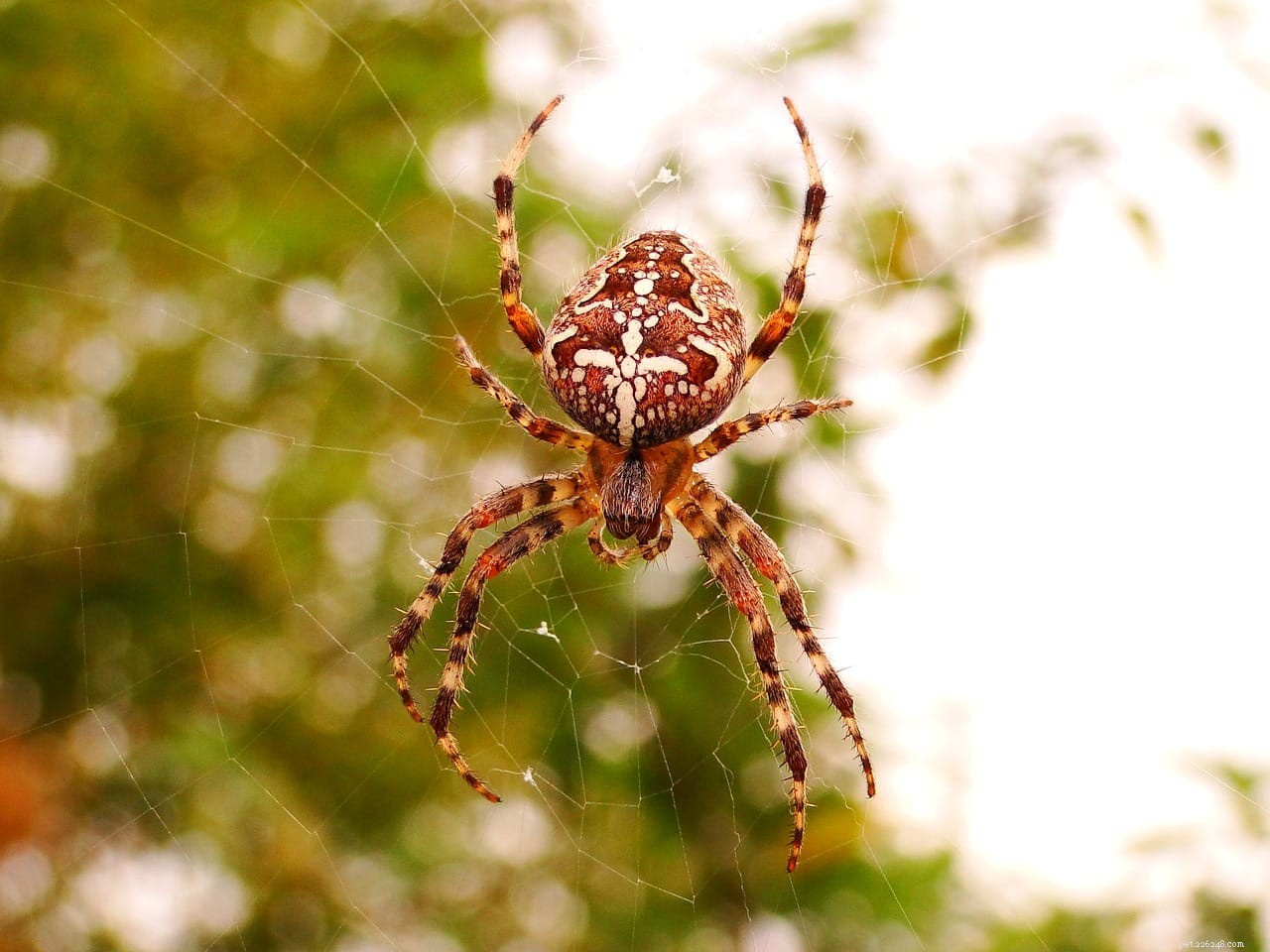
If you don’t like spiders, we don’t recommend living in Alabama.
There are around 90 different species of spiders that call at least part of this state home. Some are spread throughout the whole state, while others are primarily contained to a tiny portion. Many are pretty standard, but there are a few rarer arachnids.
Identifying the spiders you come across is essential – or at least knowing how to ID the poisonous ones is.
Keeping reading below for a basic overview of the most common spiders in Alabama.
18 Spiders Found in Alabama
Poisonous Spiders in Alabama
1. Widow Spiders
| Species: | Latrodectus |
| Longevity: | 1 – 3 years |
| Good to own as a pet?: | No |
| Legal to own?: | No |
| Adult size: | Around 10 mm (for females) |
| Diet: | Insects |
There are two subspecies of black widows that can occur in Alabama. Both of these are poisonous and quite similar in appearance. You should avoid both, as their venom can cause severe reactions in some cases.
Female black widows have the stereotypical red hourglass marking on their abdomen – while the rest of their body is entirely black. In some species, the two halves of the hourglass are somewhat separated. They are still black widows. Some widows may have red spots or white stripes as well.
The male is usually brown with lightly colored bands and spots. They are not as dangerous due to their smaller size.
2. Brown Recluse
| Species: | Loxosceles reclusa |
| Longevity: | 1 – 2 years |
| Good to own as a pet?: | No |
| Legal to own?: | No |
| Adult size: | 19 mm |
| Diet: | Insects |
The Brown Recluse is native to much of the southern United States – including Alabama. They are venomous but not as dangerous as other spiders. Their bite may lead to severe skin damage, though usually only in children and others with immune compromises.
The brown recluse is a tan color. Their most distinguished marking is the dark violin shape on the back of their head. This marking allows them to be easily identified. They look very long and lean.
Other Spiders in Alabama
3. Starbellied Orb Weaver
| Species: | Acanthepeira Stellata |
| Longevity: | About 12 months |
| Good to own as a pet?: | Yes |
| Legal to own?: | Yes |
| Adult size: | 15 mm |
| Diet: | Beetles, moths, wasps, and flies |
The Starbellied Orb Weaver is one of the most unique spiders out there. They have several spikes across their abdomen that given them a crown-like appearance.
This unusually shaped abdomen makes them very easy to tell apart from other spiders.
4. American Grass Spider
| Species: | Agelenopsis |
| Longevity: | 1 – 2 years |
| Good to own as a pet?: | Yes |
| Legal to own?: | Yes |
| Adult size: | Varies |
| Diet: | Small insects |
The American Grass Spider is a large genus found in the United States. There is a spider belong to this genus in every state.
As their name suggests, this species spends a lot of time in the grass. They don’t make webs like other spiders – and instead, run down their prey.
These spiders often have patterns running on their back, making them look a bit like a brown recluse. They are often improperly identified. Be sure to look for the distinctive violin shape of a brown recluse. Not just any stripe.
5. Green Lichen Orb Weaver
| Species: | Araneus Bicentenarius |
| Longevity: | 1 year |
| Good to own as a pet?: | Yes |
| Legal to own?: | Yes |
| Adult size: | 24 mm |
| Diet: | Insects and wasps |
Like many orb weaver spiders, the Green Lichen Orb Weaver may look imposing – but they are mainly harmless. This beautiful spider is quite colorful, with all sorts of patterns on its abdomen and legs. The exact patterns and coloration vary from individual to individual.
They make enormous webs – sometimes up to 8 feet in diameter. This particular species spends a lot of time on the edge of the web at night but hides during the day to avoid predators.
6. The European Garden Spider
| Species: | Araneus diadematus |
| Longevity: | 12 months |
| Good to own as a pet?: | Yes |
| Legal to own?: | Yes |
| Adult size: | 19 mm |
| Diet: | Flying insects |
Don’t let the name fool you: these spiders are native to much of the United States. These spiders build one of the most perfect webs out there – and they will often rebuild in the same spot each day. Strangely, the most they build the web, the worse it will get, however.
This spider is very bulbous and features spiky hairs. These aren’t harmful to people, though they can look quite uncomfortable.
7. Black and Yellow Garden Spider
| Species: | Argiope Aurantia |
| Longevity: | About one year |
| Good to own as a pet?: | Yes |
| Legal to own?: | Yes |
| Adult size: | 25 mm |
| Diet: | Flying insects |
This species is very easy to identify. They look very different from other spiders, thanks to their overly long abdomen. They have a wide black patch in the center and yellow patches running along their sides. Their legs are thin and long.
This spider may look a bit odd, but its bite is entirely harmless to people. It may cause some localized itching for a day or so but clears up very quickly. Most are less reactive than mosquito bites.
Related Read: 11 Spiders Species Found in Indiana (With Pictures)
8. Banded Garden Spider
| Species: | Argiope Trifasciata |
| Longevity: | One year |
| Good to own as a pet?: | Yes |
| Legal to own?: | Yes |
| Adult size: | 25 mm |
| Diet: | Insects |
Initially, this spider was only found in North America, but it has since been introduced to much of the world. They are very similar to other sorts of garden spiders. However, their abdomen is extremely thin and covered in black and yellow bands.
They are entirely harmless. Their bites usually don’t cause any reaction at all.
9. Red-Spotted Ant Mimic Spider
| Species: | Castianeira Descripta |
| Longevity: | Unknown |
| Good to own as a pet?: | Yes |
| Legal to own?: | Yes |
| Adult size: | 13 mm |
| Diet: | Ants |
This spider looks a lot like an ant – hence the name. They even mimic ant’s behaviors! This is all a ruse to get ants to come close to them, allowing them to attack and eat them easily.
This species is fascinating to watch due to its unique hunting behaviors. They don’t build webs like other spiders or even chase down their prey. In many cases, they will even walk around with their two front legs in the air – mimicking ant antenna.
10. Northern Yellow Sac Spider
| Species: | Cheiracanthium Mildei |
| Longevity: | One year |
| Good to own as a pet?: | Yes |
| Legal to own?: | Yes |
| Adult size: | 16 mm |
| Diet: | Other spiders |
The Northern Yellow Sac Spider can be found throughout much of the United States. As the name suggests, they are a green-yellow color with a darker stripe running halfway down their abdomen.
These nocturnal hunters do not make webs. Instead, they make a sac to hide in and then hunt prey from there.
They are not technically venomous, but their bites can be extremely painful. They are sometimes mistaken as Brown Recluse bites – causing heavy swelling and open sores.
They do have a different venom than a Brown Recluse – most people just tend to have similar reactions to both.
11. Leaf-Curling Sac Spider
| Species: | Clubiona |
| Longevity: | Unknown |
| Good to own as a pet?: | Yes |
| Legal to own?: | Yes |
| Adult size: | Varies |
| Diet: | Small insects |
This genus can be found throughout much of the world – including Alabama.
They have light brown legs and a slightly darker abdomen. It isn’t uncommon for their legs and head to appear transparent due to their very light coloration.
Their bite may cause slight pain and irritation, but it is typically not very serious at all.
12. Fishing Spiders
| Species: | Dolomedes |
| Longevity: | 1 – 2 years |
| Good to own as a pet?: | Yes |
| Legal to own?: | Yes |
| Adult size: | 4 inches |
| Diet: | Aquatic insects and small fish |
Fishing spiders are semi-aquatic and happen to be one of the largest spiders in the United States. They spend much of their life around the water, where many of their prey live. They will even place their legs on the water’s surface to detect the vibrations of small fish and insects.
There are several different species – many of which are native to Alabama. They are all relatively similar and can be challenging to tell apart.
Luckily, they are all completely harmless.
Related Read: 12 Spiders Found in Virginia
13. Woodlouse Spider
| Species: | Dysdera Crocata |
| Longevity: | 3 – 4 years |
| Good to own as a pet?: | Yes |
| Legal to own?: | Yes |
| Adult size: | 15 mm |
| Diet: | Woodlice |
The Woodlouse spider primarily preys on woodlice – hence its name. While this spider has an extensive range, it is mainly found in the eastern United States until the Mississippi River.
This species hunts with its large fangs and legs. They may look scary, but their large fangs are harmless to people. A bite won’t be any worse than your average bug bite. Their fangs are mostly around to help them puncture the exoskeleton of more formidable insects.
14. Bowl and Doily Spider
| Species: | Frontinella Pyramitela |
| Longevity: | Up to one year |
| Good to own as a pet?: | Yes |
| Legal to own?: | Yes |
| Adult size: | 4 mm |
| Diet: | Small insects |
The small Bowl and Doily spider gets its unique name due to the shape of its web – which is usually bowl-shaped and a “sheet” beneath it.
These spiders are spotted mainly in the summer between July and August. They only live for about a year, typically not surviving the winter months.
They have a large and shiny abdomen with vertical lines on each side. Many people describe their markings as looking like commas.
15. Shinybacked Orb Weaver
| Species: | Gasteracantha Cancriformis |
| Longevity: | About one year |
| Good to own as a pet?: | Yes |
| Legal to own?: | Yes |
| Adult size: | 14 mm |
| Diet: | Small insects |
Like many orb weavers, these spiders make extremely long webs. Their abdomen is broader than it is long – a rare trait amongst spiders. They have six spines that sit out from their sides and back, allowing them to be identified easily.
These spiders may look a bit scary, but their bite is entirely harmless. They are pretty docile.
16. Magnolia Green Jumper
| Species: | Lyssomanes Viridis |
| Longevity: | About one year |
| Good to own as a pet?: | Yes |
| Legal to own?: | Yes |
| Adult size: | 8 mm |
| Diet: | Small insects |
The Magnolia Green Jumper is exceptionally tiny – even when compared to other small spiders. This spider is very light green – even to the point of being translucent. Like jumping spiders, they hunt their prey instead of building webs.
These spiders are fast and shy, so they typically attempt to escape before biting. Their bite isn’t severe and typically isn’t worse than a bug bite.
17. Lined Orbweaver
| Species: | Mangora gibberosa |
| Longevity: | About one year |
| Good to own as a pet?: | Yes |
| Legal to own?: | Yes |
| Adult size: | 5 – 6 mm |
| Diet: | Small insects |
These spiders range from white to light brown. They may also have a green tint. Their legs are skinny and often appear translucent. Their large abdomen is white with green and yellow markings across the side.
They are a highly patterned species and arguably one of the most beautiful orbweavers out there.
18. Flower Crab Spider
| Species: | Misumena |
| Longevity: | 1 – 2 years |
| Good to own as a pet?: | Yes |
| Legal to own?: | Yes |
| Adult size: | 6 mm |
| Diet: | Insects |
The Flower Crab spider gets its name from two different features. First, they look a lot like crabs. Secondly, they hide in flowers and similar vegetation – attempting to catch bees when they come in.
There are many different subspecies – some of which are native to Alabama.
These spiders can change their color slightly to match whatever flower they are waiting in. Their concise color range only includes whites and yellows, though. This process also takes 10 to 25 days. It isn’t instant.
Conclusion
There are countless species of spiders in Alabama. Many of these are entirely harmless, but there are a few that are poisonous.
Identification can be essential to ensure that you don’t come into contact with a venomous spider. Of course, your best bet when you run into any spider is to leave it alone. Venomous spiders may cause problems in your home, though other spiders can safely be left alone.
Spiders are a vital part of the ecosystem, though they may be a bit icky.
- You may also be interested in: 12 Snakes Found in Alabama
- Explore Ohio’s 19 Key Spider Species
- Top 7 Most Common Spiders in Utah: What to Know
- 12 Common Alabama Snakes You Should Know About
- Discover Kansas' 25 Spiders: Black Widow & Everyday Species
- 20 Native Spiders of Hawaii: A Comprehensive Guide
- 10 Pennsylvania Spiders You’ll Encounter: Safety & Wonders
- 11 Indiana Spiders You’ll Spot – Identification Guide with Photos