

How Dogs Show Affection: 9 Clear Signs They Love You
Ask any pet parent if they love their dog, and the answer will almost always be “yes.” After all, who could resist a cuddly, playful, loyal companion? Research shows that humans often feel more empathy toward dogs than toward other people, underscoring the depth of our bond. [1]
But do dogs feel that affection in return? And how do they communicate it? Most experts agree that dogs do love their human companions, expressing this love through a range of body language and behaviors.
Below you’ll find a detailed look at the science behind canine love and the nine unmistakable ways dogs show they care.
Do Dogs Feel Love?
Before we dive into the specific behaviors, let’s address the core question: can dogs truly love us?
Dr. Luciana Assis, an animal behaviorist at the University of Lincoln, notes that while dogs undoubtedly experience basic emotions like fear, sadness, and joy, the existence of complex emotions such as love is still debated. Some researchers affirm it; others remain skeptical.
What the evidence does reveal is that dogs form bonds with humans that rival the maternal attachment seen in many species. [2] Studies also show a surge of oxytocin—the “love hormone”—when dogs interact with their favorite people, creating a mutual feedback loop of positive emotion. [3][4]
As Dr. Assis puts it, if this isn’t love, then what is?
Veterinarian Dr. Nicole Savageau from The Vets in Austin, Texas, believes dogs experience a wide range of emotions, including love, though the depth and expression can vary from one dog to another.
She emphasizes that a dog’s attachment level depends on the quality of care, attention, and positive interactions they receive over their lifetime.
How Dogs Show Affection: 9 Surefire Signs

What signals indicate that your dog truly loves you? Below are nine reliable behaviors to watch for, as outlined by Dr. Savageau.
1. Tail-Wagging
A wagging tail isn’t just excitement—it can be a sign of affection. When a dog wags with a loose, wide‑motion tail, often accompanied by a gentle bounce or spin, it signals joy in your presence.
However, context matters. A relaxed, low wag differs from a tense, alert wag, so observe the entire body language to interpret the meaning accurately.
2. Physical Closeness
Dogs that love you seek proximity: cuddling, following you around, or leaning against you are clear demonstrations of bonding.
3. Eye Contact
A soft, relaxed gaze—often with dilated pupils—reflects trust and affection. When dogs and humans share a calm eye contact, both release oxytocin, reinforcing the bond. [4]
4. Licking and Nuzzling
Gentle licking of faces, hands, or other body parts is a canine equivalent of a kiss. Nuzzling or nudging also signals care, mirroring social grooming behaviors within dog packs.
5. Relaxed Body Language
A loose posture, softened facial expression, ears back (in floppy‑ear breeds), and a calm tail wag all point to a content, affectionate state. A relaxed pant can also be a sign of happiness.
6. Exposing Their Belly
Rolling over and offering the belly invites trust and vulnerability. It’s an invitation for gentle rubs and a display of submission that conveys affection.
7. Slow Blinking
Just as cats slow‑blink to show trust, some dogs do the same. Slow blinking indicates a relaxed, secure connection.
8. Bringing You “Gifts”
When a dog brings a toy or other prized object, it’s a gesture of generosity and an attempt to please you.
9. Separation Anxiety
While distressing, behaviors such as whining, pacing, refusing food, or escape attempts when separated from you reveal a strong emotional dependency—and therefore love.
If separation anxiety is a concern, consult a veterinarian or behaviorist for solutions.
How to Return the Affection
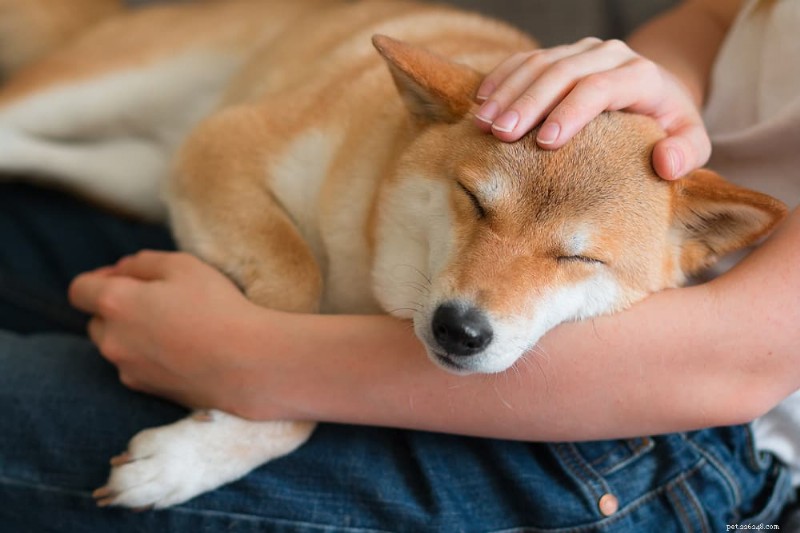
Having understood how dogs express love, how can you reciprocate? The most effective methods include gentle stroking, cuddling, maintaining eye contact, and speaking in a calm, loving tone.
Dr. Savageau also stresses the importance of mental stimulation and a safe, comfortable environment. By attentively reading your dog’s signals and honoring its individuality, you can nurture a lasting, trust‑filled bond.
Remember, every dog is unique—tailor your affection to match its personality and needs.
References
- Levin, J., Arluke, A., & Irvine, L. (2017). “Are People More Disturbed by Dog or Human Suffering? Influence of Victim’s Species and Age.” Society & Animals, 25(1), 1-16. https://doi.org/10.1163/15685306-12341440
- Karl, S., Boch, M., Zamansky, A. et al. “Exploring the dog–human relationship by combining fMRI, eye-tracking and behavioural measures.” Sci Rep 10, 22273 (2020). https://doi.org/10.1038/s41598-020-79247-5
- Kis A, Bence M, Lakatos G, Pergel E, Turcsán B, Pluijmakers J, Vas J, Elek Z, Brúder I, Földi L, Sasvári-Székely M, Miklósi A, Rónai Z, Kubinyi E. “Oxytocin receptor gene polymorphisms are associated with human directed social behavior in dogs (Canis familiaris).” PLoS One. 2014 Jan 15;9(1):e83993. doi: 10.1371/journal.pone.0083993. PMID: 24454713; PMCID: PMC3893090.
- Miho Nagasawa et al., “Oxytocin-gaze positive loop and the coevolution of human-dog bonds.” Science 348,333-336(2015). DOI:10.1126/science.1261022
- Pet Behavior
- Pet Breeds
- Pet Names
- Pet Adoption
- Pet Training
- Pet Information
- Pet Health
- Adorable Pets
- Dogs
- Decoding Canine Body Language: A Guide to Better Training
- DIY Dog Agility Tunnel: Build a Cost-Effective Course at Home
- 20 Adorable Pets With Impressive Talents
- Essential Dog Vaccinations: Protect Your Canine with a Complete Immunization Plan
- Enhancing Recovery: Acupressure After Surgery for Dysplastic Dogs
- Discover Your Dog's True Heritage: DNA Tests Unveil Surprising Insights
- How to Choose the Right Danio Species for Your Aquarium