

What Dogs Actually Think About: Insights from Canine Cognition Research
As humans, our minds buzz with thoughts big and small. For pet owners, a persistent question lingers: what occupies a dog’s mind all day, every day?
For centuries this has been speculative, but a growing number of universities now host dedicated canine cognition labs. Their interdisciplinary work—spanning psychology, neuroscience, and biology—offers increasingly reliable glimpses into the inner workings of a dog’s brain.
Do Dogs Have Thoughts?
“Dogs absolutely think,” affirms Dr. Emily Bray, a postdoctoral scholar at the Arizona Canine Cognition Center. “The challenge is deciphering those thoughts without a direct dialogue.”
Unlike human brains, a large dog’s brain is roughly the size of a lemon, while a human’s is about the size of two clenched fists¹. Even when adjusted for body mass, dogs possess a proportionally smaller brain. The difference is most pronounced in the frontal lobes, the brain’s hub for problem‑solving, memory, language, judgment, and impulse control. In humans, the frontal lobes occupy about one‑third of the brain; in dogs, only about ten percent². This disparity helps explain why a pup can’t resist a hot dog left on the counter.
Yet dogs share key cognitive traits with us—many of which likely evolved during domestication. For instance, they grasp human pointing cues. Human infants learn to interpret pointing before age one, building core communication skills. Dr. Brian Hare, co‑director of the Duke Canine Cognition Center and author of Survival of the Friendliest, notes that dogs respond to pointing just as readily as apes, a skill that may have been selected for during domestication.
Dr. Bray adds that dogs exhibit fast‑mapping—learning a word’s meaning through deduction—an ability previously documented only in humans. As dogs age, their brains undergo changes affecting executive function, memory, and inhibitory control, mirroring human cognitive aging³.
How Do Dogs Think?
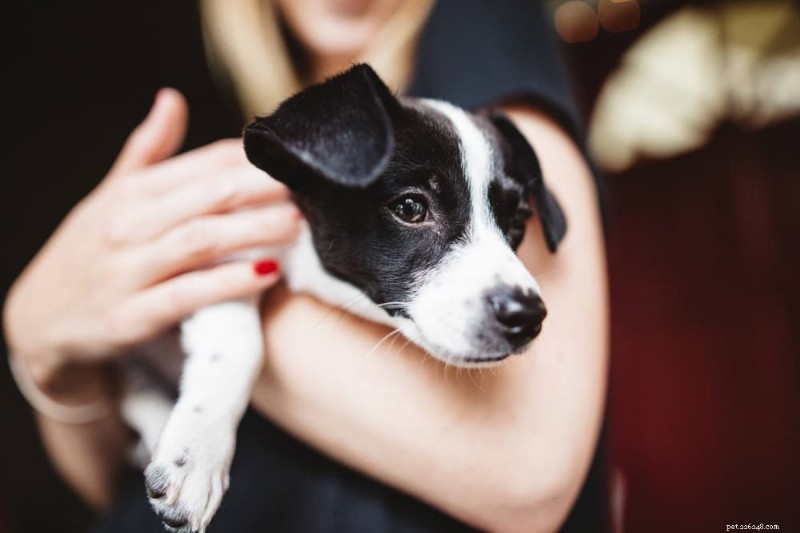
“Dog thinking looks very different from human thinking,” says Molly Byrne, a Ph.D. student at Boston College’s Canine Cognition Center. “They lack many of the neural structures that support our internal monologue.”
While dogs can learn up to 2,000 human words and basic grammar, their internal dialogue probably isn’t word‑based. Barks are more about pitch and intensity than specific words, Byrne explains.
Instead, a dog’s thoughts likely draw from its primary senses—especially smell. A larger portion of a dog’s brain is devoted to olfactory processing than in humans. Byrne predicts that dogs think in terms of smells, images, and sounds, rather than abstract language.
What Do Dogs Think About?
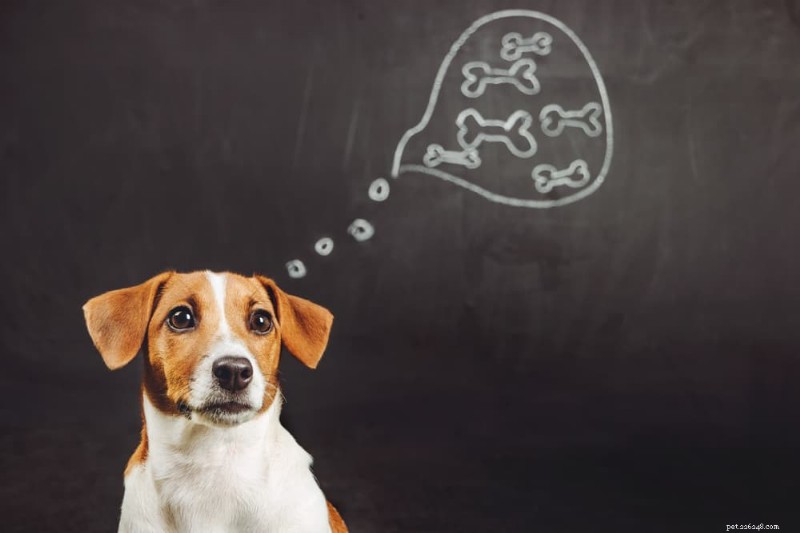
While much of a dog’s day is spent sleeping, the awake hours are probably filled with simple, present‑moment concerns—what’s for dinner, what’s that over there, or solving a puzzle—much like a toddler’s thoughts, Hare suggests.
It’s unclear how time is divided among topics, but Bray notes that dogs likely ponder everyday staples: food, play, other dogs, and their owners. Individual preference and experience shape each dog’s mental focus.
What Do Dogs Think About When They Are Alone?
Some dogs nap quietly when left alone; others exhibit stress or destructive behavior, often due to separation anxiety or boredom.
Determining their mental state is challenging. Byrne says it’s hard to know whether a dog focuses on its owner or simply feels loneliness. More research is needed to clarify these behaviors.
How to Tell What Your Dog Is Thinking

While we can’t read a dog’s mind verbatim, careful observation of body language and context clues can give us strong hints. Bray recommends mastering visual cues—such as a yawning dog that isn’t tired (often fear or anxiety) or teeth exposure (typically aggression).
Byrne adds that paying attention to what a dog lingers around offers insight. A pup sniffing a telephone pole before peeing is likely processing scents of other dogs—perhaps thinking about them. Similarly, a dog that nudges your hand may be reflecting on you and the bond you share, or simply seeking an itch to scratch.
- Pet Behavior
- Pet Breeds
- Pet Names
- Pet Adoption
- Pet Training
- Pet Information
- Pet Health
- Adorable Pets
- Dogs
- The Science Behind Puppies Sleeping in Cozy Piles
- Why Dogs Curl Up When They Sleep: The Science Behind the Cozy Ball Position
- Dog Ears Explained: How They Hear and Why It Matters
- Top 5 Brushes for Long‑Haired Cats: Keep Their Coat Tangle‑Free
- Nutritious Homemade Dog Food Recipes for Chihuahuas
- Bronze Corydoras: Complete Care Guide for the Popular Freshwater Catfish
- Study Reveals Dogs Improve Women’s Sleep Quality