

Rough Collie Overview: Traits, Care, and Ownership Guide
Introduction
Collies are frequently portrayed as the ideal dog, a virtual canine paragon. In many ways, they are. But that doesn’t mean everyone should have one. You can find a plethora of sources extolling the praises of Collies, but I aim to be a little more honest with you. Perfection is not possible, and Collies are not without their flaws (though minimal) and quirks (endearing to most, possibly annoying to some).
Quick Navigation

This isn’t a generic article of regurgitated Collie facts. My parents bred Rough Collies, so I grew up with them as family members. I now have 2 beautiful Collies of my own, but I am familiar with other breeds, having worked at a veterinary clinic and fostered many dogs. I currently volunteer with a service dog training program and run a Rover doggy daycare out of my house. While I love all dogs, I would still choose a Collie over any other. Basically, I am your standard breed addict.
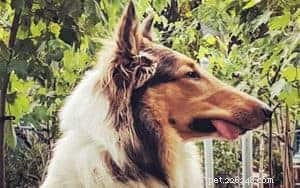
What is so lovable about a Collie dog? Publicly glamorous yet privately ridiculous – this is often the way of a “Lassie Dog.” Most Collies carry themselves with dignity and decorum befitting royalty, until someone they love wants to play. Suddenly, as if a king grew tired of posturing on his throne and swapped places with his court jester, they transform into utter clowns. Collies are friendly dogs and, to those who know them well, majestic derps.
History
How was humanity gifted with these glorious goofballs? Some historians believe their ancient ancestors came to Britain with the Roman conquerors and interbred with local dogs. The result was a dog large and powerful enough to drive away wolves and protect livestock, yet nimble enough to maneuver flocks to other pastures or to market with their incredible herding instinct. To this day, a Collie is gentle with his charges yet fierce toward those who would threaten them.
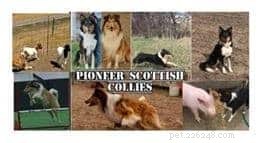
Previous NextBear in mind that every purebred dog was once a mongrel. For a long time, Collies were simply called “Scotch Shepherds” or “Scottish Sheepdogs.” As the dog favored by Scottish farmers, they were bred for function over form. (Today, a group called the Scottish Collie Preservation Society breeds dogs to emulate the old-fashioned “farm collie.”) The prototype Collie dog looked different – particularly in the wedge-shaped head structure – than the dog we know today. This was partly due to various Collie “types” that have since developed into separate breeds.
In America, Smooth Collies (short haired Collie variety) and Rough Collies (Collie roughs) can be produced in the same litter and are essentially the same except for coat length. Border Collies, originating in the border region of Scotland and England, are famously preferred for their exceptional sheep herding skills. Bearded Collies (affectionately called “Bouncing Beardies”), now the least common of their more distant Collie cousins, are seldom seen outside the show ring. Diminutive Shetland Sheepdogs or “Shelties” developed as herders on the Shetland Islands and are often mislabeled as “miniature Collies.” Australian Shepherds, a spin-off herding breed from the Collie, are still used as livestock dogs.
Early Collies were little known outside of Scotland until in the 1860s Queen Victoria, on a visit to the countryside, fell in love with the local shepherds’ dogs. She took some Collies back with her to Balmoral Castle on the Scottish Highlands and then to London, breeding them and attracting nationwide attention. The Queen’s Collies, raised and “refined” by their association with royalty, were likely interbred with Setters and even Borzois to achieve a longer head and more luxuriant coat.
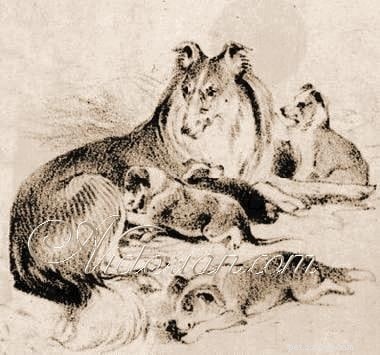
At the Crystal Palace dog show in Birmingham, England in 1870, Collies were separated into three classes: “Rough-Coated Collies,” “Smooth-Coated Collies,” and “Short-Tailed Collies.” In the United States, Collies first appeared at Westminster in 1877 and created quite a stir. The Collie Club of America has the distinction of being one of the oldest breed clubs in the USA, since it was founded in 1886. America’s wealthy class began collecting and showing Collies, which were all the rage for a time. As mentioned on the Collie Health Foundation website, the stories and books of author and breeder Albert Payson Terhune frequently featured Collies Rough and brought further attention to the breed, and a pair of white Collies were even kept by President Coolidge and his wife.
In 1924, a Collie named “Bobbie” made headlines by turning up at his family’s home in Oregon 6 months after he had become separated from them on their vacation in Indiana. People who saw his story in the newspapers and had interacted with Bobbie along the way sent mail to his family, describing parts of his journey. An investigation determined that he must have traveled nearly 3 thousand miles on foot, crossing the Rocky Mountains in the dead of winter to return to his humans. Bobbie, a true family dog, became a local legend and national hero, with his exploits even earning him an entry in Ripley’s Believe It Or Not.
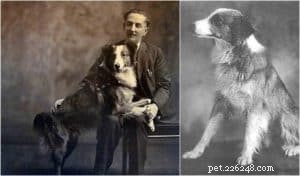
Bobbie’s real life story, subsequent book, and silent film may have inspired Eric Knight’s iconic work Lassie Come Home, which was then made into a movie. Of course, one Lassie movie was not enough to satisfy a captivated public. Trainer Rudd Weatherwax and his Collie Pal went on to found a franchise, with several movies and a long-running TV series that shaped the imagination of a nation.
The result was a Lassie craze that catapulted Collies to international fame. From obscure farm dog to exalted Queen’s companion to fabulous movie star to ubiquitous family pet, the Collie had reached a zenith of popularity. But as is so often true, the notoriety was not all for the best. While demand for Rough Collie dogs soared, opportunistic breeders flooded the market with indiscriminately-bred puppies. Health problems increased due to these poor breeding practices.
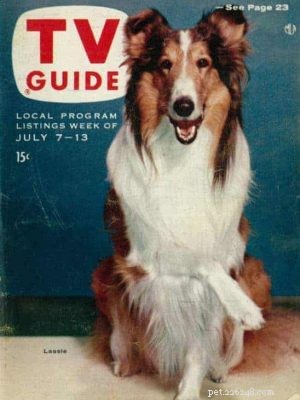
Collies finally experienced a decline in popularity after the 1970s. This was not a bad thing, since it gave breed enthusiasts a chance to rectify some of the issues created by the Collie boom. And Lassie’s legacy lives on, as the phrase “What kind of dog is Lassie” is googled over 4,000 times per month. To this day a Rough Collie is often simply referred to as a “Lassie dog“.

So how popular are Rough Collies and Smooth Collies? Rough Collies continued to enjoy attention, being kept as pets by such celebrities as Elvis Presley and Kevin Costner. Currently, the mascot of Texas A & M University is a Rough Collie named Reveille. While Smooth Collies have never been in the spotlight like their longhaired Collie counterparts, they have recently experienced somewhat of a service dog renaissance since people have noticed their ability and practicality, given their lower grooming requirements. Freedom Guide Dogs in New York uses Smooth-coated Collies as guide dogs for the blind.
Currently, the Collie breed ranks 38th in popularity of the 193 breeds recognized by the AKC. As Pati Merrill, former president of the Collie Health Foundation, said, “We’re okay with that.” The work of dedicated breeders over the past several decades has largely been that of damage control, and it is paying off.
Collie Health
Present day Collies are considered a relatively healthy breed, with an average lifespan of 12 to 14 years. But as with any animal that has been selectively bred and studied with great care for many golden years, some health conditions have been identified, including sensitivity to certain drugs. Before adopting a Collie or buying a Collie puppy, it is best to find out what you can about health history.
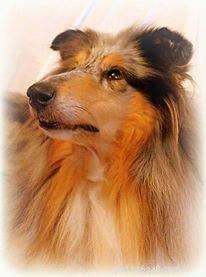
In particular, the majority of Collies today (estimates from various sources range from 60% – 75% worldwide) are affected to some extent by CEA (Collie Eye Anomaly). As its name suggests, Collie Eye Anomaly or “Collie eye defect” is a condition that can affect a dog’s vision. While CEA does occur with high frequency in Collies, it can also be found in Shetland Sheepdogs, Border Collies, Australian Shepherds, Lancashire Heelers, and Novia Scotia Duck Tolling Retrievers.
CEA, when first identified over 50 years ago, affected an estimated 90% of Collies in the USA, but numbers are down now due to careful selection and testing. At its most severe, CEA can lead to some vision loss and even total blindness, though such cases are now limited to less than 10% of the Collie population. The good news is that “most Collies with CEA do not demonstrate vision problems,” according to Eye Care for Animals.
As stated by The Collie Eye, “The condition in mildly affected dogs does not worsen over time.” The majority of Collies with CEA, in human terms, might be considered somewhat nearsighted or in need of reading glasses. As stated by the Collie Health Foundation, “The majority of dogs that are mildly affected will generally have perfectly adequate vision throughout their life.”
If you are looking to adopt an adult dog or want to evaluate the parents of a litter from which you may purchase a puppy, it helps to know that a dog past the age of 2 without signs of trouble is probably not at risk for vision loss from CEA. As explained on The Collie Eye website, complications from CEA “usually occur in the first couple of years of life.”
CEA can be identified through genetic disease testing that pinpoints whether a dog is affected, is a carrier, or is clear of a condition. In addition, eye tests performed by a veterinary opthalmologist, in which the eyes are dilated and inspected, will determine to what extent a dog is affected by CEA. There are several identifiable labels of CEA, but the Collie Health Foundation’s official position is that only carriers or dogs with choroidal hypoplasia – “the least harmful and least severe form” – should be bred.
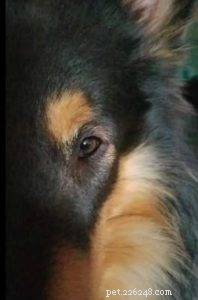
However, Collies are prone to another inheritable eye condition called PRA (Progressive Retinal Atrophy). Typically much less common but more serious than CEA, it is a degenerative condition that will lead to blindness. While CEA has been the subject of much hype and hysteria, responsible breeders should also be testing for PRA.
No dogs with PRA should be used for breeding. Most dogs with PRA will be blind by the time they are 1 year old, but there is a late-onset form that will not manifest until a dog is anywhere from 3-9 years old. This is why it is vital for breeders to genetically test for PRA. According to Animal Eye Care, “PRA occurs in most breeds of dogs and also occurs in mixed breeds.”
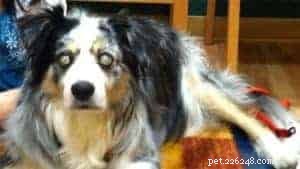
While Collies are not very at-risk for elbow and hip dysplasia, it is an added bonus if you can find a breeder who has had OFA joint testing done on their dogs. However, this is not a very simple test, as it involves anesthetizing a dog to obtain clear x-rays while he is positioned on his back. Not all breeders are willing to put their dogs through this, especially if they come from a bloodline not plagued by joint problems or if their dogs have MDR1.
MDR1 (Multi Drug Resistance Syndrome) is a drug sensitivity that makes Collies (and 12 other popular breeds, plus mixes of these breeds) sensitive to certain chemical compounds such as anesthetics and some parasite preventives. MDR1 can be identified through genetic testing (DNA test), which involves sending a saliva or blood sample to a lab for analysis. Paw Print Genetics tests for “The Big 3” Collie health issues, as well as offering a “Collie Panel” to test for 3 other, less common – but still concerning – health issues.
You may be wondering, shouldn’t breeders only select ideal dogs for breeding? In a perfect world, yes. But even a seemingly flawless canine specimen can have hidden issues. If all breeders chose only genetic paragons to reproduce, the gene pool would be reduced to just 25% or less of all Collies and would become so limited as to create other problems. Usually the best-case scenario is to choose dogs who have minimal faults and thus gradually breed out undesirable characteristics.

So why get a Collie, or any purebred dog, if they have health problems? A purebred’s advantage is that their genetic predispositions have been identified and you know in advance what to check for. Collies and their relatives are prone to eye problems, Bully breeds to skin problems, Boxers and other brachycephalic dogs to breathing problems, Beagles to epilepsy, St. Bernards and similar large, heavy breeds to joint problems.
Hybrid vigor is largely a myth, as was found by an in-depth study over a five-year period that examined the veterinary health records of 90,000 purebred and mixed breed dogs. Anita Oberbauer, an animal physiologist and chair of the animal science department at UC Davis, said, “The public is under the impression that mixed breeds exhibit vigor and will not express genetic disorders. This is simply not true.”
While broadening a gene pool can have some benefits, the fact remains that crossing dogs of different breeds together will not magically wipe out inheritable health defects. If a Collie with eye problems is bred to a Standard Poodle with hip problems, the “Cadoodle” puppies that result from such a cross will be genetically predisposed to both hip and eye problems. Breeders of designer dogs all too often cite the “hybrid vigor” trope as an excuse to not have any testing done – while still charging purebred prices – and make an exorbitant profit.
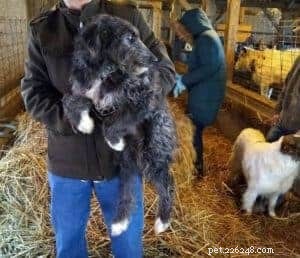
Sometimes mutts make the best dogs, but their genetics are a wild card. If you adopt a crossbreed or mutt, it is still a good idea to make sure that the parents have been screened or even to have the active dog individually tested to know what potential health conditions may crop up.
Smooth and Rough Collie Uses
Collies are a versatile breed, probably as a result of their varied background.
The two Collies (Rough variety) I grew up with on our Michigan hobby farm had several jobs. They were draft dogs: hitched up to a wagon in summer or toboggan in winter to pull my little sisters or cousins around the yard. They were entertainers: Leia would jump through hula hoops and tire swings, and Luke would army crawl and dance on his hind legs. They were herders: sent to round up our goats, chickens, and even the pet rabbit after they had been let out to free range. They were varmint dogs: killing or driving off mice, gophers, woodchucks, opossums, raccoons, or stray cats that infested or trespassed on our property. They were watchdogs: reliably announcing the arrival of visitors. They were protectors: staunchly placing themselves between us children and potential danger.
You may be thinking, well, those are examples of just two multi-tasking dogs. But these are by no means rare instances. In my local Collie Club, we have Collies involved in herding, agility, barn hunt, conformation shows, obedience trials, and volunteer therapy dogs that work in the community.
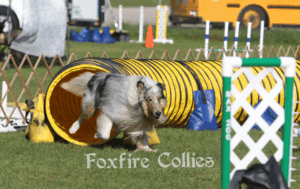
Some Collies are still used as general-purpose farm dogs, particularly by those who value their gentler, less mouthy approach to guiding livestock. But most Collies’ main function in modern times is as a companion, something at which they have proven to excel. They have also successfully been used as assistance dogs. Smooth Collies, due to their shorter fur and easier upkeep, are generally preferred over the Lassie dog breed as guide dogs for the blind, but Rough Collies can be used as PTSD (Post Traumatic Stress Disorder), Mobility Assistance dogs, and Seizure Alert Dogs, to name a few.
Appearance
As a result of Collies’ worldwide popularity, their appearance and size now varies slightly from country to country based on differences in breed standards. For example, the standards of the United Kennel Club (an international breed registry) and the American Kennel Club (the registry of the USA) specify that female Collies should weigh 50-65 pounds and stand 22-24 inches tall at the shoulders, while males should weigh 60-75 pounds and stand 24-26 inches at the shoulders. The UK (United Kingdom) and FCI (Federation Cynologique Internationale) standards, by contrast, call for a smaller dog ranging in wither height from 51-56 centimeters for females and 56-61 centimeters for males, with the weight unspecified.
I am part of some international Facebook Collie groups, and I follow thousands of Collie Instagram accounts from nearly every nation under the sun. Because of this, I’ve learned to pick up on a Collie’s probable region of origin based on its “look.”
In general, American Collies are larger, having longer muzzles with less of a stop (dished face), and very often erect ears that do not stay tipped (naturally folded over at the top) without the aid of glue or tape applied when they are puppies. European Collies tend to be smaller, with many of them having luxurious coats. South American Collies seem to have larger eyes, harking back to the old “Lassie” type. Australian Collies have a certain look, as do German Collies… I could go on.
The point is, no matter how much people may bicker over variations in head structure, ear carriage, and coat color due to region or bloodline – they’re all Collies, and as such they’re all wonderful.
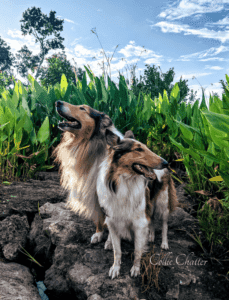
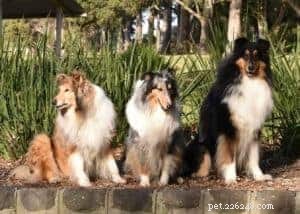
Collies come in 2 coat types, Long-Haired Collie (Rough) and Short-Haired Collie (Smooth), and 4 main coat colors (Sable & White, Tri color, Blue Merle, and White). Outcrossing to Borzois may have introduced the “white” coat pattern, which is still recognized in the US but no longer in the UK.
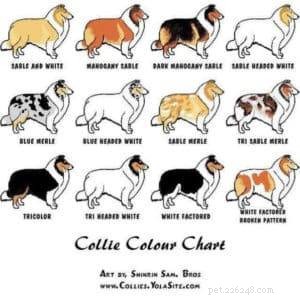
Two merles should never, never be bred together, as such a breeding can produce “double merle” dogs that are blind, deaf, or both. (This goes for merle dogs of any breed, not just Collies.) Some double merle puppies are born with no eyes at all. Unscrupulous breeders deliberately breed blue merles together to obtain an entire litter of merle puppies, which can be sold for more money since they are a less common color. Sadly, up to a quarter of such a litter can be double merles, which may be disposed of or sold to unsuspecting buyers as “rare” white merles.
Other people produce such disabled “double dilute” puppies through ignorance, mistakenly breeding what they thought was a pure sable Collie – but was actually a sable merle – to a blue merle. Sometimes sable merles have blue eyes or partial blue eyes; but if they do not it is hard to distinguish them as adults from regular sable and white Collies, as any light spotting/marbling they may have had as puppies usually fades. Often the only way to identify an adult sable merle is to check the ear tips for retained silvery hairs.
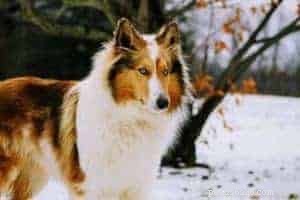
Grooming
A Rough Collie requires maintenance, though not to the extent you might think. People who see my Collies and me out in public often say things like, “Oh, I bet grooming a Rough Collie must be terrible!” Honestly, it’s not, though I’m sure that’s a matter of perspective. On average, I spend 15-30 minutes once a week per Collie. (Yoshi, my fox-like female, is the 15, while Gustav, my lion-like male, is the 30.) The secret is in the upkeep. Make the grooming a regular thing, and it’s surprisingly manageable. Personally, I enjoy the grooming sessions and see them as a bonding experience with my dogs.
Most female Rough Collies are easier to brush out than males. They don’t generally get such a luxuriant mane. However, they do have a full coat shed after giving birth or after each heat, which occurs every 6-9 months in unspayed females.
If you love the Collie personality but don’t want the coat hassle, consider a Smooth Collie. They aren’t as glamorous as their long coat relatives and so don’t get as much attention, but they are just as fabulous in every other way and far more low-maintenance.
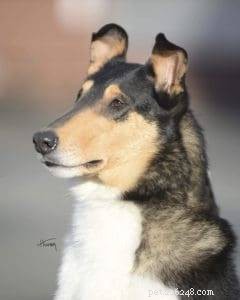
Collies are described as “seasonal” shedders. As spring gets into full swing, you can expect a big pre-summer blowout of the suddenly superfluous undercoat. It will come out in clumps, like a horse casting off its shaggy winter coat. This natural thinning of the undercoat is how a Collie prepares itself for the summer heat.
I’ll say that again – please do not ever shave your Collie. If you outsource the coat maintenance, don’t let your groomer do it either – no matter how professional they think they are. (Shaving any double-coated breed also leaves them prone to skin infections and reduced/altered coat quality.) It does them no favors and actually removes the natural insulation that helps them stay cool in hot weather. A Collie’s hairs are hollow, allowing heat to travel out the pores and be released through the hair shaft. Dogs do not sweat through their skin like we do, except on the paw pads. Panting is their natural cooling system. I don’t shave my Collies, and we live in Florida. They survive just fine.
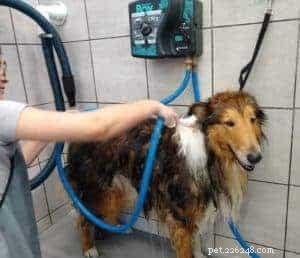
Collies are also referred to as “dry clean” dogs, as brushing removes dirt and debris from their coat. Some will even lick themselves clean like cats. They do not typically carry an oily coat or offensive doggie odor. However, a good bath is recommended every few months (some say only once annually), preferably with a mild or medicated shampoo to avoid skin irritation. Depending how thick your Collie’s outer coat is, you may need to wet and wash them in sections. It can also help to pre-mix a solution of shampoo and water in a pump bottle or empty dish soap container to squirt it onto the skin. Be sure to rinse and dry as well as possible to prevent hot spots from cropping up.
Do Collies shed? Yes, but when not in the throes of a seasonal blowout, Rough Collie shedding is comparatively minimal to other double-coated breeds. You won’t normally see the long, single hairs constantly decorating furniture and floors of houses belonging to German Shepherds or even Labrador Retrievers. Instead, soft Collie under-fur clumps into tidy little tumbleweeds, easily located and swept or vacuumed up. It’s also fairly simple to get off of clothing, since it can be rolled into fun little furballs between your fingertips or removed with a lint glove or roller.
Some side notes on cleaning up after the Lassie dog breed… Investing in a brush for de-furring furniture and certain types of rugs saves tons of time and effort. Also, a long-handled FURemover or “carpet rake” is better than a regular broom for sweeping up hair. (Trust me; I want to compose an ode to mine.) I discovered the amazing properties of fur rakes while working at a veterinary clinic. They’ve made common brooms almost obsolete for me, since they can be used on bare floors also.
Reader Recommended Pet Hair Removal Vacuums With "High Reviews"
If you have carpet, you’ll need to frequently clean Collie fur out of your vacuum to keep it functioning efficiently.
Some people in my Collie Facebook group swear by their self-cleaning vacuums and skip that process entirely. See their go-to vacuums below:
BISSELL Cleanview Swivel Pet Upright Bagless Vacuum Cleaner
 View on Amazon
Shark Rotator Powered Lift-Away TruePet Upright Corded Bagless Vacuum for Carpet and Hard Floor with Hand Vacuum and Anti-Allergy Seal
 View on Amazon
Exercising Your Collie
Collies, Rough or Smooth variety, are considered to be average energy dogs. Most of the time, they are content to perform bear rug impersonations. Usually they are good with one walk a day, or a rousing game of tug-of-war or fetch. I went through a rough patch for a while, and I was living in a trailer with no yard for Gus to run in. At that time, we had two walks every day like clockwork, with off-leash time on the weekends. If you have an apartment and no fenced yard, keeping a Collie can be done; but it will take some commitment on your part.
Also, take the weather into account when exercising your Collie. Dogs can and will overheat faster than humans, and are thus more susceptible to heat stroke. Because we live in Florida, I never walk my dogs midday during the hot months (which is most months) and when we do walk, we avoid pavement – especially asphalt or blacktop – if at all possible. See my article “Do Collies Like to Swim” for information on water exercise.
Some people also opt to have their dogs wear footwear, for the same purpose that humans wear shoes. (While this may seem ridiculous, what’s really ridiculous is dogs ending up at veterinary emergency rooms because their paw pads were horribly burned.) Dog shoes can also be helpful in cold climates. When we lived in Michigan, I fished many an ice ball out from between my Collies’ paw pads. You can save yourself and your dog the hassle by investing in some canine snow boots.
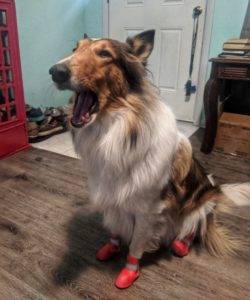
Sometimes I just play inside with Yoshi on rainy days or when I’m not up to a walk. A dog park is another alternative for those days when you’re feeling less active, since you can let your Collie off-leash to get their energy out with other dog friends. If you have a more high-energy Collie dog, you may want to consider nosework training or involvement in agility or herding competitions.
For puppies, the energy requirements will obviously be higher. When Yoshi was younger, she got two walks per day – usually one in the morning and one in the late afternoon. That way, she would be less inclined to boredom and destruction when we were away, and she would let us sleep through the night. A tired dog is a good dog.
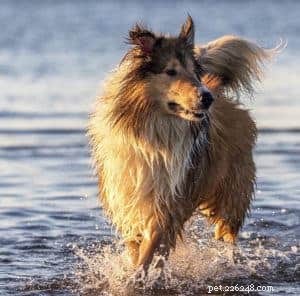
Training
When it comes to training and personality, Collies are relatively easy. Yoshi, my newest Collie, has been the most challenging by far, but I would still take Yoshi on her most rotten day over nearly any other dog on their best day. Generally, even a “naughty” Collie is still a good dog.
Collies are highly intelligent dogs, often learning new commands within the first few repetitions. They are eager to please, if they like you and have a bond with you. Plenty of Collies win obedience titles. However, they are not “biddable” for just anyone. If someone else tries to order Sir Gustav around, he looks at me as if to ask, “Do I really have to listen to them?” They have a mind of their own, you see, and aren’t too keen on robotic obedience. Otherwise, they’d be featured on “Top Ten Smartest Dogs” lists more often.
This “intelligent disobedience” isn’t necessarily a bad thing. There are times it can save a human’s life. For instance, a guide dog for the blind should not obey a command to cross the street if it sees a car coming. A dog’s ability to think for himself can actually make a better worker, since the best herding dogs do not need to be micromanaged. Being able to say, “Go get the sheep” is simpler than having to show a dog through every step of the process necessary to bring in the sheep. While a dog will need guidance when introduced to a new task, the ability to work independently at some point is important.
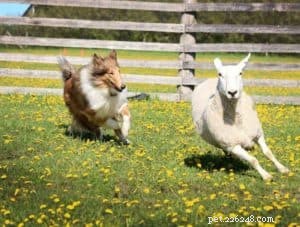
If you give a Collie a command, it may not be obeyed promptly. Sometimes they like to evaluate how they’re feeling and what reward you’re offering, then decide if they will do what you ask. You may have to repeat yourself two or three times, with increasing firmness, until they finally sigh heavily as if to say, “Oh, fine – if you insist.”
Basically, Collies can be stubborn, in a polite, Bartleby sort of way. Many times I have asked one of my Collies (and I’m now on my 4th and 5th) to do something, only to have them stare coolly at me with an expression that says, “I prefer not to.” If a Collie doesn’t see the point of doing a thing and isn’t sufficiently motivated, they will be disinclined to do it. In this respect, they can be on the same wavelength with cats.
Like people, not all Collies are created equal. My boy Gustav loves to wow an audience with his trick repertoire: the more people to impress, the more of a ham he becomes. He is motivated by lavish praise. My girl Yoshi couldn’t care less if a crowd of people is watching, because public opinion matters not at all to her. She is motivated by the promise of play.
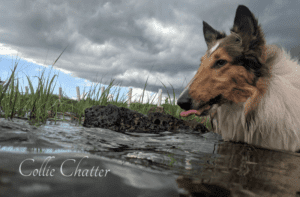
Collies are sensitive, to the extent that some owners swear their Collies are psychic. They are emotionally intelligent: picking up on moods, registering tones, and reading facial expressions to an uncanny degree. To my shame, I have a perfect example of this…
My Collies like to lie directly in front of doors or in pathways, ideally positioned to receive attention as their humans come and go. Due to this adorable but inconvenient habit, my dogs know the word “MOVE.” Which I sometimes have to repeat (see above). Except when I’m grumpy. At such times, the Collies take one look at my face and clear the way without my having to say a word.
Due to this sensitivity, it is almost criminal to use heavy-handed training methods with Collies. They will respond to a word, a tone, a gesture, a directional cue, a look, a silence. If you treat them with respect and love, they will lavish the same on you, tenfold. They will learn quickly, in an effort to make the person they adore happy, and they will adeptly pick up on not only obedience training (come, sit, lie down, stay) but also manners training (quiet, wait, move, no, go.)
Manners training is crucial if you want your Collie to be a beloved member of your household. It’s no fun being that embarrassed pet parent who shoves their dog in a crate, the garage, or the back yard every time someone comes over. With a Collie, this shouldn’t be necessary. If you teach your Collie to greet new friends with paws on the ground, not to be a haunting presence at meals, and not to be a nuisance barker, you will have a much calmer home.
There seems to be this misconception now that only “positive reinforcement” can be used when training a dog. This likely stems from a total misunderstanding of the technical terms used in ABA (Applied Behavioral Analysis), which is a field related to pyschology. As someone who has worked as an ABA Instructor, I know firsthand that ABA definitions are different from the language of everyday people. For instance, negative reinforcement does not mean abuse; it means the removal of something negative in order to increase a desired response – probably not at all what most people would have thought.
In ABA terms, punishment doesn’t mean abuse either: “positive punishment” refers to the addition of something and “negative punishment” refers to the removal of something – both with the goal of decreasing an undesirable behavior. In reality, both reinforcement (positive and negative) and punishment (positive and negative) can be used in tandem as part of a behavior modification plan.
Simply stated, some people act afraid to reprimand their dogs at all, but correction happens all the time from other dogs and even the environment. Rewards (treats, praise, play, etc.) should absolutely be the go-to, but reproof is sometimes necessary to keep bad or even dangerous habits, like car chasing, from forming. Just remember that correction without connection will not get you very far. A trusting bond is essential for progress.
At a conference for ABA Instructors, I met dog trainers as well as teachers, and I even attended a session taught by a successful zoologist and animal trainer. The way we learn is not so different from the way animals learn, in that our behaviors are shaped by our environments.
If you liked this post, you can leave me $1 or more tip on vocal.media or purchase one of our recommended dog products from Amazon so we can buy more dog supplies ourselves!
Get new blog post updates through our monthly email newsletter.
Test your Collie breed knowledge with our Collie Trivia Challenge.
If you have any questions or input about Collies or dogs in general, feel free to leave it in the comments below!
Citations/further reading:
Collie by Samantha Moore
Collies by Harold W. Sundstrom and Mary O. Sundstrom
The Collie by Charlotte Wilcox (written on a primary level)
 Play Video
- Pet Behavior
- Pet Breeds
- Pet Names
- Pet Adoption
- Pet Training
- Pet Information
- Pet Health
- Adorable Pets
- Dogs
- Discover the Scottish Collie: History, Traits, and Why They’re Loved
- Vasya the Rough Collie: Training to Support Asthma, Panic Attacks, Anxiety, and Depression
- Sassy Lassie: The Remarkable Rough Collie Guide Dog
- The Inspiring Journey of Sophie: A Rescued Collie's Legacy
- From Trauma to Triumph: Kyndyl’s Service Dog Journey
- Essential Grooming Tools for a Pristine Rough Collie Coat
- Rough Collie Behavior: Understanding Traits, Training, and Care