

9 Stunning Hairless Dog Breeds: History, Care, and Low‑Shedding Benefits
Hairless dogs may look sleek and futuristic, but their roots trace back to 13th‑century China and 16th‑century South America. Today, the Chinese Crested dominates the scene, while the Xoloitzcuintli and American Hairless Terrier (AHT) are gaining popularity. The Peruvian Inca Orchid also holds a special place among the rare, hair‑free breeds.
Owners often choose hairless dogs for their unique appearance, minimal shedding, and the perception that they are easier to groom. Many wonder whether these dogs truly suit people with allergies. We consulted two veterinarians who own hairless dogs and a seasoned breeder to answer that question—and more.
Expert Voices
- Teresa Burks, DVM – Chinese Crested owner, veterinarian at Solomon Animal Hospital, Wichita, KS; also competes with her dogs in dog sports.
- Angie Claussen – AKC Breeder of Merit, longtime breeder of American Hairless Terriers under the “Poise” kennel.
- Kate Hornick, DVM – American Hairless Terrier owner, veterinarian at Mentor Animal Hospital, Mentor, OH; showcases her dogs in shows.
Why Some Dogs Are Hairless
Hairlessness in dogs results from two distinct genetic mechanisms:
- FOXI3 – Present in all but one of the four AKC‑recognized hairless breeds. The mutation causes a semi‑lethal dominant pattern: a single copy produces a hair‑free dog with tufts of hair on the head, tail, and ankles; two copies are lethal. These dogs often have abnormal or missing teeth.
- SGK3 – A recessive gene that leads to hairlessness without affecting teeth. AHTs are the only AKC breed with this gene, allowing a true‑breeding hairless line.
Both genes disrupt hair follicle development or tooth formation, which explains the distinctive physical traits of each breed.
How Many Hairless Breeds Exist?
The American Kennel Club recognizes four hairless breeds: Chinese Crested, Xoloitzcuintli, Peruvian Inca Orchid, and American Hairless Terrier. Several other rare, sometimes extinct, breeds also exist.
Chinese Crested
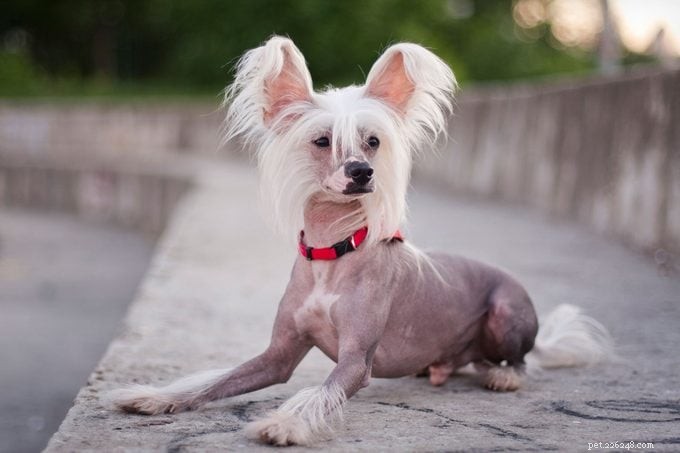
Known as the “My Little Pony of dogdom,” the Chinese Crested combines elegance with a playful spirit. The hairless variant sports tufts of long hair on the head, tail, and ankles, while the coated variety—called the Powder Puff—has a full, fluffy coat.
Standing 11–13 inches tall and weighing 10–13 lbs, they are an AKC toy breed. Historically prized by Chinese sailors and later championed by celebrity Gypsy Rose Lee in the 1950s, these dogs excel in agility and are beloved family companions.
Xoloitzcuintli
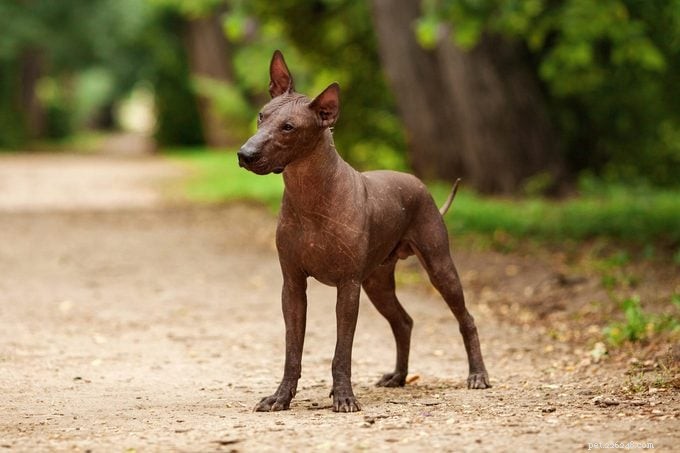
Pronounced “show‑low‑eats‑queent‑lee,” the Xolo traces back to Aztec times, once considered sacred and even sacrificed to guide souls. After nearly disappearing, the breed was revived in 1954 and re‑recognized by the AKC.
They come in three sizes—toy (10–14 inches), miniature (14–18 inches), and standard (18–23 inches)—and weigh 10–55 lbs. The Xolo’s sleek, ivory skin and muscular build make it a striking, loyal companion.
Peruvian Inca Orchid
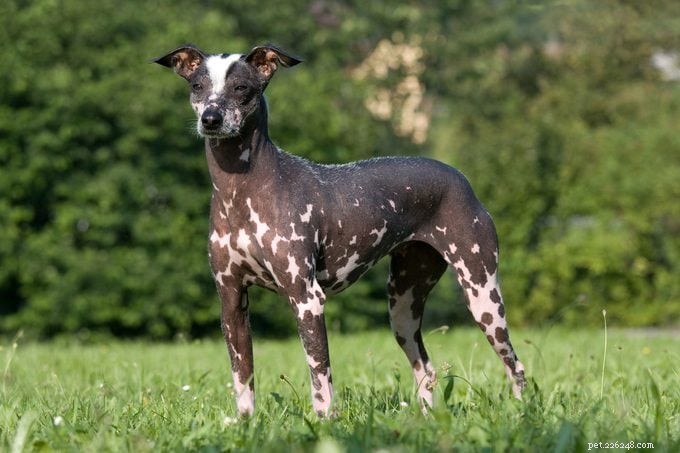
Once believed to possess healing powers, the PIO was rediscovered in the Andes in 1966 and declared Peru’s national patrimony in 2001. Their smooth skin, often mottled brown, gray, or copper, feels like a living heating pad.
These agile sight hounds come in small (10–16 inches, 9–19 lbs), medium (16–20 inches, 18–26 lbs), and large (20–26 inches, 26–55 lbs) sizes. They are currently in the AKC miscellaneous group but may join the hound group in the future.
American Hairless Terrier
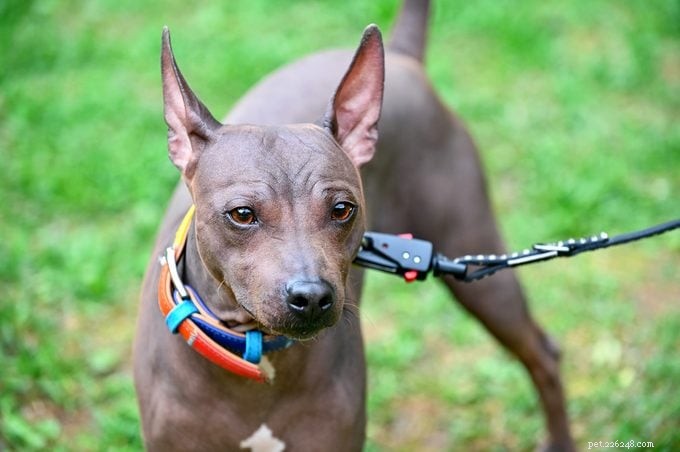
Originating from a coated Rat Terrier puppy that lost its coat in 1966, the AHT was developed for its normal dentition and full hairlessness. The breed shows no tufts; its skin is soft and smooth—unlike the bristly texture of other hairless breeds.
Standing 12–16 inches tall and weighing 7–14 lbs, AHTs are energetic terriers known for their playfulness, intelligence, and hunting instinct. They thrive in indoor environments and enjoy close human interaction.
Other Rare Hairless Breeds
Argentine Pila
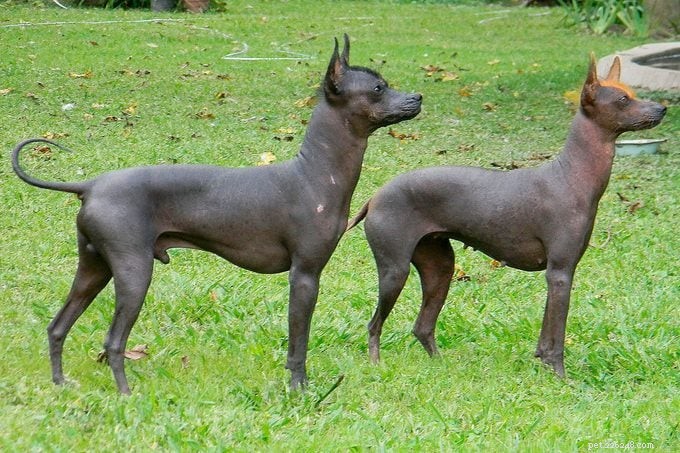
The Pila ranges from 9–13 inches (small) to 18–22 inches (large). Coated versions have short hair; hairless ones feature a tuft on the head. Skin colors include black, gray, and brown.
Bolivian Hairless Dog (Khala)
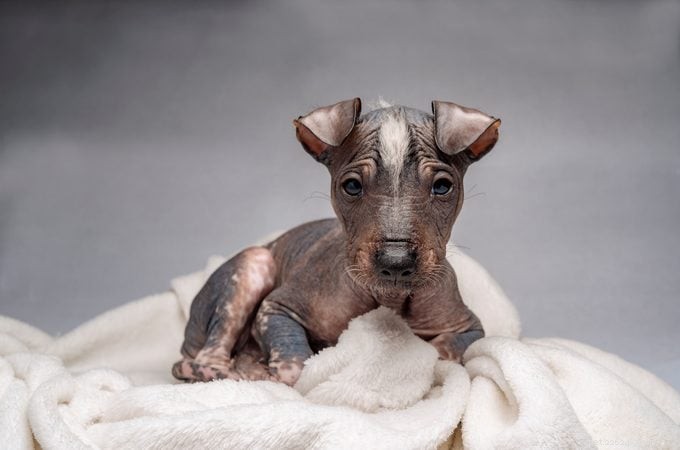
With a single flowing tuft on the head, the Khala resembles a rock‑star look. Two size categories: Medio (14–17 inches, 15–20 lbs) and Grande (17–20 inches, 18–30 lbs).
Jonangi (India)
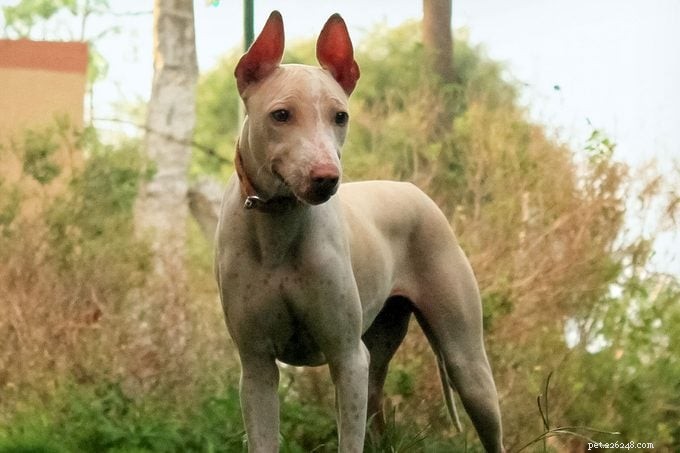
Once used for duck herding, the Jonangi is near extinction. It stands 18–22 inches and weighs 45–85 lbs.
Abyssinian Sand Terrier (African Hairless Dog)
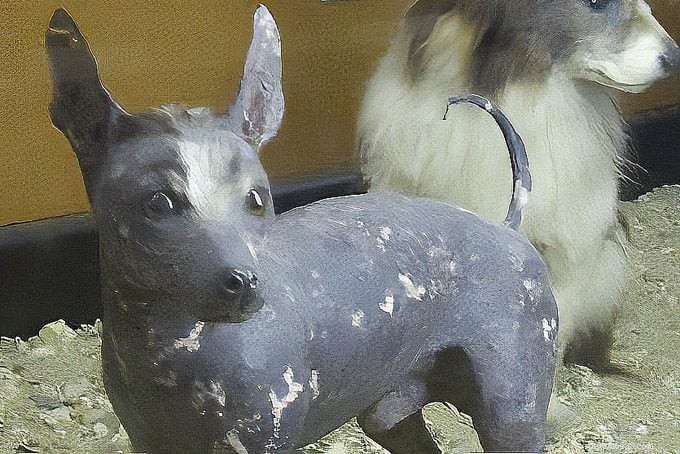
Possibly extinct, the last documented specimen dates to 1903 and is preserved in a British museum.
Ecuadorian Hairless Dog
An elusive breed from Ecuador’s Santa Elena Peninsula, it may descend from the PIO or Xolo. No confirmed photographs exist; it is under 18 inches tall.
Frequently Asked Questions
How Do You Care for Hairless Dogs?
Despite their lack of fur, hairless dogs need regular skin care to prevent dryness, sunburn, and acne. Teresa Burks recommends rotating benzoyl peroxide and antibacterial/fungal shampoos, with weekly baths tailored to each dog’s skin type. Moisturizing is essential—too much or the wrong lotion can cause blackheads, while too little leads to dryness.
Sun protection is crucial: apply baby SPF 50 sunscreen or dress them in sun shirts. They also require warmth, so stylish coats help keep them comfortable year‑round.
Are Hairless Dogs Hypoallergenic?
Hairless dogs can be less allergenic, but they are not allergy‑proof. Allergies are triggered by dander, not fur. Angie Claussen explains that hairless dogs retain their natural skin oil on the surface, trapping dander and making it easier to wash away. Regular bathing reduces airborne allergens, benefiting allergy sufferers.
Why Trust Our Research
Reader’s Digest commits to publishing expert‑written, fact‑checked content. Our contributors, such as award‑winning journalist Caroline Coile, PhD, combine deep canine knowledge with rigorous sourcing. We continually review and update our articles to maintain accuracy.
Sources
- Teresa Burks, DVM, Solomon Animal Hospital, Wichita, KS – interview, Feb 6 2024
- Angie Claussen, American Hairless Terrier breeder – interview, Feb 4 2024
- Kate Hornick, DVM, Mentor Animal Hospital, Mentor, OH – interview, Feb 2 2024
- Archaeological and Anthropological Science: “Special pet, special care. Diet, provenance, and health analyses of a dog reveal strong ties with humans in Patagonia.”
- Scientific Reports: “The dental phenotype of hairless dogs with FOXI3 haploinsufficiency.”
- Philosophical Transactions B: “The bald and the beautiful: hairlessness in domestic dog breeds.”
- Pet Behavior
- Pet Breeds
- Pet Names
- Pet Adoption
- Pet Training
- Pet Information
- Pet Health
- Adorable Pets
- Dogs
- Three Key Reasons Cats Purr: From Healing to Bonding
- Is Chocolate Safe for Dogs? Expert Guidelines & Safe Portions
- Top Allergy-Relief Supplements for Dogs: Proven Ingredients & Expert Tips
- Effective Clumber Spaniel Training: Proven Techniques for Smart, Gentle Hunters
- Do Dogs Experience Dysphoria? Insights into Their Emotional Well-Being
- What Causes Excessive Itching in Dogs? Understanding Symptoms & Solutions
- The Ultimate Cat Scratching Post: Cat-Approved & Owner-Approved