

Osteosarcoma Treatment: Why Amputation May Save Lives
“You chose to amputate the leg,” the oncology resident nodded. “It’s not an easy decision but, I think, the right one.”
Frankly, for me, the decision wasn’t a difficult one: Without amputation, this insidious cancer, osteosarcoma, would take Lucas in only a few months, if not weeks. With amputation, his prognosis expanded to around four months. With amputation plus chemo (a topic for another day), 50 percent of dogs make it a year and 25 percent hit two years.
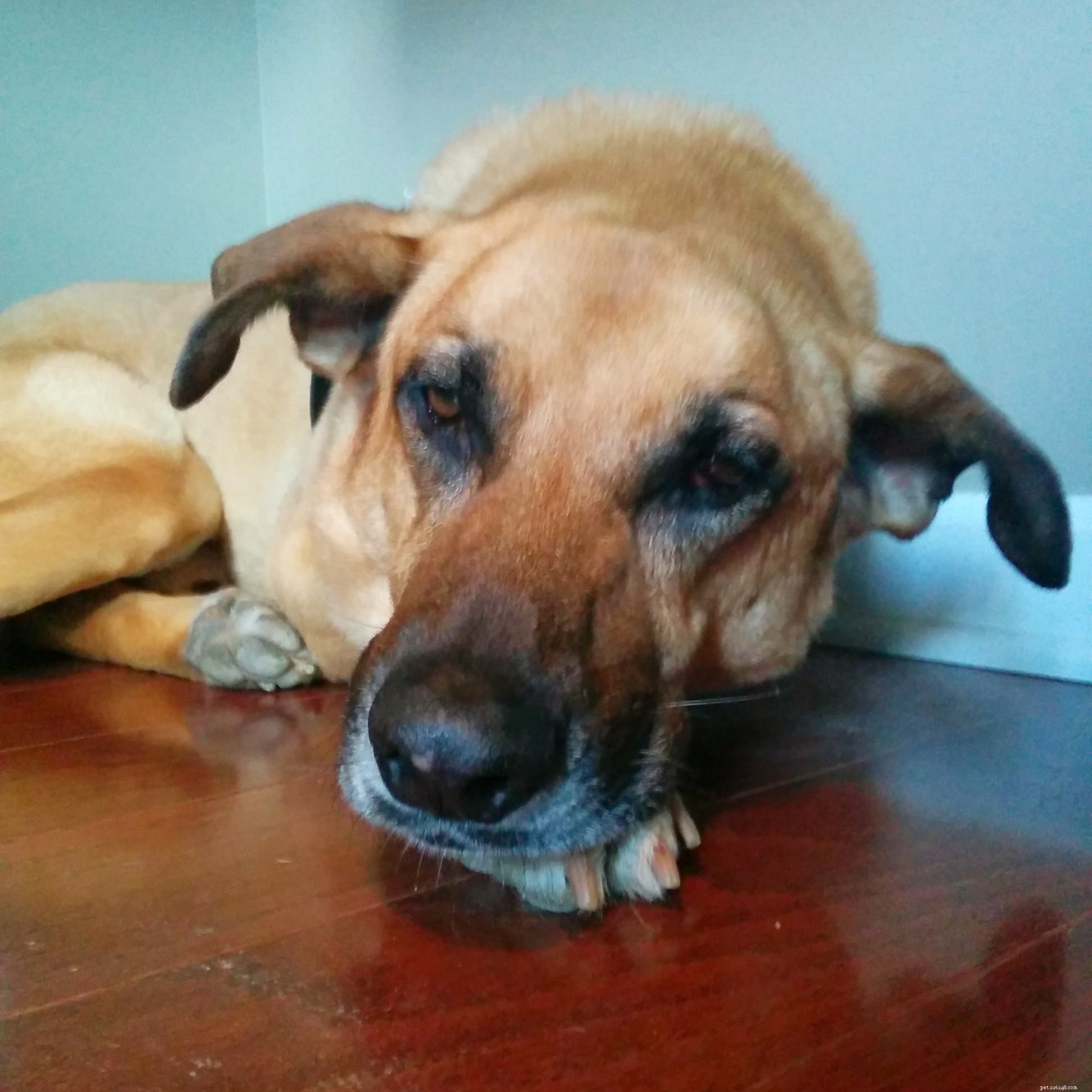
Of course, we had an advantage. We were coming at this from an informed place. When Emmett had a nerve sheath tumor on his leg years ago, the oncologist recommended amputation. We dove into the research, spoke with vets, chatted on internet forums, and discovered a pretty resounding optimism: Dogs recover quickly from amputation and can live pretty-darn-awesome lives afterward. (Ultimately, the surgeon was able to excise the tumor with wide, clear margins, preserving Emmett’s leg.)
With Lucas, we found ourselves slogging and flying – all at once. We spotted a mild limp, a slight favoring of his front left, but he had been to doggy daycare that weekend. A sprain, perhaps? He limps often, so we thought we’d wait and see. We waited through the weekend, and it worsened. I called the vet, who saw him on Wednesday. She x-rayed it. Saw the cancer. The next Tuesday we were at the oncologist’s, and the following Wednesday the leg was gone.
Limp to amputation. Three weeks.
He came home after three days at the animal hospital. We had two bandage changes scheduled, then we needed to wait two weeks until his stitches came out. At the first change, she removed the fentanyl patch. What we didn’t know, and what we still didn’t know when I wrote the follow-up post, was that when the patch was removed, Lucas went into withdrawal. The frantic pacing, the wild eyes, the drooling, all of it, she chalked up to having that patch taken off. (Add this to the notebook-length list of Things I Wish I Would’ve Known.)
But, you know, all that research we did and all those anecdotes were correct: He bounced back. Quickly. He was on complete exercise restriction for those two weeks. Every time we looked away–after those horrible first few days, anyway–he was attempting to sneak off, climb up the couch, dig in the garden, anything he could get away with that he wasn’t supposed to be doing. The difficult part wasn’t the fact that he lost his leg. It wasn’t the fact that his movement was jerky and unstable and unbalanced. It wasn’t the fact that he went through moments of panic and pain and disorientation. Nope. The difficult part was keeping his fuzzy butt still for two straight weeks.
Thankfully, the stitches came out as scheduled, and the restriction was lifted. He had a few full days to be himself. He even started short walks up and down the block. Heck, a few times he dashed off in a run across the backyard to bark at something passing by our fence.
Throughout all of it, from spotting the initial limp until his first chemo treatment this week, we received one warning over and over again: Be prepared for behavioral changes.
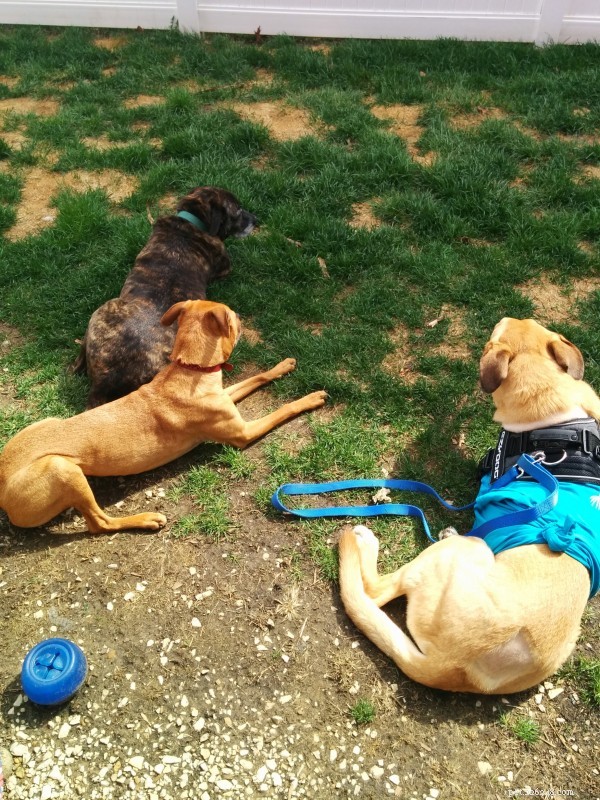
Initially, I was nervous about how it would go with Emmett and Cooper, but that was totally unfounded. From the first moment Lucas came home from the hospital, they were like, “Oh, alright.” No biggie. Except one night. Neither John nor I saw it start, but Emmett and Cooper got into a Fight. Yep, with a capital F. We had to pull them apart. There was some blood. There was some fur flying. Thankfully, neither got hurt, and they were over it instantaneously. There’s been no recurrence, but I suspect that all of it–the weird schedules, the stress, the managing Lucas, the paying all our attention to Lucas, all of it–contributed to that single incident.
The other BIG change is that Lucas has become clingy. Now, for those of you with velcro dogs, this might sound strange. Lucas has never been like Emmett and Cooper who desperately need to be, basically, on top of us at all times. No, Lucas has always been independent. He’ll sleep downstairs while everyone else is upstairs. He’ll play in the yard by himself. He’ll pick a toy out of the box and chew peacefully on his bed while Emmett and Cooper trail me from room to room.
Not anymore. He’s usually right about here:
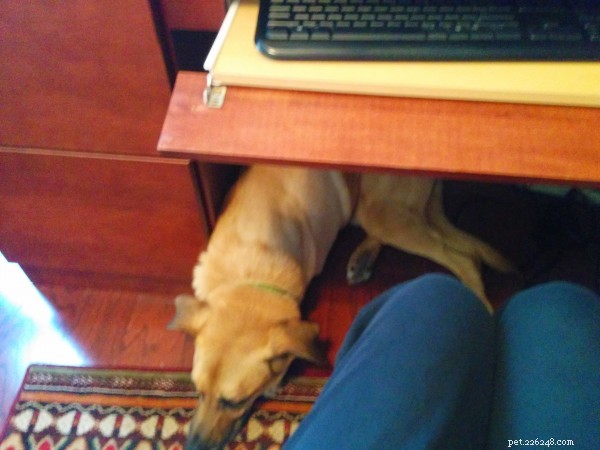
Or here:
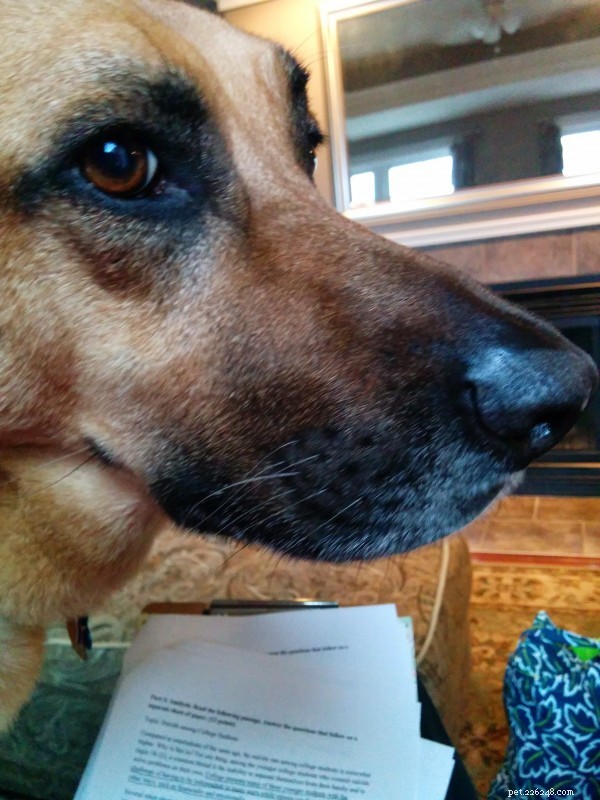
Since he came home with us in 2007, he never once slept in bed with us. He spent the last few weeks sleeping right up close and snuggled with us.
The last change of note is that he seems to have some phantom pain. He’ll be lounging peacefully, then all of a sudden he YELPS! and shoots up and dashes off, like he’s been stung by a bee. After that happens, he’s disoriented for a bit, standing and staring at us with his tail tucked. It happened last night, and he spent about two hours just standing, staring, drooling, all with his tail tucked under his belly. It’s odd. It’s on my list of things to discuss with his vet next week.
As far as osteosarcomo and amputation go, that’s been our experience. I think I covered most of it, but please don’t hesitate to leave any specific questions in the comments. I’m happy to share what we’ve been going through in the hopes that it helps someone else. There have been a few life-saving products, too, which I’ll also cover (with a giveaway of something AMAZING) next week. He’s past his first chemo treatment, and I’m going to cover that–and add to the Things I Wish I Would’ve Known notebook–next week, as well.
In the meantime, please do let me know if you have any questions I can answer! And have a wonderful, fun-filled weekend with your pups!
- Pet Behavior
- Pet Breeds
- Pet Names
- Pet Adoption
- Pet Training
- Pet Information
- Pet Health
- Adorable Pets
- Dogs
- Dog Toe Amputation: Safe, Pain‑Free Recovery for Greyhounds and Other Breeds
- A Dog's Unexpected Injury: Handling Limping and Swelling with Confidence
- Understanding Osteosarcoma Chemotherapy: What Pet Owners Need to Know
- Marijuana and Dogs: What Every Owner Should Know About Safety and Exposure
- Understanding Osteosarcoma in Dogs: Symptoms, Diagnosis, and Care
- Veterinary Guide to Canine Osteosarcoma: Causes, Symptoms, Diagnosis & Treatment
- Osteosarcoma in Dogs: Causes, Diagnosis, and Proven Treatment Strategies