

Can Amputation Improve a Dog’s Behavior? A Vet’s Perspective
Both Emmett and Lucas had their blood panels this morning at our local vet. Em’s is just routine; since he’s on oral chemo probably forever, they’re monitoring his levels every 10 weeks. Lucas’ is part of the weekly checkups he gets for his Purdue chemo trial. With both of them undergoing two different chemo protocols, it rarely happens that their schedules sync, but when it does it’s so convenient!
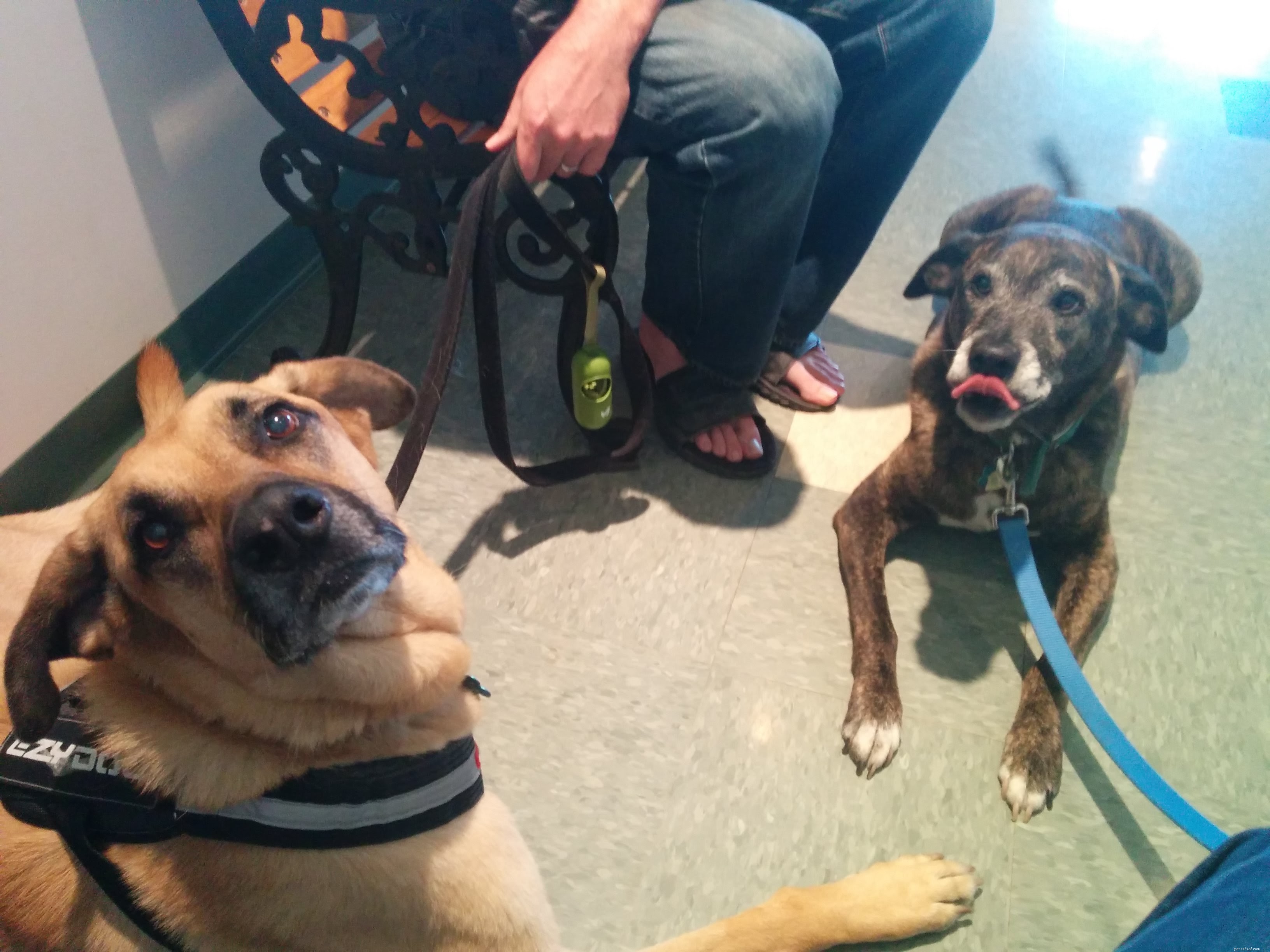
As you guys know, Lucas has always been a reactive dog. Over the years it went from reacting to, basically, everything to just dogs and occasionally strangers. And not all dogs either; he rocked doggy daycare but flipped at any dog passing him in the neighborhood. We took reactive dog training classes. We briefly joined a dog walking group. We practiced and trained and balanced counter conditioning with management. As for strangers, he was pretty much fine as long as he was left alone.
His annual vet visit always caused strife because it was just. so. stressful. For him and for us. But, luckily, he was the picture of health, so we really only had to deal with it once per year.
Until…
So, when Lucas got his cancer diagnosis, we knew it would entail numerous vet visits. Honestly, I had no idea just how many. His initial consults locally, his amputation, three days at the hospital after that, two wound check visits, getting his stitches out–all that before chemo–then consults at Purdue, weekly blood tests at our local vet, chemo appointments every three weeks plus one extra trip so far because his blood count was off… He still has another blood test next week, a chemo next week, another round of staging radiology three weeks after that if they don’t want to do a fifth chemo (we just learned of that possibility today), followed by radiology staging every few months after that…
Meanwhile, try taking a three-legged dog who’s as cute as Lucas anywhere! He gets stopped on the street and in the lobby at the vet and just about everywhere we go!
All this has given us far more opportunities to work on desensitization and counter-conditioning exercises than we could have ever dreamed of.
And you know what?
It’s working!
This morning, our vet remarked about how well behaved he is and how comfortable he is compared to how he used to be. He loves everyone and hops around greeting and licking. Of course, every single time he goes back for his blood test, I send the can of cheese with the tech. And cheese showers down on him in the lobby–and it becomes a downpour if there are other dogs nearby. He did snipe at a dog last week, but it wasn’t his fault. I made it clear that he needed to have distance from the other dogs, but as we were checking out, a woman wasn’t paying attention and her dog came right up to him. Not his fault, and it was only a small snipe, not a full-blown melt-down. Victory!
Clearly this progress would not have been made if he hadn’t received this diagnosis and a rigorous schedule that requires weekly or sometimes twice-weekly vet visits. It’s given us tons of opportunity to work on his training, and he’s made so much progress that others are commenting on it! As for strangers, he’s getting used to people coming up to say hi. He still whines a bit, but for the most part now it’s excitement rather than stress!
I suppose if you were a “silver lining” type of person, which I strive to be, this is definitely a shiny one emerging from this horrible situation. He’s becoming more confident and comfortable in places and with people, something we’ve wished for him since day one. It’s pretty awesome to see him navigating previously untenable situations with darn-near-ease (well, that plus cheese), and that’s one more thing we have to be grateful for!
- Pet Behavior
- Pet Breeds
- Pet Names
- Pet Adoption
- Pet Training
- Pet Information
- Pet Health
- Adorable Pets
- Dogs
- Dog Toe Amputation: Safe, Pain‑Free Recovery for Greyhounds and Other Breeds
- Osteosarcoma Treatment: Why Amputation May Save Lives
- Strengthen Your Relationship: Proven Dog Training Techniques for a Stronger Bond
- Improve Walks with Your Leash-Reactive Dog: Proven Strategies for Calm and Confident Strolls
- Mastering Canine Stimulus Control with Positive Training Techniques
- Pain’s Impact on Dog Behavior: Veterinary Research Reveals Key Insights
- Understanding Why Dogs Walk Backwards Through Doors