

Dog MRI Explained: What Owners Need to Know
While X‑rays and CT scans are familiar tools, Magnetic Resonance Imaging (MRI) offers a deeper, non‑invasive view of a dog’s soft tissues. In veterinary medicine, MRIs are increasingly used to diagnose complex neurological conditions and early‑stage cancers that other imaging methods may miss.
If your veterinarian recommends an MRI, you’ll likely have questions about the procedure, its cost, and potential risks. This guide breaks down everything you need to know, from the science behind MRI to what to expect on the day of the scan.
What Is an MRI?
Magnetic Resonance Imaging uses powerful magnetic fields to capture detailed images of a dog’s internal structures. By measuring how protons in body tissues respond to the magnetic field, MRIs can reveal subtle abnormalities in the brain, spinal cord, joints, and abdomen without ionizing radiation.
Unlike X‑rays, which excel at visualizing bone, or CT scans, which provide cross‑sectional bone and soft‑tissue images, MRI penetrates bone and highlights soft‑tissue differences down to 1–2 mm. This makes it the gold standard for diagnosing:
- Brain disorders such as strokes, hydrocephalus, and tumors
- Spinal conditions including disc disease, fractures, and canal stenosis
- Small joint lesions and certain abdominal masses that are too subtle for other imaging modalities
Why Dogs Need MRIs
Because MRI machines are costly and require specialized staff, most veterinary practices rely on X‑rays and ultrasound for routine exams. MRIs are reserved for cases where these tools cannot pinpoint the cause of neurological signs—wobbliness, seizures, paralysis, or unexplained back pain.
By providing high‑resolution images, MRIs can uncover hidden lesions, guide surgical planning, and inform prognosis, often improving outcomes for pets with complex conditions.
Types of Dog MRIs
Standard MRIs image a specific body region in a static snapshot. A less common variant is functional MRI (fMRI), which tracks brain activity by detecting blood‑flow changes during tasks. fMRI is primarily a research tool and rarely used in routine veterinary care because dogs must be anesthetized, which suppresses natural brain activity. However, selective studies have trained dogs to remain still, enabling investigations into service‑dog potential and other behavioral questions.
Risks and Precautions
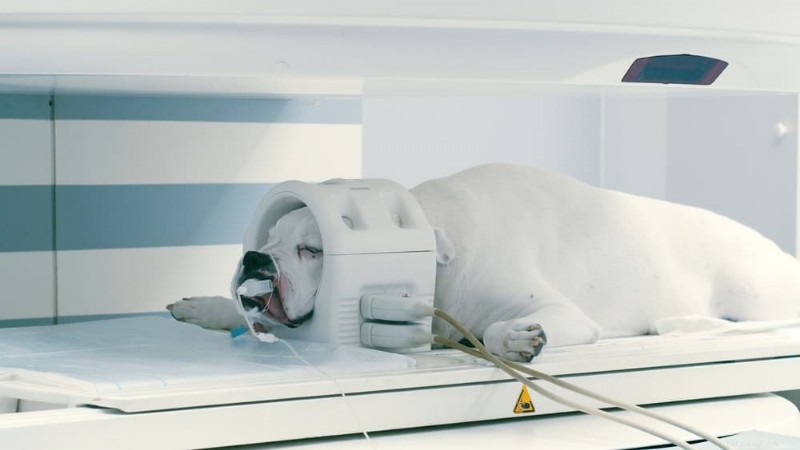
The principal risk associated with a dog MRI is the need for general anesthesia to keep the animal still for the 60‑minute or longer scan. While anesthesia carries inherent risks—especially for dogs with pre‑existing health issues—veterinarians mitigate these by conducting thorough pre‑operative blood work and monitoring vital signs throughout the procedure.
Dogs with ferromagnetic implants, such as certain pacemakers or metal hardware, may be contraindicated for MRI. Always inform your vet of any prior surgeries or implants to determine safety.
What to Expect During the Procedure
After a pre‑anesthetic evaluation, your dog will receive a sedative followed by a full anesthetic. A venous line will be placed to administer fluids and, if necessary, a contrast agent that enhances image clarity.
Your dog will then be positioned on a specialized table that slides into the MRI bore. Anesthesia monitors—heart rate, blood pressure, and temperature—will be managed remotely. You will not be present during the scan, but the veterinary team will keep you informed once the dog is awake and stable.
Cost Considerations
Dog MRI is a high‑end diagnostic service. Costs typically range from $2,000 to $5,000, depending on geographic location, the specific body area imaged, and any prior tests performed. Pet insurance may cover the expense if the condition falls under a covered service; otherwise, many practices offer payment plans, credit options, or referral to low‑cost veterinary services.
- Pet Behavior
- Pet Breeds
- Pet Names
- Pet Adoption
- Pet Training
- Pet Information
- Pet Health
- Adorable Pets
- Dogs
- Can Pet Rabbits Swim? Understanding Their Love for Water
- Mastering Dandie Dinmont Terrier Training: Tips for a Well-behaved Family Companion
- How to Care for Your Senior Cat: Essential Tips for Healthy Aging
- Danish Swedish Farmdog: Loyal, Energetic Companion for Active Families
- How to Build a Stress‑Free Vet Experience for Your New Cat
- Best‑Rated Portable Dog Water Bottle: Loved by 20,000+ Amazon Customers
- Gentle Dog Nail Trimming: Safe, Stress-Free Techniques