

Canine Lymphoma: Signs, Stages, Diagnosis, and Evidence‑Based Treatment
According to the Purdue University College of Veterinary Medicine, lymphoma accounts for roughly 7–14 % of all canine cancers. It can manifest in a variety of ways, so early recognition is key for the best outcome.
What Is Lymphoma?
Lymphoma originates in the lymphatic system, which includes lymph nodes, the spleen, thymus, lymph vessels, and bone marrow. The disease begins when a specific type of white blood cell—lymphocyte—undergoes abnormal growth and proliferation. This disrupts immune function, fluid balance, and can lead to metastatic tumors throughout the body. While many dogs ultimately succumb to the disease, timely intervention can extend life and preserve quality.
Causes of Lymphoma in Dogs
Although the exact trigger remains unclear, genetic predisposition is suspected because certain breeds exhibit higher incidence rates. These breeds include:
- Golden Retrievers
- Boxers
- Rottweilers
- Scottish Terriers
- Basset Hounds
- Cocker Spaniels
- German Shepherds
- Airedales
- Bulldogs
- Poodles
Environmental factors—such as exposure to specific herbicides, radiation, industrial waste, and second‑hand smoke—have also been linked to increased risk. Regardless of breed, any dog can develop lymphoma.
Types of Lymphoma in Dogs
The classification of lymphoma in dogs is based on cell type, grade, and anatomical location. Symptoms vary accordingly.
B‑Cell vs. T‑Cell Lymphoma
B‑cell lymphoma is the most common subtype and generally confers a longer survival time compared to T‑cell lymphoma, which tends to progress more aggressively.
High‑Grade vs. Low‑Grade Lymphoma
High‑grade (lymphoblastic) lymphoma presents rapidly and often has a poorer prognosis. Low‑grade (lymphocytic) lymphoma progresses more slowly and can allow for extended periods of remission.
Multicentric Lymphoma
This is the most frequent form, characterized by swollen lymph nodes throughout the body. Commonly noticeable nodes include those under the jaw, in the neck, front of the shoulders, armpits, groin, and behind the knees. Additional signs may include weight loss, lethargy, vomiting, diarrhea, and increased thirst.
Alimentary Lymphoma
Occurring in about 5–7 % of cases, this subtype originates in the gastrointestinal tract, producing vomiting, diarrhea, appetite changes, and weight loss.
Mediastinal Lymphoma
Rare but serious, mediastinal lymphoma involves the chest cavity, compressing the heart, lungs, and airway. Owners may notice coughing, shortness of breath, and reduced exercise tolerance.
Extranodal Lymphoma
Extranodal disease refers to lymphoma that arises outside the lymph nodes—examples include central nervous system lymphoma, cutaneous lymphoma, and pulmonary lymphoma. Signs depend on the affected organ; CNS lymphoma may present with seizures or behavioral changes, while cutaneous lymphoma can appear as non‑healing skin lesions.
Stages of Lymphoma in Dogs
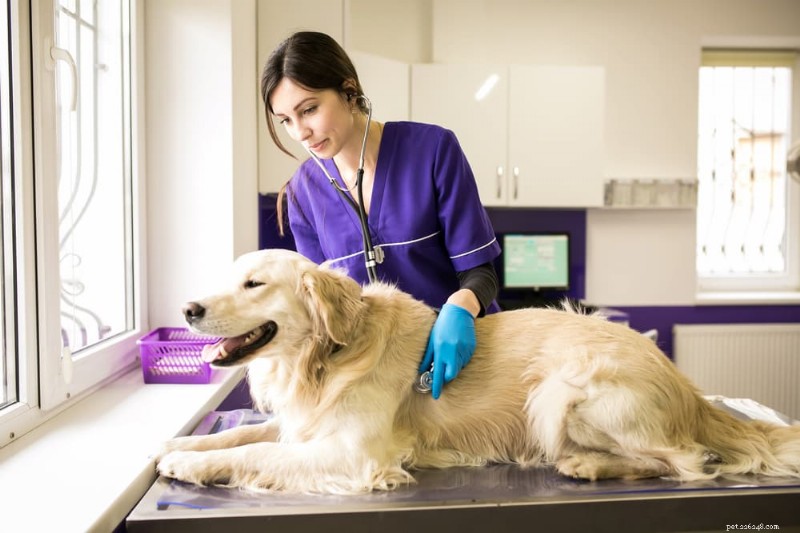
Staging reflects disease distribution:
- Stage I: One lymph node involved.
- Stage II: Nodes on one side of the diaphragm.
- Stage III: Nodes on both sides of the diaphragm.
- Stage IV: Liver or spleen involvement.
- Stage V: Bone marrow, nervous system, or other unusual sites.
Each stage is further divided into substage A (clinically well) and substage B (clinically ill). Substage A dogs usually have a better outlook.
Diagnosing Lymphoma in Dogs
Diagnosis typically begins with a physical exam and cytology of an enlarged lymph node. A fine‑needle aspirate is usually well tolerated without sedation. If cytology is inconclusive, a surgical biopsy may be required. Flow cytometry or immunophenotyping performed at a reference laboratory distinguishes B‑cell from T‑cell lymphoma and informs prognosis.
Imaging—chest and abdominal radiographs, abdominal ultrasound, and when indicated MRI or CT scans—assesses disease spread. Bone marrow aspirate may be performed if marrow involvement is suspected. Comprehensive blood work and urinalysis evaluate overall health before treatment.
While initial diagnosis can be completed by a general practitioner, referral to a veterinary oncologist is essential for advanced diagnostics and therapy planning.
Treating Lymphoma in Dogs
Chemotherapy remains the cornerstone of treatment for most canine lymphomas. Combination protocols (multiple agents) yield higher remission rates and longer durations than single‑agent therapy.
Chemotherapy
Standard first‑line agents include L‑asparaginase, vincristine, cyclophosphamide, doxorubicin, and prednisone. Blood panels precede each session to monitor tolerance. Low‑grade lymphoma may be managed with oral agents such as chlorambucil plus prednisone.
Dogs often tolerate chemotherapy well; side effects to watch for include vomiting, diarrhea, decreased appetite, and general malaise. Adjustments to the protocol or supportive medications can mitigate discomfort.
Other Treatments
For owners who decline chemotherapy, prednisone alone offers palliative relief but typically limits life expectancy to 4–6 weeks. Rarely, localized surgery or radiation is employed, usually in combination with chemotherapy, as monotherapy rarely achieves long‑term control.
End‑of‑Life Care
When remission fails, focus shifts to comfort care. Common late‑stage signs include loss of appetite, vomiting, and diarrhea. Euthanasia is considered when quality of life deteriorates beyond acceptable limits.
Cost to Treat Lymphoma in Dogs
Initial staging and diagnostics can start at $500, with CT or MRI adding $1,000 or more. Prednisone alone costs $20–$30 per month, offering a budget‑friendly option. Chemotherapy can range from $5,000 to over $10,000, depending on protocol. Typical remission lasts 8–9 months, with a second remission possible for 2–4 months. Individual costs vary by location and chosen therapy.
Prognosis for Dogs with Lymphoma

Survival correlates strongly with stage, grade, and cell type. Stages I–III generally offer better outcomes than IV or V. Low‑grade and B‑cell lymphomas yield longer survival times than high‑grade or T‑cell variants. Mediastinal or CNS lymphoma typically has a short prognosis.
While statistical averages are useful, each dog is unique. Treatment decisions should balance expected outcomes, costs, and your pet’s well‑being.
Preventing Lymphoma in Dogs
No proven prevention strategy exists; lymphoma risk is largely driven by genetics and environmental exposure. Rather than blame, focus on regular veterinary care, early detection, and choosing the most suitable treatment plan with your veterinary oncologist.
Though the diagnosis can be challenging, effective therapy often improves quality of life, allowing more meaningful moments with your companion.
- Pet Behavior
- Pet Breeds
- Pet Names
- Pet Adoption
- Pet Training
- Pet Information
- Pet Health
- Adorable Pets
- Dogs
- Top Cat Litter Choices of 2022: Expert Reviews & Ratings
- How to Treat and Prevent Hot Spots in Pets: A Comprehensive Guide
- Top Naming Ideas for Geldings & Stallions
- Managing Arthritis in Horses: Prevention, Diagnosis, and Care
- Ducorp’s Cockatoo: A Vibrant Family Parrot for Your Home
- Pet Fashion Trends: Dressing Your Dog for Fun and Safety
- Sergio Ramos: Legendary Defender & His Enchanting Family