

5 Subtle Signs Your Dog Is Deeply Bonded With You (Beyond Obedience)
How can you tell if your dog truly feels connected to you? While many people equate a strong bond with perfect obedience, modern behavior science shows that trust, security, and voluntary interaction are far more telling.
Obedience Is Not a Measure of Love
A dog may obey a cue because it has been practiced, heavily reinforced, or out of fear of consequences. None of these reasons alone reveal how the dog feels about you. Likewise, a deeply bonded dog can be distracted by a rabbit and momentarily forget you’re there. Training is valuable, but it shouldn’t be used as a love test. Instead, look for patterns of voluntary behavior—what the dog chooses to do when no command is given.

Want the training steps laid out for you?
My illustrated Core Skills guide turns positive‑reinforcement training into clear, practical exercises you can follow at home.
Get the Core Skills Guide – Digital download, instant access via Etsy.
1. They Check In With You Voluntarily
During a walk, your dog may pause, glance back, or nuzzle your hand simply to include you in the adventure. No cue, no treat—just a choice to stay connected. This occasional check‑in shows the dog sees you as a companion, not just a leash holder.
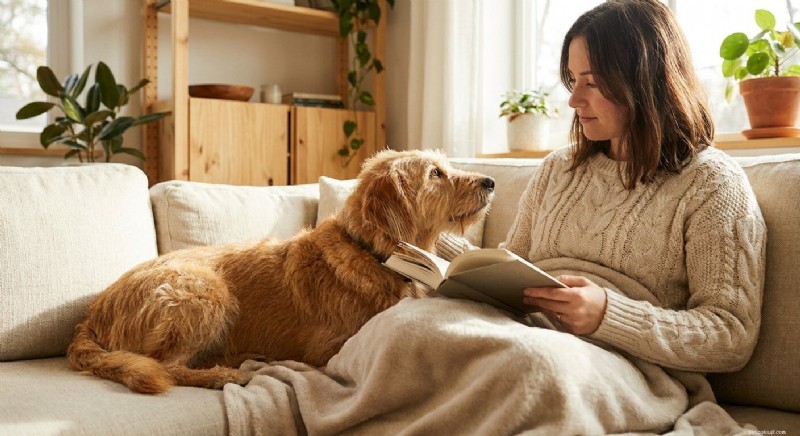
A dog that constantly watches you isn’t necessarily more bonded; confidence to explore while keeping you on their radar is a healthier sign.
2. They Look to You When Unsure
When something unexpected happens—a strange object, an odd noise, or a new trash can—many dogs glance at their person for guidance. Research on social referencing shows dogs use our reactions as information in ambiguous situations. This isn’t clinginess; it’s a sign they view you as a reliable source of safety.
One quick look doesn’t prove a perfect bond, and a dog that constantly watches may be anxious. Look for a pattern: the dog seeks your input, then processes the situation independently.
3. They Genuinely Enjoy Doing Things With You
Affection isn’t limited to cuddles. Some dogs love physical closeness, while others prefer shared activities—fetch, a walk, or simply watching you work. Breed, age, temperament, and past experiences shape how a dog shows closeness. The key question is whether your dog seems happy to spend time with you, not how many seconds they spend in your lap.
4. They Can Fully Relax Around You
A dog that sprawls out, sighs contentedly, or calmly chews a toy while you’re nearby demonstrates true security. Rest requires vulnerability; a dog that’s constantly on high alert may not yet feel safe enough to let its guard down.
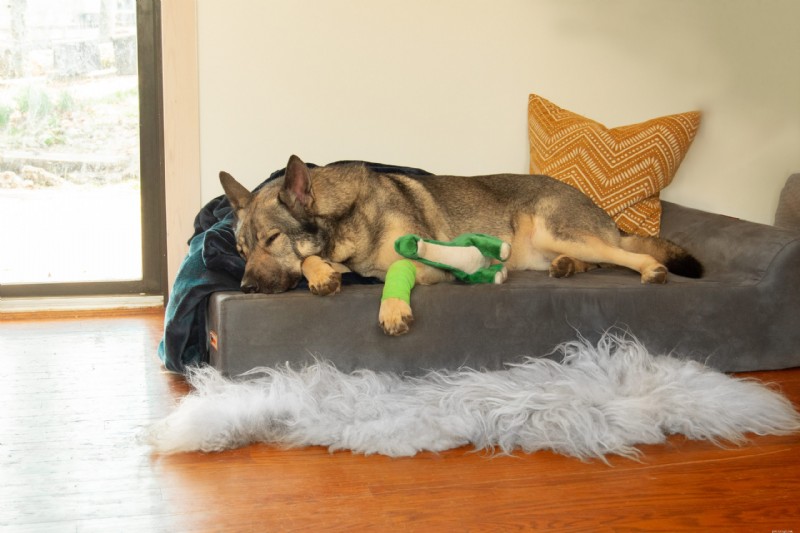
Relaxation doesn’t have to be on your lap. Whether the dog chooses the couch, the kitchen floor, or a spot a few feet away, focus on the quality of the calm—soft body, easy breathing, and the ability to stay settled as life continues around them.
Want to Get Better at Reading Your Dog?
Lili Chin’s Doggie Language turns subtle body‑language cues into clear illustrations without feeling like a textbook.
This is an affiliate link. If you buy through it, Rebarkable may earn a commission at no extra cost to you.
5. They Seek Your Company Without Panic When You Leave
A healthy bond means the dog enjoys being near you but can also cope when you’re not immediately available. A dog that follows you into the office because it prefers your company is different from a dog that experiences distress the moment a door closes.
Separation anxiety is a welfare issue, not a proof of deeper love. If a dog becomes unusually clingy, consider health, pain, or environmental changes and discuss them with a veterinarian.
Look for a Pattern, Not One Perfect Sign
No single behavior proves exactly how your dog feels. A dog might check in because it expects a treat, or sleep beside you because the spot is warm. What matters is the overall pattern: voluntary engagement, relaxed presence, occasional seeking of information, and the ability to be comfortable when you’re away.
When those quieter, repeated choices appear, they tell us more about the bond than a perfectly executed recall.
Ultimately, a strong relationship is measured by trust, safety, and mutual enjoyment—not by whether your dog obeys every command above all distractions.
- Pet Behavior
- Pet Breeds
- Pet Names
- Pet Adoption
- Pet Training
- Pet Information
- Pet Health
- Adorable Pets
- Dogs
- Understanding Why Dogs Love Outdoor Time: A Guide for Pet Owners
- Is My Dog Depressed? Expert Tips to Identify & Address Canine Mood Issues
- Border Collie Mal Shreds New Stuffed Alligator—Why Dogs Destroy Toys and How to Manage the Chaos
- Why Do Cats Sniff Each Other’s Rear Ends? The Science Behind Their Behavior
- Replace Your Dog’s Bad Habits with Positive Reinforcement: A Step-by-Step Guide
- How to Transition Your Puppy to Solid Food: A Step-by-Step Guide
- Managing Separation Anxiety in Dogs: Signs, Causes, and Effective Solutions