

How to Prevent Your Dog’s Ball Obsession While Keeping Fetch Fun
A dog that loves a ball isn’t necessarily troubled. Many dogs light up at the sight of a ball, enjoy a quick game of fetch, then relax with a drink and a nap. The key question isn’t “how excited is my dog?” but rather “what does ball play do to my dog’s overall life, and can they recover after the game?”
I look at four factors: function, flexibility, frustration, and recovery. Can your dog wait for the cue to start? Can they stop when play ends? Can they still sniff, eat, rest, and interact with the world? Or has the ball become the only thing they think about?
This matters because fetch can be joyful, useful, and a shared activity. I’m not here to demonize it or label every ball‑carrying Labrador as having canine OCD.
Why Some Dogs Fixate on Balls
Fetch combines anticipation, movement, chase, capture, and repetition—an incredibly reinforcing sequence for many dogs. It also taps into parts of the predatory motor pattern (orient, stalk, chase, grab‑bite, kill‑bite, dissect, consume). While domestic dogs don’t express the full hunting sequence, breed, genetics, and individual temperament can make certain pieces especially rewarding.
Repeated chasing can raise arousal. Add frustration—the pause before a throw, a ball that’s out of reach, or uncertainty about the next game—and some dogs begin staring, barking, whining, or constantly patrolling the ball’s storage spot.
That doesn’t automatically make the behavior compulsive. A 2025 exploratory study of 105 highly toy‑motivated dogs found addictive‑like traits in 33 of them, including excessive fixation, reduced responsiveness to alternatives, and persistent attempts to access toys. Extreme toy motivation can become a welfare concern, but it’s not universal.
Indie Taught Me Not to Blame the Ball Too Quickly
My German Shepherd Indie was reactive and, before his mobility declined, loved his ball. I wondered whether indoor access was unhealthy and considered taking it away.
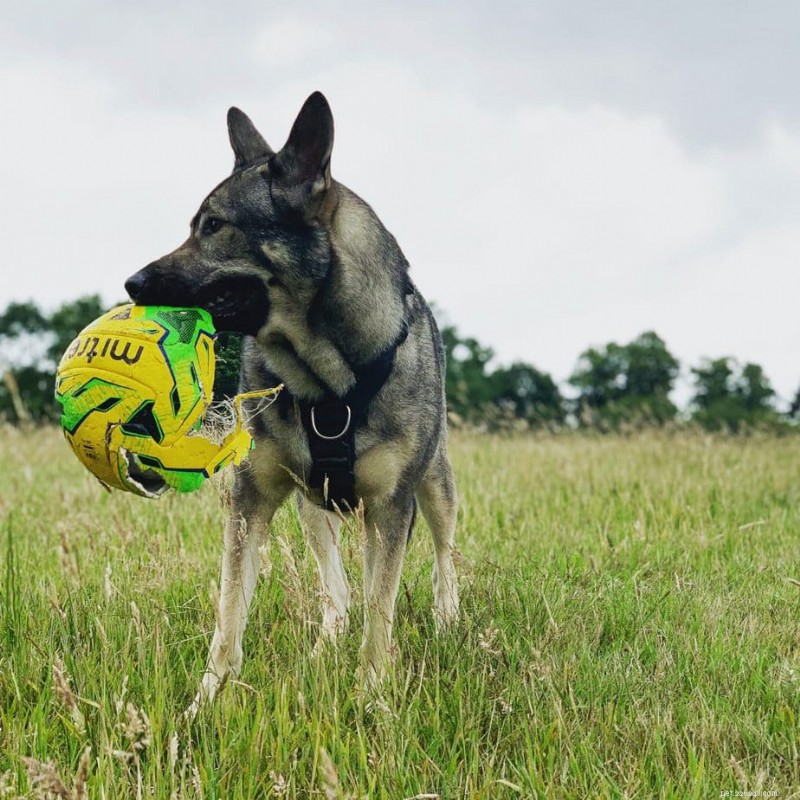
For Indie, the ball wasn’t just excitement—it helped him regulate his stress. When I removed it, he became more whiny and struggled to calm down. Giving the ball back provided a solid outlet for the grab‑bite and kill‑bite portion of his motor sequence, acting as a stress valve.
This is an observation about my dog, not a universal claim. Sometimes the item you think is causing stress actually helps the dog manage it, which is why a blanket “remove the ball” approach can be misguided.
Enthusiastic Fetch vs. Growing Problem
Healthy enthusiasm
- Excited but can wait for a start cue
- Can disengage and enjoy other activities
- Recovers quickly after play
- Eats, sleeps, sniffs, and socializes normally
- Missing one session causes no distress
Concerning fixation
- Constantly pesters or searches for the ball
- Ignores familiar cues around the ball
- Becomes frantic, distressed, or aggressive when access ends
- Neglects rest, sniffing, food, toileting, or social interaction
- Remains highly aroused long after play
- Repetitive play interferes with normal life
One sign is context, not a diagnosis. Look at the overall pattern, frequency, and whether the behavior is shrinking the dog’s normal life.
The Merck Veterinary Manual defines compulsive behavior as intense, repetitive actions that are difficult to interrupt, occur at inappropriate intensities or contexts, and interfere with normal activities—far beyond “bringing me the ball while I watch TV.”
How to Prevent Fetch Obsession Without Killing the Fun
1. Give the game a clear start and finish
Use predictable cues—e.g., say “Ready?” to begin and “All done” to end. When the game stops, put the ball out of sight and transition directly into another predictable activity such as a drink, a sniff walk, a scatter‑feed, or quiet time.
2. Keep sessions short
Throw a few times, pause, and see if your dog can reconnect with you. End while they’re still calm rather than waiting until they’re frantic or exhausted. High‑drive dogs often misjudge their own fatigue.
3. Teach a downshift, not just a stop
After fetch, help the nervous system shift gears with sniffing, gentle food searches, scatter feeding, water, safe chewing, or a slow wander. These decompression activities teach recovery as a skill, not just the absence of exercise.
4. Enrich the dog’s life beyond the ball
Offer alternative outlets that match the dog’s preferences: tug, scent work, tracking, food puzzles, controlled chase games, safe chewing, digging, or shredding appropriate items. My “How‑To Kong” guide provides practical enrichment ideas.
5. Reward disengagement
Notice moments when your dog looks away, checks in with you, or chooses to sniff. Reinforce these behaviors without always using the ball as leverage, otherwise the dog may learn that staring is a way to get the ball moving.
6. Reduce fetch gradually if needed
Don’t abruptly remove the ball. Shorten sessions, add pauses, and lower frequency over time while monitoring sleep, whining, pacing, reactivity, and the ability to settle. Indie reminded me that if a dog becomes less regulated when the ball disappears, I need to rethink my assumptions.
What About Automatic Ball Launchers?
We tried a PetSafe automatic launcher with Indie. It makes repetitions easier to control, but it removes the shared experience of playing together. Automation isn’t automatically enrichment—you still must watch arousal, frustration, fatigue, movement, and recovery. Also, many launchers only accept standard tennis‑ball‑sized balls, which can be too small for large breeds.
Please Stop Using Actual Tennis Balls
They’re cheap, but the felt is abrasive, and dirt or sand can worsen dental wear. Chewing can damage teeth, and a broken ball can pose a choking hazard. The AKC’s tennis‑ball safety guidance highlights both dental and choking concerns.
Choose a durable, dog‑safe ball large enough that it can’t lodge in the throat. Supervise play, inspect the ball regularly, and replace it when damaged. No toy is indestructible, and “my dog has never swallowed it before” isn’t a safety guarantee.
When to Seek Professional Help
First, consult your veterinarian if the behavior changes suddenly or affects sleep, eating, toileting, mobility, or social interaction—medical issues can masquerade as behavioral problems.
If ball‑related behavior escalates, becomes injurious, impossible to interrupt, leads to aggression, or dominates the dog’s day, contact an accredited reward‑based behavior professional or a veterinary behaviorist. At that point the goal is welfare protection, not merely “less annoying” behavior.
Your Dog’s Life Should Remain Bigger Than the Ball
Fetch can be brilliant—providing movement, shared fun, and a valuable outlet. The goal isn’t a dog that never wants the ball; it’s a dog that can enjoy the ball without sacrificing rest, sniffing, food, friends, and all the other components of a good life.
Sometimes, as Indie taught me, the ball itself is part of the dog’s downshift. Watch the individual dog in front of you, not a simplistic rule you found on the internet.
- Pet Behavior
- Pet Breeds
- Pet Names
- Pet Adoption
- Pet Training
- Pet Information
- Pet Health
- Adorable Pets
- Dogs
- Understanding Dog Aggression: Causes, Signs, and Effective Solutions
- 5 Key Reasons Your Cat Won’t Stop Crying—and How to Help
- English Cocker Spaniel: Key Facts, Traits, and Care Guide
- Painted Turtle Care & Natural History: Expert Tips for Owners
- High-Fiber Oat Bran Dog Treats: Boost Digestive Health & Comfort
- Allergy-Friendly Cats: Top Breeds That Won’t Trigger Sneezing
- Why a Titer Test Matters Before Vaccinating Your Dog