

USGS Study Finds Florida Burmese Pythons Could Spread, Yet They Cannot Survive South Carolina Winters
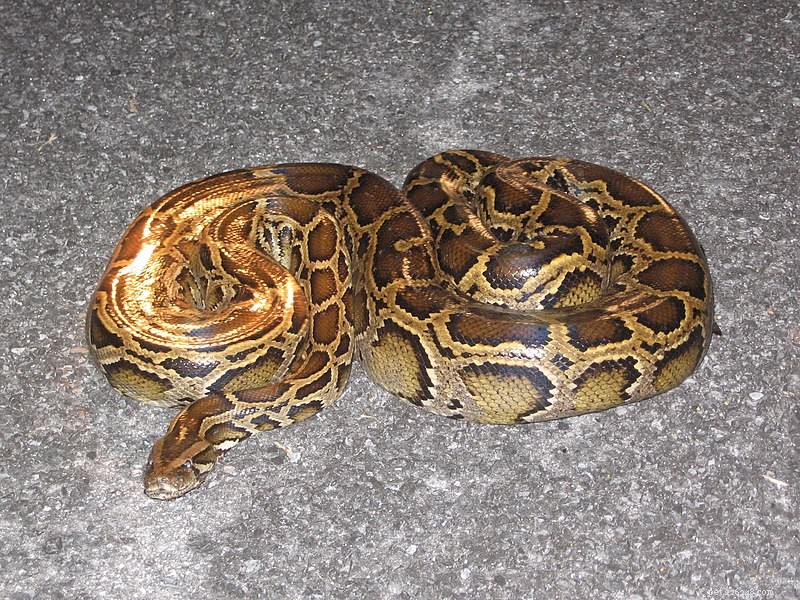 In 2008, a computer-based study by the US Geological Survey stated that Florida’s introduced Burmese Pythons (Python molurus bivittatus) might colonize up to 1/3 of the United States in time. While the snakes’ presence in Florida is a severe problem, the release of this study generated a flood of illogical fears and predictions. Recently, another study conducted by a noted herpetologist and utilizing live snakes has injected some sanity into the controversy.
Method and Results
Conducted at the Savannah River Site in central South Carolina (stomping grounds of legendary herpetologist Whit Gibbons and the site of many important field research efforts), the study was designed to determine if Burmese Pythons could survive winters in this region. Ten snakes, ranging in size from 4-11 feet, were confined to an 80 x 100 foot outdoor pen in which was available the food, shelter and vegetation typically found nearby.
As reported in the September, 2010 issue of Biological Invasions, all 10 snakes perished between December 11, 2009 and January 4, 2010.
Pythons Hibernate in Asia, Why not in America?
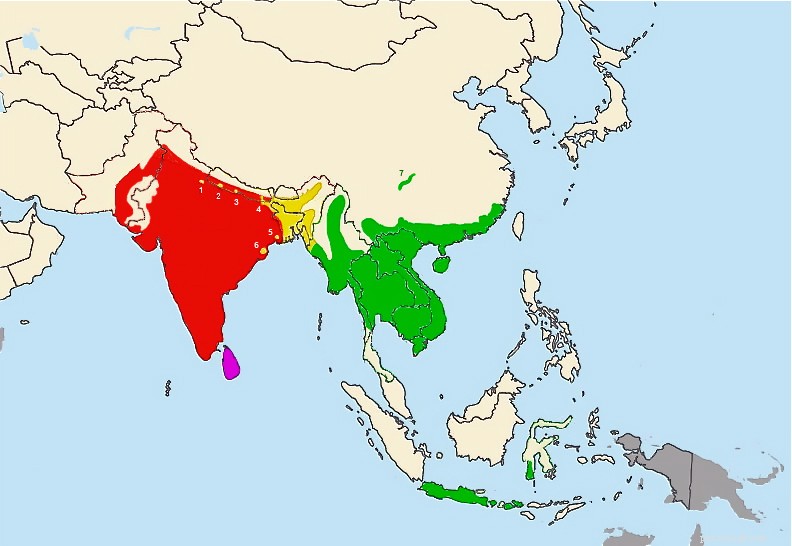
The USGS study that claimed pythons would spread north of Florida was based on the similarities between the climate in the American Southeast and that in parts of the snakes’ native range. Indeed, in the northern and mountainous portions of their range (please see green area on map), Burmese Pythons do experience cold winters, and are known to hibernate/brumate. So why did they die in South Carolina?
In addition to differences in the length and intensity of the cold period, and in the types of shelters used for the winter, it may be that only certain populations of Burmese Pythons are cold-adapted, and these have not found their way into the pet trade (and, hence, to Florida). Such has been established for other species – Green Anoles in southern Florida, for example, cannot tolerate northern Florida’s winters (one reason why you should not release captives, even within their natural range).
Future Research
 The winter chosen for the study was unusually cold, causing large die-offs of pythons and other reptiles even in southern Florida (please see article below), so follow-up studies in milder winters may be useful.
- Boa vs. Python: How to Spot the Differences Between Two Iconic Snakes
- Burmese Pythons: Comprehensive Species Guide for Experienced Keepers
- Florida Cold Snap Strikes Introduced Burmese Pythons and Native Herpetofauna
- New Study Confirms Breeding Populations of African Rock Pythons in Southern Florida
- Alert: African Rock Pythons Potentially Establishing Breeding Populations in Southern Florida
- Myth-Buster: Can Invasive Burmese Pythons Expand Beyond Southern Florida?
- Burmese Pythons in the Wild: Exploring the Natural History of a Giant Snake