

Florida Cold Snap Strikes Introduced Burmese Pythons and Native Herpetofauna
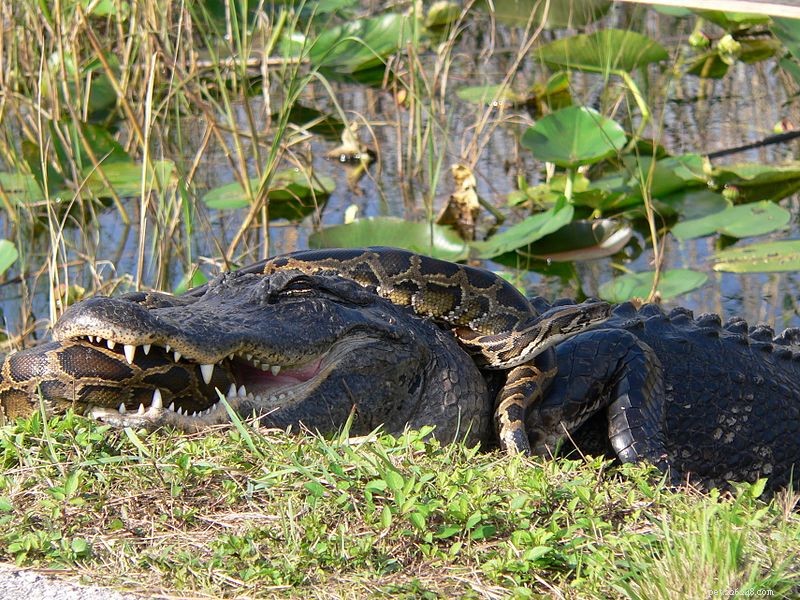 I’ve received a number of questions lately from herp enthusiasts (and “regular people”!) who have come across cold-stunned reptiles and amphibians in Florida. Cuban Knight Anoles, Green Tree Frogs and many other species have been severely impacted by the record-breaking cold weather.
Burmese Pythons
A colleague’s comment on cold weather and Florida’s introduced Burmese Pythons brought to mind an incident that occurred several years ago. A friend of mine stopped into a coffee shop near Florida City and was surprised to see the skins of 14 large Burmese Pythons tacked to the wall. She learned that the shop’s owner had captured all along one road on a single warm morning following a cold snap. Herpetologists also know that such times are ideal for collecting, as snakes flock to roads to take advantage of the warm pavement and access to sun.
In parts of its native range, the Burmese Python actually encounters quite cool winters, and is known to hibernate. In fact, captives rarely breed unless stimulated by a cooling-off period. Florida’s unusually cold weather will likely not cause many mortalities, but, as illustrated above, may render the snakes more vulnerable to people and predators.
Other Introduced Species
Successful invasive species are hardy by nature, but those from very warm habitats will suffer from exposure to low temperatures. I’ve had several reports of Cuban Knight Anoles that have been found alive but which remain lethargic even when warmed up. What likely happens is that the immune system becomes depressed, leaving the animal open to attack by pathogens.
Further north, conditions in winter are harsher. An introduced population of Barking Treefrogs, which normally range to Virginia, persisted in southern New Jersey for several years but died off one extra-cold winter. Italian Wall Lizards (Podarcis sicula) are well-established in NYC and weather most winters easily, but experience high mortality during prolonged freezes.
Crocodiles and Alligators
One native animal of concern is the American Crocodile, which reaches the northernmost limits of its range in southern Florida – animals at the extreme edges of their ranges are at risk during severe weather. However, Florida’s crocs have take steps to solve this problem on their own. Most of the state’s population has moved into the 90+ F waters of the Turkey Point Power Plant’s canals. Years ago I toured the area and was surprised to see such a large, vigorous breeding population.
Florida’s other native crocodilian, the American Alligator, should be okay as well. Alligators range as far north as southern Virginia, where they inhabit lakes that sometimes become ice-bound. They utilize a very unique strategy at these times to survive, lying relatively dormant in shallow water with their snouts protruding through a hole in the ice – not what most expect of a “tropical” creature!
Other Native Species
Many natives with large ranges differ in their tolerance to the cold. For example, Green Anoles from southern Florida cannot survive the temperatures that are routinely tolerated by the same species in northern Florida. This has important conservation implications – someone who picks up an Eastern Box Turtle in North Carolina and releases in NY may be consigning it to an early demise.
Fishes on Tropical Fish Farms, native fishes and crayfishes have also expired in record numbers this year. Please check out my recent posts on Twitter for links to related articles.
- Spider Ball Pythons: Comprehensive Care & Health Guide
- Burmese Pythons: Comprehensive Species Guide for Experienced Keepers
- USGS Study Finds Florida Burmese Pythons Could Spread, Yet They Cannot Survive South Carolina Winters
- Herpetology Field Reports: Unusual Predator‑Prey Dynamics in Florida
- Myth-Buster: Can Invasive Burmese Pythons Expand Beyond Southern Florida?
- Burmese Pythons in the Wild: Exploring the Natural History of a Giant Snake
- Cold Therapy Revives Severely Ill Amphibians: Bronx Zoo Observations