

Discover 26 Remarkable Musk and Mud Turtle Species
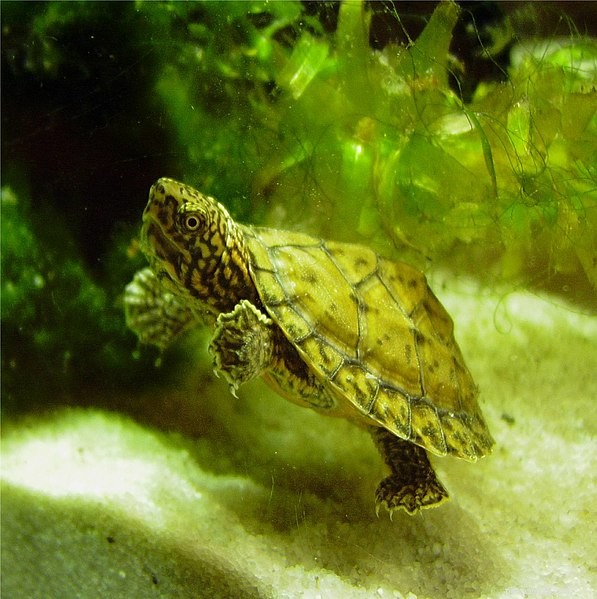 The 26 Mud and Musk Turtle species (Family Kinosternidae and Staurotypidae) share a common body plan and general behaviors, yet show an astonishing range of adaptations to diet, habitat and predators. Among them we find both North America’s smallest turtle and brutes with jaws capable of crushing a finger. Very few receive attention from hobbyists or zoos, yet nearly all are hardy and can be bred in captivity. I’ve had the good fortune of keeping 15 or so species, including my longest-lived pet, a 41 year-old Common Musk Turtle (please see Part 1)…following is an introduction to some unique species.
Note: All Mud and Musk Turtles can deliver painful and, in the case of the Mexican Giant Musk, dangerous bites. Many calm down in captivity, but extreme caution is always necessary.
Mexican Giant Musk Turtle, Staurotypus triporcatus
This 15-inch-long turtle shares its habitat with several crocodilians, and has developed an extremely thick shell (and, some say, a pugnacious disposition!) in response. It ranges from Veracruz, Mexico to Honduras, and is known locally as the Guau.
A Giant Musk under my care at the Bronx Zoo is now in its 70’s, and has lost none of its willingness to bite when handled. Notoriously difficult to pair up, captive-bred animals have only recently become available. It is a mollusk specialist, easily crushing clams and smaller turtles in its massive jaws…mine even made short work of hard-shelled snails known as Periwinkles.
Flattened Musk Turtle, Sternotherus depressus
This smallest of North America’s turtles is a mere 3 – 4.5 inches in length, and lives only in northwest Alabama’s Black Warrior River. Unlike its relatives, all of which sport high, almost “tortoise-like” carapaces (most pronounced in the Razorback Musk Turtle, see photo), its upper shell is extremely flat. Some believe this adaptation assists it in hiding from its many predators.
In nature this species hybridizes with the Loggerhead Musk, S. minor.
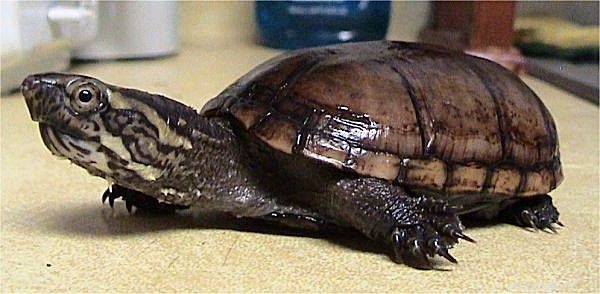
Mud Turtle, Kinosternon subrubrum
Four subspecies of Mud Turtle have been identified, with the eastern race being endangered in several states. Now bred in captivity, this droll little turtle is an excellent choice for novice turtle-keepers.
The Eastern Mud Turtle often frequents brackish waters…in NY, it is known only from salt marshes and tidal streams.
Narrow-Bridged Musk Turtle, Claudius angustatus
This most unusual turtle is only rarely kept or bred. Although but 5 inches long, its jaws are incredibly wide, and it can reach further back with its neck than even the Common Snapper. Some speculate that this arrangement helps them to catch frogs, which are common in the shallow, weedy ponds they inhabit.
This is a “hands-off” turtle – I’ve had 30-year captives that remained as aggressive as the day they were collected. Despite that, they do well if provided whole fishes, snails, crayfishes and earthworms. Their pugnacious nature complicates breeding – I’ve yet to find a compatible pair.
Striped Mud Turtle, Kinosternon bauri
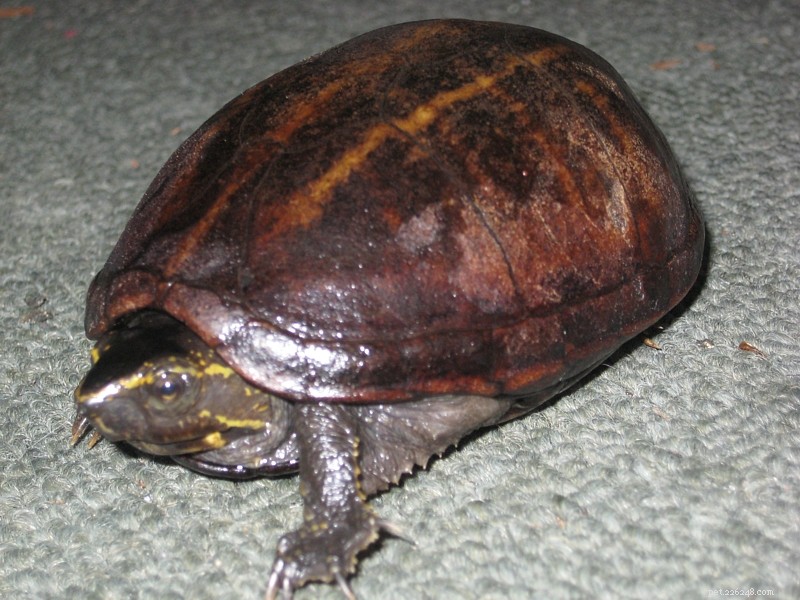
Sporting a lightly-striped, olive-brown carapace, the Striped Mud Turtle (please see photo) inhabits swamps and canals from southern Georgia to the Florida Keys.
This turtle appears regularly in the trade…perhaps because, unlike its largely aquatic relatives, it frequently travels overland. It has been bred in captivity and makes a fine pet, although those I’ve kept tended to burrow into the earth for extended periods (wild specimens aestivate during droughts).
- Complete Musk Turtle Care Guide: Housing, Lighting, and Health Tips
- Eastern Mud Turtle Care Guide: Habitat, Feeding, and Health
- Optimal Diet for Semi-Aquatic Turtles: Vegetables & Greens for Sliders, Map Turtles, & More – Part 1
- Semi-Aquatic Turtle Diets: Nutritious Vegetables & Greens – Part 2
- Keeled Box Turtle: Conservation & Captive Breeding Strategies – Part 2
- Affordable, Expert-Approved Terrariums for Sliders, Painted Turtles & More – Part 1
- Affordable Turtle Habitats: Budget-Friendly Setups for Sliders, Painted Turtles & More – Part 2