

Expert Care Guide for Red‑Eared, Map, and Painted Turtles
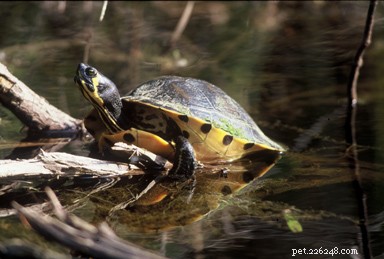 Turtles that split their time between land and water are among the world’s most popular reptilian pets. Cooters, Red-Bellied Turtles, Yellow-Bellied Sliders, Reeve’s Turtles, Red-Headed Sidenecks and many other species can also be kept as described below. Please write in for specific information on these and other turtles.
Natural History
The Red-Eared Slider, Trachemys scripta elegans, is bred in the millions on farms in the American Southeast. Unfortunately, their needs are often not appreciated by new owners, who are usually surprised at how quickly their pets grow. However, assuming that you plan for its size and 30+ year lifespan, the Slider makes a wonderfully-responsive pet.
The Slider’s natural range extends from the central and southeastern USA into Texas and Mexico. It also has the widest introduced range of any reptile, with populations established in Brazil, Japan, New Zealand and over 40 other countries.
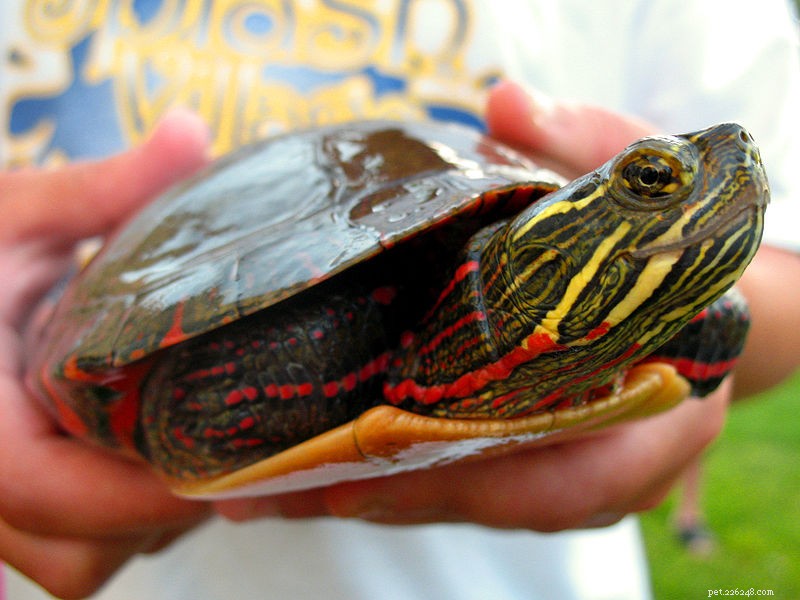
The 4 Painted Turtle species are, indeed, so colorful as to appear “painted”. They range from southern Canada through most of the USA to northern Mexico.
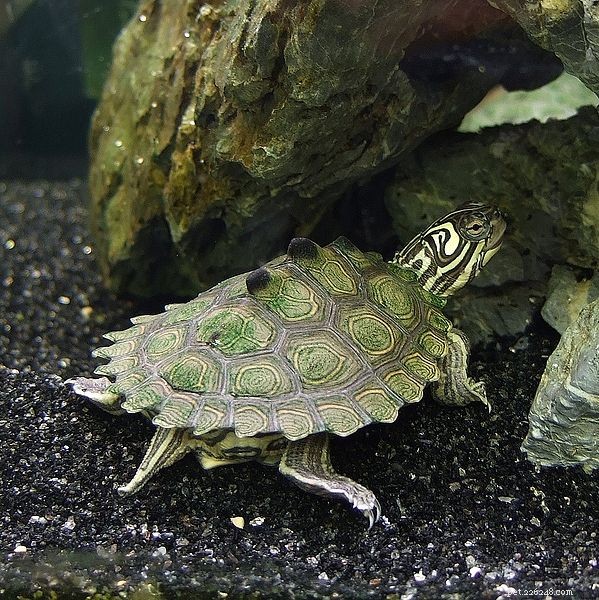
The 13 Map Turtle species are also confined to North America. The Black-Knobbed Map and others sport uniquely-ridged shells and fantastic patterns.
Behavior
Semi-aquatic turtles quickly learn to associate their owners with food, and will paddle over to beg when you approach. Ever-alert, they plunge (or “slide”) from basking sites when startled. Most feed readily from the hand, and they may even reproduce.
Housing
Setting up the Aquarium
Female Sliders reach 8-12 inches in length, while males generally top out at 6 inches. An adult female will require a 55-75 gallon aquarium; a male might make due in a 30 gallon, but more room is preferable.
Zoo Med’s Turtle Tub is an excellent option for larger individuals. Plastic storage bins, if properly outfitted, may also be used.
Wading pools are often easier to manage than aquariums. Koi ponds sometimes contain shelves meant to hold plants; these work well as turtle basking areas. Outdoor housing is ideal, assuming that raccoons and other predators can be excluded.
Although highly aquatic, Sliders and similar turtles need a dry surface on which to bask. Commercial turtle docks will suffice for smaller specimens. Cork bark, wedged or affixed via silicone to the aquarium’s sides, is a good option for adults.
Filtration
 Turtles are messy feeders and very hard on water quality. Submersible or canister filters are necessary unless the enclosure can be emptied and cleaned several times weekly (I’ve found the Zoo Med Turtle Clean Filter to be ideal). Even with filtration, partial water changes are essential.
Removing your turtles to an easily-cleaned container for feeding will lessen the filter’s workload and help to keep the water clean.
Substrate
Bare-bottomed aquariums are best, as gravel traps food and wastes, greatly complicating cleaning. If gravel is used, it should be of a size too large to be swallowed.
Light and Heat
Turtles that bask in the wild require UVB radiation in captivity. If a florescent bulb is used (the Zoo Med 10.0 Bulb provides the highest UVB output), be sure that the turtle can bask within 6-12 inches of it. Mercury vapor and halogen bulbs broadcast UVB over greater distances, and also provide beneficial UVA radiation. Natural sunlight is the best UVB source, but be aware that glass filters-out UVB rays.
Water temperatures of 75-82 F should be maintained. Large individuals may break typical aquarium heaters, so choose a reinforced model such as the ExoTerra Turtle heater. An incandescent bulb should be used to warm the basking site to 88-90 F.
Companions
Semi-aquatic turtles will eat or harass fishes, newts and aquatic frogs.
Individuals of the same sex may get along, but aggression often develops so be prepared to house them separately. It’s difficult to keep pairs together long-term, as the males’ continual mating attempts usually cause stress and bite wounds. Please write in for information on breeding.
Feeding
In the wild, Sliders, Painted Turtles and similar species begin life as carnivores but increasingly consume aquatic plants as they mature. Pets favor animal-based foods, but should be encouraged to eat plants; a fasting period will tempt them to sample new items.
Dandelion, kale, mustard and collared greens, romaine and other produce should be offered. Aquatic plants such as Elodea, Anachris and Duckweed may also be accepted. Spinach and beet leaves are high in oxalic acid and have been implicated in health problems.
Reptomin Food Sticks provide excellent nutrition and can serve as 50-75% of the diet. Other commercial aquatic turtle diets are also worth investigating.
 Natural foods should always be included in turtle diets. Whole freshwater fishes such as minnows and shiners are the best source of Calcium for turtles. Offer fish at least once weekly, but use goldfishes sparingly as a steady goldfish diet has been implicated in liver problems.
Other important food items include earthworms, krill, canned snails, and freeze-dried river shrimp and, to a lesser extent, crickets, waxworms and other insects.
Health Considerations
Salmonella bacteria, commonly present in turtle digestive tracts, can cause severe illnesses in people. Handling an animal will not cause an infection, as the bacteria must be ingested. Salmonella infections are easy to avoid via the use of proper hygiene. Wash your hands with warm, soapy water after handling any animal. Please speak with your family doctor concerning details, and feel free to write me for links to useful resources.
- Complete Musk Turtle Care Guide: Housing, Lighting, and Health Tips
- How to Properly Feed Your Red‑Eared Slider Turtle: A Complete Guide
- Red-Eared Slider Turtle: Complete Care Guide & Species Overview
- Optimal Housing for Red‑Eared Slider Turtles: Tips & Essentials
- Optimal Diet for Semi-Aquatic Turtles: Vegetables & Greens for Sliders, Map Turtles, & More – Part 1
- Semi-Aquatic Turtle Diets: Nutritious Vegetables & Greens – Part 2
- Painted Turtle Care & Natural History: Expert Tips for Owners