

2010 Amphibian Discoveries: New Species, Algae-Filled Salamanders & a Century-Old Species – Part 2
 Global amphibian declines and extinctions spurred herpetologists to pay special attention to frogs, salamanders and caecilians in 2010. In Part 1 of this article, I reported on the discovery of several new species, and the re-discovery of a few that had not been seen for decades. Today we’ll look at interesting findings concerning a well-known salamander that houses algae in its cells and a rarely- seen species that lives for over 100 years.
Algae in Salamander Cells
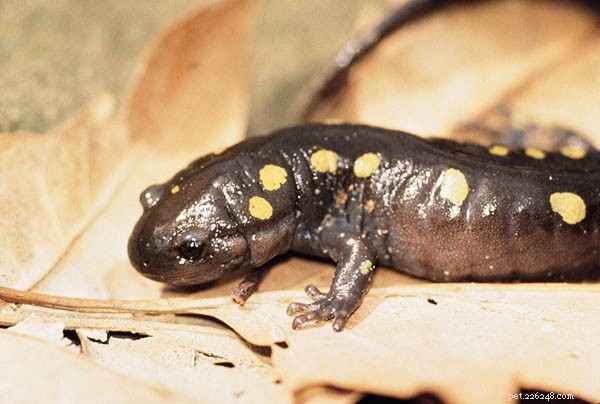
It’s long been known that algae growing within the egg masses of Spotted Salamanders, Ambystoma maculatum, provides oxygen to the embryos and utilizes their waste products. In 2010, however, Dalhousie University (Canada) biologists shocked the herp world by announcing that they had found living algae within Spotted Salamander cells, functioning as it does in the egg mass. This is the closest known association between a vertebrate and a plant, mimicking in some ways the relationship between algae and coral.
This discovery may have important implications for medical research. Since vertebrates typically destroy foreign bodies that attempt to live within cells, the salamanders must have a way to “turn off” the immune system. Research is also focusing on their unique abilities to regenerate complex structures such as limbs and tails.
Salamander Lives for Over a Century
Found only in subterranean streams in a few caves in southern Europe, the Olm, Proteus anguinus, is one of earth’s most unusual salamanders, and has fascinated biologists and area residents for centuries. Olms are blind, retain external gills, never see the light of day, do not mature until age 16, and reproduce by both laying eggs and bearing live young. Despite their very unique natural environments, Olms do quite well in zoos, often living into their 70’s.
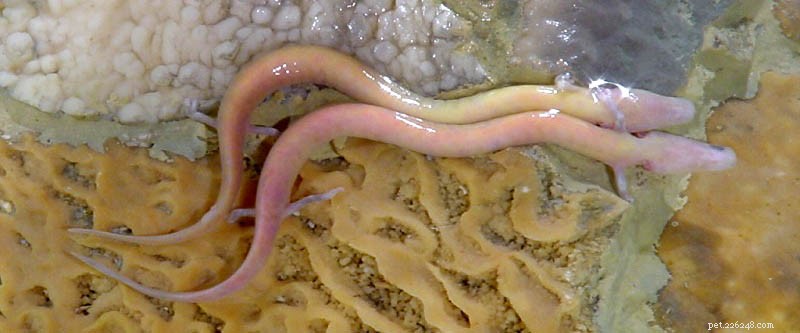 Due to the Olm’s rarity, researchers have maintained a breeding colony in a cave at St. Girons, France, since the 1952. A search of its records revealed that individual Olms have survived for over 100 years…double the lifespan of the previous record-holders, the Japanese Giant Salamander and the African Bullfrog. It is hoped that research into the basis of their longevity will be of benefit to those studying aging in humans.
- Breeding the Green Basilisk (Plumed) and Related Species – A Comprehensive Guide
- Breeding Green Basilisks & Related Species: Expert Guide – Part 2
- 2010 Amphibian Breakthroughs: New Species, Revived Extinct Finds & Insightful Discoveries – Part 1
- New 2010 Lizard Discoveries: Unique Species & Surprising Facts
- New Skinks, Sea Snakes, and Caecilians: Unexpected Discoveries Reshape Herpetology
- USA Reptile & Amphibian Conservation 2012: Threats, Lawsuits, and Hope
- 2012's Newly Discovered Reptile & Amphibian Species—Snakes, Frogs, and Lizards