

Spotted Salamanders Thrive Amid Roadside Salts and Toxins
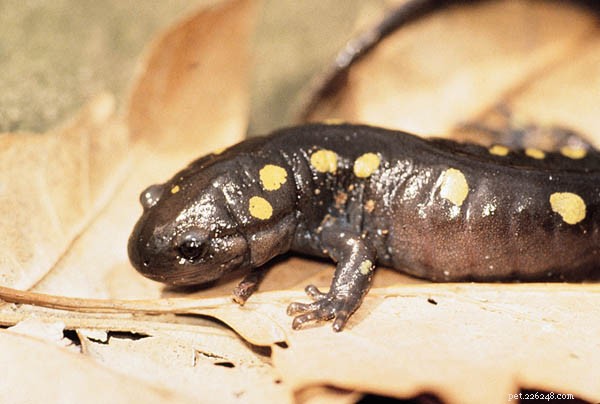 Early spring is a favorite time for amphibian enthusiasts. Here in the northeastern USA, a spectacular event is unfolding, as Wood Frogs, Tiger and Spotted Salamanders, Spring Peepers and others head en masse for their breeding ponds. I’ve been visiting one pond, first shown to me by herpetologist John Behler, for nearly 30 years. When luck is with me, I can see 3 amphibian species, along with fairy shrimp and other interesting creatures, in a single evening (please see article below).
The small vernal (temporary) pools used by many amphibians are fragile habitats, and quickly spoiled by pollutants; that many are near roads worsens the situation. With their highly-permeable skins, amphibians are especially sensitive to changes in water quality. The recent finding that Spotted Salamanders (Ambystoma maculatum) may be evolving defenses against roadside toxins is a rare light at the end of the rather dismal “amphibian conservation” tunnel.
“Salt Water” Salamanders
Yale University researchers report (Science Papers, January, 2012) that toxins carried into ponds via road runoff may be spurring the rapid evolution of defensive adaptations in Spotted Salamanders. Due to road salting, the salinity of roadside ponds can be 70 times that of nearby woodland ponds; a variety of other toxins are also commonly present.
Life in ponds subjected to road runoff is difficult. Salamander larvae living in roadside ponds suffer higher mortality (44% vs. 13%) and an increased number of skeletal defects than do larvae from ponds located away from roads. Also, metamorphosis is delayed. This is particularly troublesome, as vernal pools dry up during the summer – larvae that have not transformed by that time perish.
Only the Strong Survive…
However, those salamanders that have somehow adapted to these harsh conditions seem to gain a survival advantage over those hailing from “natural”, or un-polluted, ponds. Their larvae out-survive other larvae when both are reared together in roadside water.
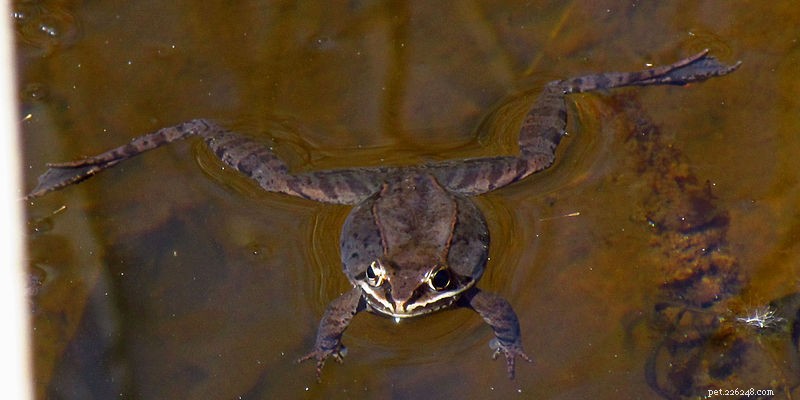 More surprising than this, however, is the fact that roadside pond larvae also do better than natural pond larvae when reared in unpolluted water. The mechanics are not yet understood, but some survival advantage seems to carry over and remain useful even in non-toxic environments.
This finding is the first known example of a vertebrate evolving in response to roadside toxins. However, only cautious optimism is in order, as each environment and species represents a different scenario…and far more creatures are likely to succumb rather than adapt to pollution.
- Proper Feeding of Pet Snakes: Overcoming Reluctance to Eat Frozen Mice and Other Pre‑Killed Prey
- Caring for Pet Aquatic Turtles: Outdoor Pond Tips & Climate Considerations
- How Ferrets Coexist With Dogs, Cats, and Other Pets
- Understanding and Managing Gas Bubble Disease in Aquatic Amphibians
- Recovering Escaped Cobras & Snakes: Successful Retrievals from Zoos and Homes – Part 2
- Salt-Water Snapping Turtles: Adaptations and Ecology in Estuarine Habitats
- Salamanders & Cellular Regeneration: How They Regrow Limbs