

Salamanders & Cellular Regeneration: How They Regrow Limbs
As anyone who has attempted to lift one by its tail knows, salamanders and newts can discard these body parts with no ill effect. In time, we learned that they can regenerate not only tails, but also heart, brain and spinal cord tissue…parts of any organ, it turns out, can be regrown. Furthermore, researchers describe the cell regeneration process as “perfect” – normal function is restored, and there is little if any scarring. Salamanders hold special interest for me. I’ve kept a great many species in zoos and at home, have studied several in the wild, and even had the happy opportunity to write two books on their care. I’ve always hoped that we would uncover the key to their mind-boggling abilities. I’m happy to report that a groundbreaking discovery has now given us some answers, and may lead to research of immense benefit to people suffering from a wide range of diseases and injuries.
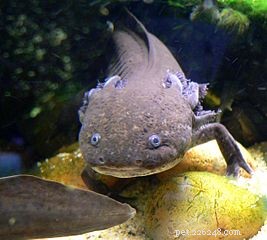
Puloaded to Wikipedia Commons by Stan Shebs,
Why Study Salamanders?
Internally, amphibians and people show many similarities. And while most are aware of the medical significance of frog studies and dissections, few people know that the real amphibian research star is the Mexican Axolotl, Ambystoma mexicanum. Studies of this unusual aquatic salamander have led to important advances many fields, including gene expression, neurobiology and limb/organ regeneration.
Ironically, this valuable lab animal is nearly extinct in the wild (please see article linked below). Nearly all of the billions of individuals currently in the lab and pet trades can likely trace their origins to specimens collected from Lake Xochimilco and shipped to Paris in 1864. You can read more about this fascinating creature’s natural history and care in the articles linked below.
A Surprising Player in the Regeneration Mystery
Mexican Axolotls were used in a study that recently cracked the mystery surrounding limb regeneration. Writing in the May 21, 2013 issue of The Proceedings of the National Academy of Sciences, researchers at the Australian Regenerative Medicine Institute revealed that the ability to regenerate limbs is dependent upon the salamanders’ immune systems. Immune cells known as macrophages control the process.
When macrophages are removed, axolotls lose their ability to regenerate limbs, and, in common with ‘less-bionic” animals, can only form scar tissue at the site of an amputation. This finding came as a surprise, as macrophages were previously believed to inhibit or negatively-affect the process of regeneration.
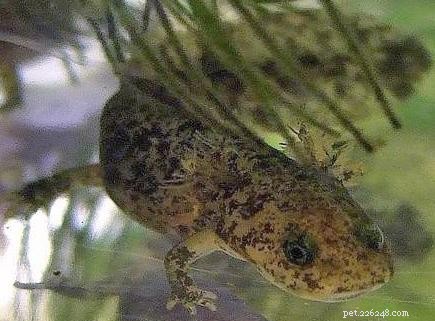
Uploaded to Wikipedia Commons by Eugene van der Pijll
Medical Research Possibilities
How the macrophages, or immune system cells, manage to pull off this amazing feat, and whether they also control the regeneration of other tissues and organs, awaits further investigation. It is hoped that insights into the mechanics of regeneration will someday be applicable to human medical research.
Interestingly, studies have shown that many other creatures were once able to regenerate limbs, but lost those abilities as they evolved over time. But the “groundwork” may still be there, waiting to be “turned on”…perhaps even in us. Forward-thinking researchers believe that the information we are gleaning from salamander studies may play a role heart and liver disease treatment, scar healing, and the regeneration of human tissue.
- The Intricate Language of Turtles: How They Communicate
- Understanding No-Bark Collars: Types, Functionality, and Effectiveness
- How Chameleons Change Color – The Science & Purpose Explained
- How Much Do Golden Retrievers Shed? Understanding Shedding Frequency and Management
- Guide to Caring for Native American Amphibian Pets: Frogs, Toads & Salamanders
- Unlocking Regeneration: How Salamanders Rebuild Body Parts
- Step-by-Step Guide: Safely Introducing Your Cat to a Dog (and Vice Versa)