

Common Health Issues in Senegal Chameleons & Related Species: A Care Guide
 The Senegal Chameleon (Chamaeleo senegalensis) occupies a unique position in the pet trade. Inexpensive and widely available, it can be a hearty captive if given proper care. However, this West African native is more easily collected than bred, so most that become available are wild-caught. Collection and shipment, hard on any creature, is particularly difficult for chameleons to endure. As a result, a variety of health problems are commonly seen in newly-acquired Senegal Chameleons.
In some ways, the Senegal Chameleon situation reminds me of that faced by Green Anoles in the 1960’s and ‘70’s. Because they were interesting and cheap, these fascinating little lizards were often purchased without much forethought. It took many years, and untold numbers of dead anoles, before we understood their specific husbandry needs.
The following information can be applied to most chameleons; I’ve focused on Senegals because they are often chosen by novice keepers (Note: the Smooth Chameleon, formerly considered a Senegal subspecies, is now classified as C. laevigatus).
Proper Care
As with any reptile, a proper environment and diet is essential to good health; lacking this, no amount of veterinary attention will be of long-term use. Chameleons are particularly demanding in their requirements.
Senegal Chameleons need a highly-varied diet, large, airy enclosures maintained at 74-78 F (with a basking spot of 85-90 F), humidity levels of 60-90% and exposure to UVB radiation. Please see the articles below and write me for additional information.
Stress
Chameleons are notably stress-prone. The mere presence of a dominant individual, even if separately caged, can cause others in the room to cease feeding and become ill. So it’s easy to imagine the effects of cramming hundreds of chameleons into holding and shipping containers.
Stress weakens the immune system, and therefore is a consideration in all medical conditions. Bacterial, parasitic and other infections will worsen as the immune system falters. As wild-caught lizards invariably harbor parasites, fecal tests are essential for all Senegal Chameleons that have not been captive-bred.
Regarding stress, please remember that chameleons are pets to be observed, but not handled. Because they do not run off when approached, people are sometimes misled into believing that chameleons “enjoy” handling. Nothing could be further from the truth!
Egg Retention (Dystocia)
Under ideal conditions, female Senegal Chameleons are prolific breeders, producing 20-70 eggs twice yearly. However, gravid females that are collected and shipped overseas usually fare poorly. Typically arriving at their new homes in a stressed and dehydrated condition, females should be watched carefully and examined by a veterinarian if they appear to be carrying eggs. Gravid females may appear thin, yet heavy in the abdomen, and usually exhibit restless behavior (searching for a nest site) or listlessness.
Calcium deficiencies, a concern in any gravid reptile, are common among wild-caught female Senegal Chameleons. Depressed calcium levels will prevent the female from expelling her eggs; veterinary intervention is essential if death is to be prevented.
The lack of a suitable nesting site can also cause a female to retain her eggs, even if she is in good health. Please write in for further information.
Dehydration
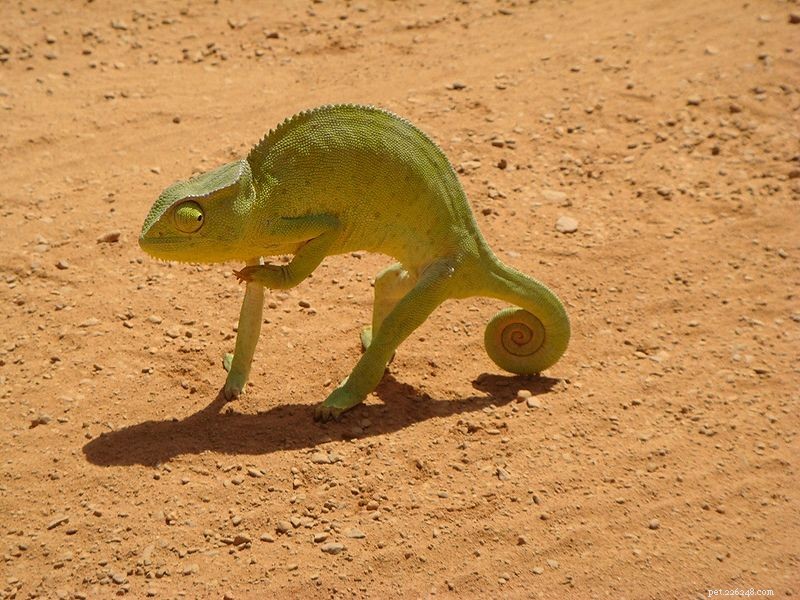 The skin of dehydrated chameleons will have a “puckered”/wrinkled appearance, and shedding will be difficult. Dried skin, leftover from previous sheds, may be evident on the feet and toes.
Most new arrivals will be dehydrated, but the problem is also common in long-term captives. Senegal Chameleons generally drink only when water is dripped or misted into their terrariums. In some cases, dripping water must be continually available if the animal is to remain hydrated. Low humidity levels will add to the problem, and likely increase your pet’s drinking water requirements.
Shipping-Related Injuries
Rubbed snouts, skin abrasions and abscesses are common among imported lizards of all species. Due to their unique structure, chameleon eyes are particularly sensitive. Check carefully for tears and bits of debris that may have become lodged around the eyes.
Nutritional Concerns
Senegal Chameleons that adjust to captivity often feed ravenously, misleading owners into thinking that all is well. It’s important to understand that they need a highly-varied diet; crickets and mealworms alone, even if supplemented, are not sufficient. Please see the article below for suggested diets.
Metabolic Bone Disease, evidenced by malformed jaws and limbs in its later stages, is a common concern. Calcium, Vitamin D3 and UVB needs are inter-related – all three must be viewed as a single concept. Recently, for example, chameleons have been found to adjust their basking behavior in accordance with dietary levels of D3; please see the article below and write me for further information.
There’s some evidence that Vitamin A deficiencies are involved in several of the health issues faced by pet chameleons and other reptiles. Unfortunately, we know little about their actual requirements. A varied diet will help; please write in for supplement suggestions.
- Key Health Challenges in French Bulldogs: What Owners Need to Know
- Top 7 Cat Health Issues Every Owner Should Know
- 10 Essential Dog Health Problems Every Owner Should Know
- Breeding the Green Basilisk (Plumed) and Related Species – A Comprehensive Guide
- Breeding Green Basilisks & Related Species: Expert Guide – Part 2
- Chihuahua Health Guide: Common Illnesses, Key Tests & Longevity Tips
- Understanding Dog Eyelids: Key Facts and Common Issues