

New Leopard Frog Species Unveiled in New York City
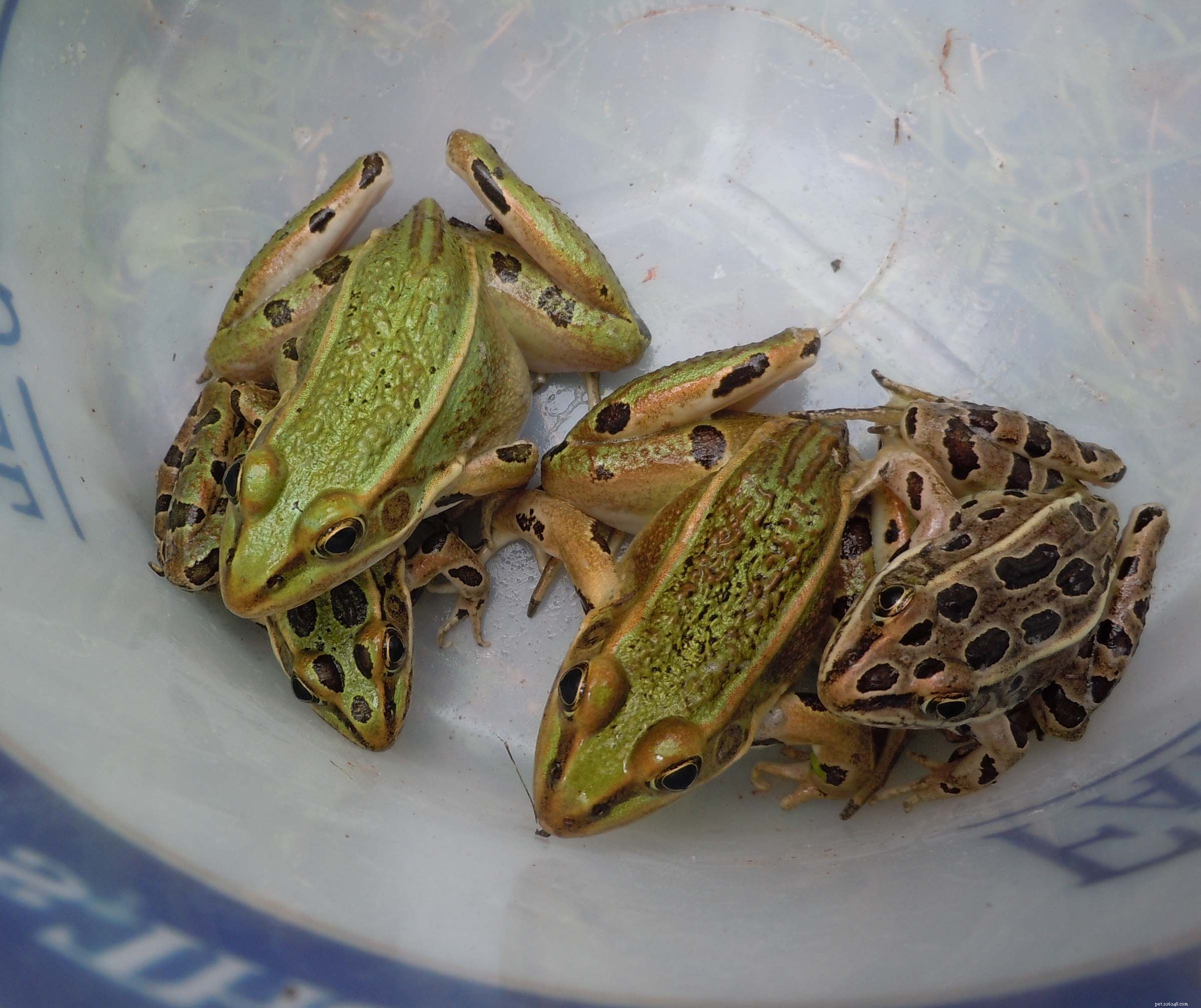 As a native of NYC, I’m no stranger to the natural wonders to be found there. In my time, I’ve filled quite a few notebooks with pleasant surprises…coyotes in Manhattan, Pine Voles in the Bronx, Red Salamanders on Staten Island, 1,000+ insect species, 13 herps, 250+ birds, red and gray fox on the grounds of the Bronx Zoo, and many more. New species have been discovered as well, but most have been small and secretive, such as the undescribed centipede recently found living in Central Park. But the existence of a sizable, gaudy frog that calls loudly each spring, living undetected within city limits, took the herpetological community very much by surprise.
Sharp Ears Lead to a New Species
Northern Leopard Frogs, Rana (Lithobates) pipiens, have been recorded in NYC, but are rarely encountered today. The area also forms the northernmost limit of the range of the Southern Leopard Frog, R. pipiens; never common, it may now be locally extinct.
It was during a search for Leopard Frogs in the NYC borough of Staten Island that a Rutgers’ University doctoral student noticed that the frog calls he was hearing were unique… similar to, yet different from, those of both Northern and Southern Frogs. Hybrids, perhaps?
The “questionable” frogs were located and collected. Lab and genetics studies conducted over the past 2-3 years revealed that the animals were a species new to science. This revelation is especially surprising because Leopard Frogs have been well-studied in the Northeast. The NYS DEC has sought sighting reports for years, and the existence of a third native Leopard Frog was postulated as early as 1936. Yet the new frog remained “hidden in plain sight” until now. The research behind this exciting new discovery is described in the Journal of Molecular Phylogenetics and Evolution, linked below.
A Small Range, Centered on Yankee Stadium
The frog’s range has been described as entirely within “commuting distance of NYC” – maybe this fact will be used when it comes time to give the new frog a common and Latin name?
The range is believed to extend from Putnam County, NY to Trenton, NJ, with its center at (or formerly at!) Yankee Stadium. Although not recorded near Yankee Stadium or in the Bronx, I suspect researchers will be haunting the Van Cortland and Pelham Bay Parks this year. I’ve found Leopard Frogs at these sites, long ago, and assumed they were Northerners, but now I wonder… (the new species seems impossible to distinguish by sight alone).
The newly-described frog also lives in New Jersey’s Great Swamp. It was here, while on a childhood trip with the NY Herpetological Society, that I first saw Leopard Frogs breeding (I now wonder what species I was looking at….). The Great Swamp remains a magical place for me, and I’m planning another trip in a week or so. Please visit if you have the chance…you can read more about this area in the article below.
Interestingly, the Eastern Gray Tree Frog, Hyla versicolor, another NYC resident, is also distinguished from a look-alike cousin, the Cope’s Gray Tree Frog, H. chrysoscelis, by voice alone…physically, they are identical.
Leopard Frog Diversity
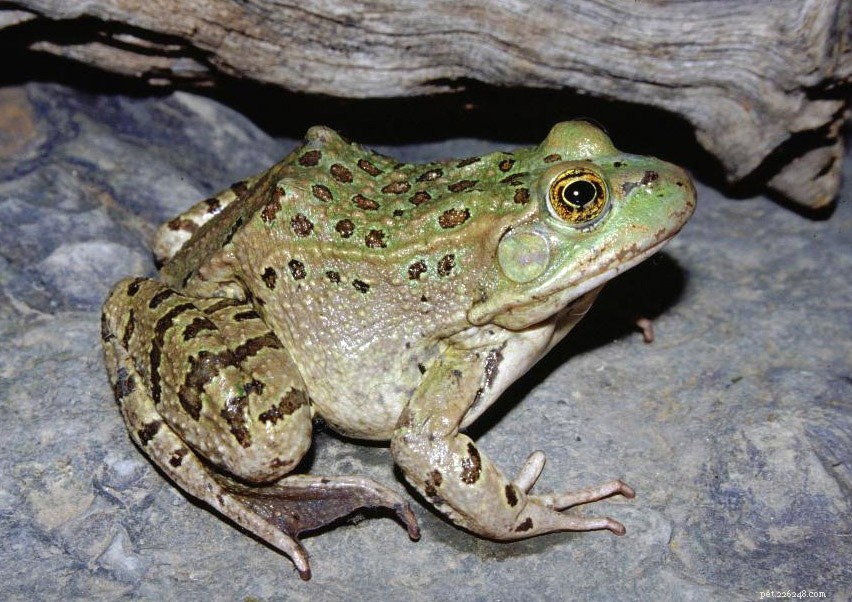 Depending upon the authority followed, 12-17 Leopard Frog species range from Canada to Central America. While superficially similar in appearance, most have unique habitat requirements, and their conservation needs vary greatly. The Chiracahua Leopard Frog, R. chiracahuensis, (which calls while submerged), is one of several that are quite rare; just this month (March, 2012), the federal government set aside 10,000 acres as protected habitat for this species (please see article below).
This underlies the importance of using genetics and other techniques to identify unique populations and species. There is a reason why the newly- discovered Leopard Frog diverged from the 2 relatives with which it overlaps…its future may depend upon our understanding of that process. Please see the article below for information on other Leopard Frogs.
Leopard Frogs in Captivity
Leopard Frogs can be good terrarium subjects, but tend to be high strung; spacious quarters are a necessity. Captive-bred animals, or those reared from tadpoles, do best as pets (Leopard Frogs should not be collected from the wild, and are protected by many states). They may be kept as I’ve described for Green Frogs in this article; please write in for more specific information.
- Leopard Frog: Caring for Spotty Amphibian Pets
- Leopard Frogs (Meadow Frogs): A Complete Care & Species Guide
- Urban Herping: Uncovering New York City’s Snake Diversity
- New Skinks, Sea Snakes, and Caecilians: Unexpected Discoveries Reshape Herpetology
- New Poison Frog Species Discovered in Guyana Rainforest, Threatened by Ecotourism
- Scientists Discover New Leaf‑Tailed Gecko Species in Australia's Cape Melville
- Scientists Discover Transparent Glass Frog Revealing Its Heart