

Comprehensive Live Food Care for Reptiles, Amphibians, Tarantulas, and Scorpions
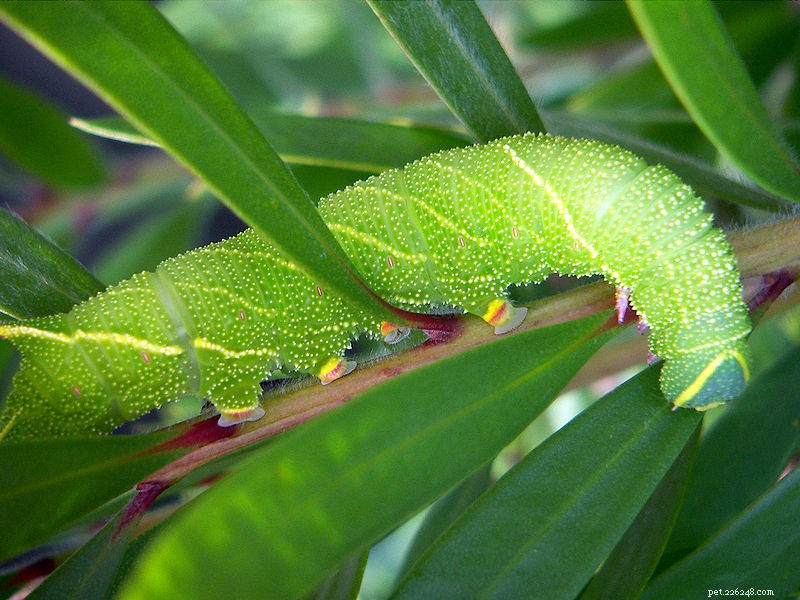 I’ve covered a number of less-commonly kept food animals in this care guide, along with pet trade staples. Please consider as many as you can, as dietary variety is critical to the health of most pets. The extra effort on your part will be very worthwhile…novel foods also inspire enthusiastic feeding responses, and may even stimulate reproduction.
There is an endless supply of useful live foods, so please post your ideas and observations.
Earthworms, Red Wigglers, Nightcrawlers (Lumbricus terrestris, others)
I’d like to see earthworms replace crickets as dietary staples for those species that accept them. Highly nutritious, they are readily taken by most amphibians and turtles, some lizards, insectivorous snakes, and tarantulas. Most reproduce rapidly when kept in a screen-covered plastic container with alternating layers of dead leaves and moist topsoil; they can also be stored under refrigeration. Keep earthworms at 70 F or below if possible (certain species tolerate warmer temperatures).
Earthworms should be provided a diet of leaf litter, bread crumbs, corn meal, fish flakes and reptile calcium powder.
Blackworms (Lumbriculus variegatus)
These nutritious earthworm relatives are accepted by most newts, frogs, and turtles. Blackworms will live for weeks in a refrigerator if their water is changed daily.
Terrestrial Isopods, Sowbugs, Potato Bugs (Order Isopoda)
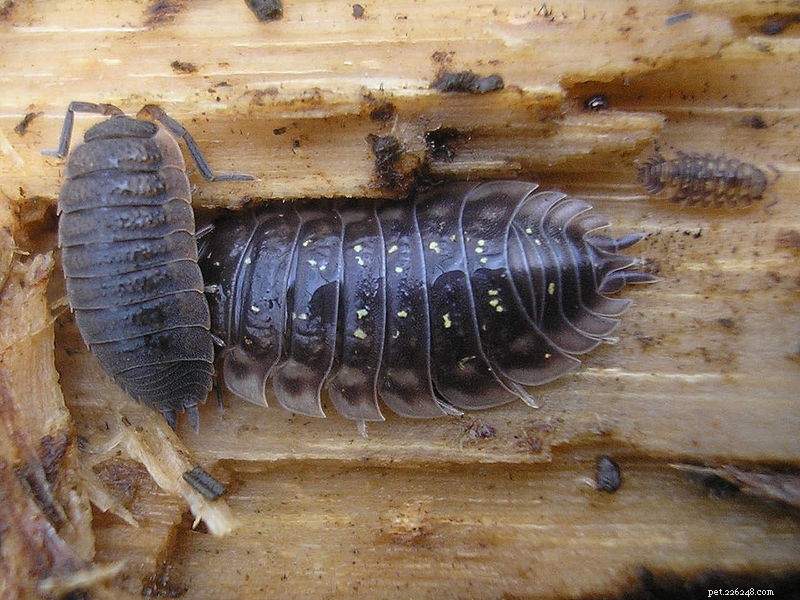 These crustaceans are a good source of Calcium and likely contain nutrients not found in insects. They are also useful scavengers, consuming dead insects, feces, and shed skins. Isopods may be purchased or collected beneath rocks and leaf litter.
A breeding colony can be established in an aquarium provisioned with moist coconut husk and topsoil. Fish flakes, leaf litter, coffee grounds and vegetable peels provide a good diet.
Aquatic species may be seined from fresh or marine waters.
Houseflies (Muscidae) and Phoenixor Calci-worms (Hermetia illucens)
Housefly cultures, including flightless strains, are commercially available. Both larvae and adults are widely accepted, and are especially favored by tree frogs and arboreal lizards. They are especially valuable for small creatures that are usually restricted to “cricket-only” diets.
Calci-worms, the larvae of Black Soldier Flies, are soft-bodied and contain an ideal calcium: phosphorus profile. They do well at room temperatures, and will feed on moist fish flakes and vegetable peels.
House Crickets (Acheta domestica)
Crickets should be fed a healthful diet prior to being used; cricket pellets, tropical fish flakes, dry milk and reptile calcium powder works well. Oranges, apples or gel cubes should be provided as a water source.
Screen-covered aquariums or storage bins provisioned with egg crate or paper towel rolls make good cricket enclosures. Fungal diseases quickly take hold in poorly-ventilated quarters.
Adult crickets have powerful mouthparts, and some of their body-parts are indigestible; use the smallest acceptable size (please see article below).
Mealworms and Super (King) Mealworms (Tenebrio molitor, Zophobus morio)
Mealworms grow quickly at 76-80 F, but normal room temperatures also suffice. They should be kept in wheat bran, powdered baby food and tropical fish food flakes, with banana skins as a moisture source.
 I prefer to use only newly-molted (white) mealworms or pupae as food, especially for amphibians. Mealworm beetles are also taken by many creatures. Mealworm-rich diets have been linked to intestinal blockages. Please write in for details.
Waxworms (Galleria mellonella)
These unusual caterpillars reside in beehives. They are shipped in sawdust, which must be removed before use, and should be refrigerated until needed. Due to a high fat content (58%) and thick exoskeleton, they are best used sparingly.
Orange-Spotted Roaches (Blaptica dubia)
This insect has a soft exoskeleton and rarely flies. They can be housed in bare-bottomed aquariums or sweater boxes stocked with egg crate or paper towel rolls. Fine “insect screening” will prevent the nymphs, which are born alive, from escaping.
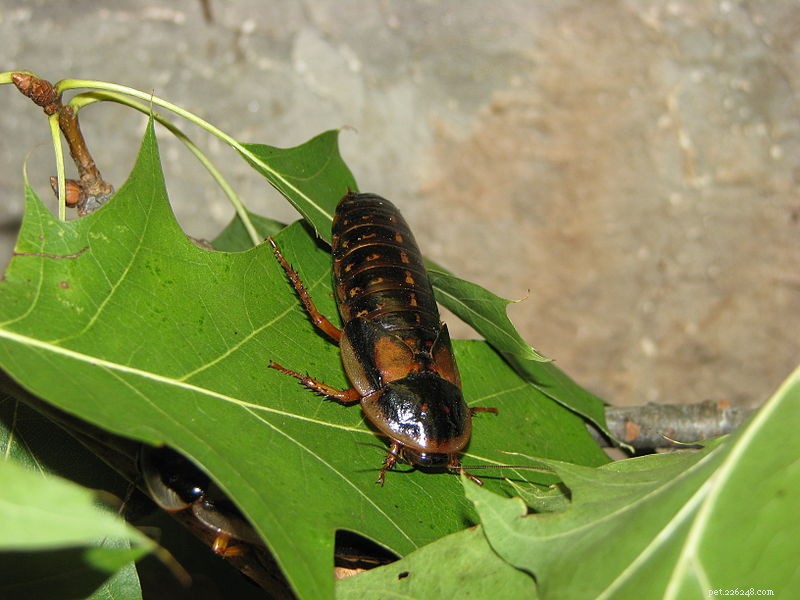 Breeding and growth is most rapid at higher temperatures, but 68-95 F is tolerated. A diet of fish food flakes, powdered baby food, fruits, vegetables and reptile calcium powder will ensure a nutritious meal for your pets. Cricket cubes can be used as a water source. Please write in for information on other species.
Fruit Flies (Drosophila melanogaster and relatives)
Fruit Flies, including flightless strains, are widely available; cultures are usually supplied with food and instructions.
Red and Confused Flour Beetle Larvae, Tribolium castaneum and T. confusum
Flour Beetle colonies are available commercially; dog biscuits or dried baby food will meet their food and moisture needs. The larvae are an excellent but little-used food for Poison Frogs, spiderlings and other tiny pets.
Springtails (Collembolla sp.)
Springtails are minute, primitive insects that can be collected from beneath leaf litter or purchased. They feed upon decaying vegetables and fish flakes, and breed readily.
Wild-Caught Invertebrates
Wild-caught invertebrates can impart important variety to captive diets. Learn to identify stinging and toxic species, and avoid collecting in areas where pesticides are used.
Swinging through tall grass with a net will yield a variety of nutritious aphids, grasshoppers, caterpillars and other “field plankton”. The Zoo Med Bug Napper will help snare moths and beetles. Please write and see articles below in for collecting tips.
Other Insects
Grasshoppers, silkworms, hornworms, praying mantis egg cases and other invertebrates are commercially available. Even if used only on occasion, they can make a big difference in your pets’ health and longevity.
Brine Shrimp, Daphnia, Mosquito Larvae
These tiny creatures are relished by salamander larvae, newts, aquatic frogs, and carnivorous tadpoles. They should be allowed to feed on a commercial Brine Shrimp diets and algae tabs being offered to your pets.
Mosquito larvae transform into adults rapidly, so feed only as many as will be consumed immediately. As a child, believing that I had discovered “fresh water Brine Shrimp”, I once filled my house with hundreds of hungry mosquitoes!
Crayfish
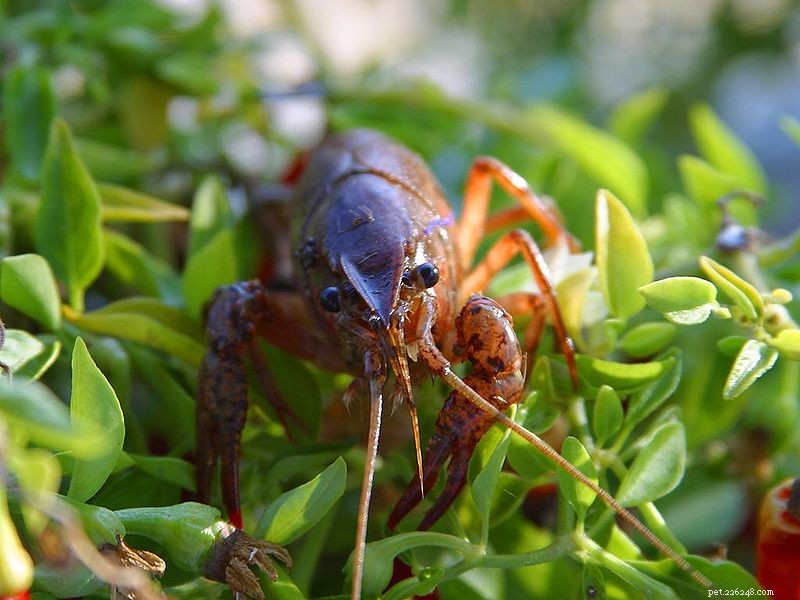 Crayfishes contain high concentrations of calcium and Vitamin E, and store well in damp moss under refrigeration. Unless they are soft (recently molted), the claws should be removed. I used crayfishes without incident for many years at the Bronx Zoo, but please write in if you are concerned about parasite transmission and wish to pre-treat them.
Fish
Fishes boast an ideal calcium: phosphorous ratio. Pond-raised minnows and shiners are highly nutritious, guppies, platys, mollies and others may also be offered. Wild fishes can be collected via seine or minnow trap (watch for spines borne by catfishes, sunfishes and others).
Goldfish-only diets have been implicated in health problems. Please write in for further information.
- Are Wild-Caught Invertebrates Safe for Reptiles & Amphibians? Key Concerns Explained
- Mite Management in Scorpion, Millipede, and Tarantula Terrariums: A Guide to Invertebrate Health
- Optimal Shelter Placement for Reptiles & Amphibians: A Practical Guide
- Groundbreaking Field Research Uncovers Novel Feeding Patterns in Reptiles and Amphibians
- Reptile Hobbyists: Champions of Conservation or Contributors to Declines?
- Undergravel Filters: A Proven Solution for Reptile and Amphibian Aquariums & Terrariums
- Breeding and Rearing Grasshoppers & Locusts for Premium Reptile & Amphibian Nutrition